인게이지먼트(Engagement) 중심의 마케팅이란, 고객이 직접 관심을 갖고 참여할 만한 콘텐츠를 사용해 고객들에게 접근하는 마케팅 전략입니다.
인게이지먼트 중심 전략은 브랜드와의 상호작용을 유도해 고객과의 연결성을 생성하고 장기적인 관계를 구축해 그들을 잠재 고객에서 충성 고객으로 이어질 수 있도록 합니다.
기업들은 단순히 웹사이트를 통한 콘텐츠 제공 뿐만 아니라 이메일, 기업 블로그, 소셜 미디어 등 다양한 채널을 통해 고객에게 다양하고 개인화된 콘텐츠를 제공합니다.
여기서 인게이지먼트(Engagement)는 더 많은 콘텐츠 보기(Page View), 장시간 체류, 공유하기, 댓글달기, 좋아요 누르기 등 모든 형태의 반응을 말합니다.
고객 참여를 효과적으로 구현한다면 잠재 고객은 자신이 해당 브랜드를 이해한다고 느끼고 해당 브랜드에 소속감마저 느끼게 됩니다.
이는 브랜드의 인지도를 높이고 신뢰를 높이는데 큰 도움을 줍니다.
또한 잠재 고객들에게 유용한 정보를 제공하고 문제를 해결하는데 도움을 준다면 그들의 삶을 더욱 윤택해지게 하겠죠.
디지털화에 따른 데이터 분석 활용
B2B 마케터들은 어느 순간부터 구글 애널리틱스와 같은 디지털 도구를 적극적으로 활용하기 시작했습니다. 데이터의 중요성을 인식하고 직관적인 마케팅에서 보다 분석적인 마케팅이 효과적임을 깨달았던 것이죠.
그러나 구글 애널리틱스로는 익명의 방문자를 알아낼 수 없다는 단점이 있었습니다. 따라서 소수의 트래픽에 집중해야 하는 B2B 서비스에는 제대로 활용할 수 없다는 문제도 있었습니다.
이로 인해 마케터들은 더 디테일한 데이터 분석에 대해 강한 필요성을 느끼고 있습니다.
B2B 마케팅 트렌드 ‘양보다 질’에 집중하기
노출량은 매출액과 비례하지 않는다
이제 마케터들은 무의미한 노출 기반의 마케팅 보다는 인게이지먼트(Engagement) 마케팅과 같은 참여형 혹은 가치 전달형 마케팅에 집중을 하고 있습니다.
특히나 많은 고객이 필요한 B2C보다 정확한 잠재고객, 특정 기업들에 집중해야 하는 B2B마케팅 트렌드에서 변화가 뚜렷하게 드러나고 있습니다.
결론적으로 양적인 확장보다는 타겟팅된 고객에게 집중하는 것이 더욱 효과적임을 기업들은 느끼고 있습니다. 이제 기업들은 잠재 고객들에게 어떤 가치를 전달할 것인지, 어떻게 참여율을 높일 것인지에 대한 관점에서 마케팅을 시도하고 있습니다.
인바운드 마케팅
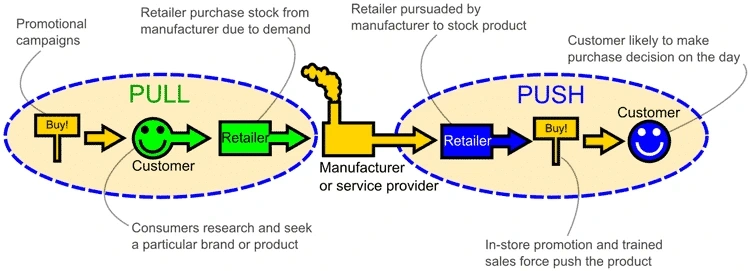
인바운드 마케팅이란 잠재고객의 공감을 불러일으키는 유용한 컨텐츠와 경험을 제공하는 마케팅을 말합니다. 이는 광고에 의존하는 게 아니라 직접 고객에게 다가가 거래를 성사하게 만들도록 돕는 디지털 마케팅이라고 할 수 있습니다.
해외 통계에 따르면 마케터들은 인바운드 마케팅을 통해 평균 사이트 전환율을 2배 가량 올린 경험이 있다고 합니다. (B2B 인바운드 마케팅 사례 연구). 성장마케팅 역시 이러한 인바운드 유입을 개선하는 마케팅을 통해 SQL (Sales Quality Lead)을 평균 3배 이상 증가시켰으며, 크게는 18배 이상 증가 시킨 레퍼런스도 가지고 있습니다.
B2B 인바운드 마케팅 전략을 실행할 때는 다음과 같은 단계로 전환이 이루어진다고 볼 수 있습니다.
Attract
잠재고객들이 관심을 가지는 키워드를 적극적으로 활용한 콘텐츠를 통해서 브랜드 인지도를 높이고 유입을 발생시킵니다.
Convert
방문자의 요구 사항에 대한 솔루션을 제시합니다.
Close
잠재 고객 및 방문자를 고객으로 전환시킵니다.
Delight
고객과 파트너쉽을 맺어 협력관계를 유지합니다.
최종 단계까지 도달해 만족감을 느낀 고객은 최고의 홍보 대사가 되기도 합니다. 그들은 충성 고객이 되어 회사에 상상하지 못한 이득을 가져다주기도 합니다.
2024년, 지금 우리의 마케팅은 온라인에서 요구사항을 충족시킬 수 있는 제품 혹은 서비스를 검색하고 있는 잠재 고객에게 쉽고 매력적이게 발견되어야 합니다. 그리고, 경쟁사와의 비교에서 우위를 점할 수 있는 USP (Unique Selling Point)를 효과적으로 설득하는 내용과 구조를 갖춰야 하겠죠.
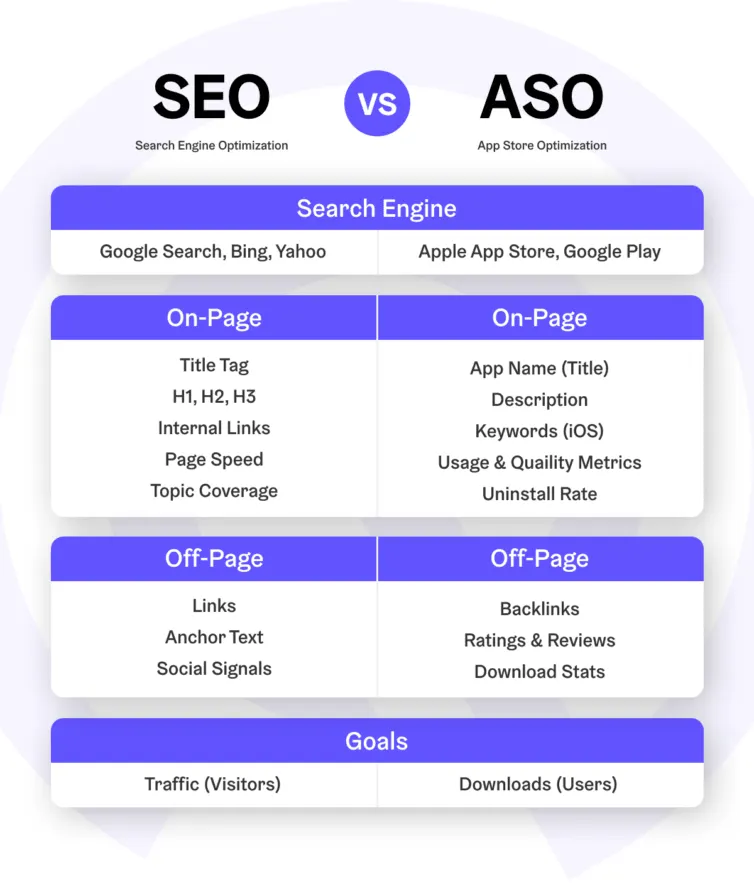
ASO is a concept similar to search engine optimization (SEO) for websites. ASO focuses on increasing the apps visibility, encouraging organic downloads, and demonstrating to users that the app meets their needs.
Why ASO is Important
Apps have become an essential part of our daily lives. On average, people spend over 30 hours per month using apps. Additionally, 25% of users find the apps they need through app store searches. Most users who search within app stores do so to find apps that fulfill their needs, making ASO increasingly important.
With millions of applications available in app stores, users typically rely on search functions to find the apps they want. By improving ASO, apps can achieve higher rankings in search results, significantly enhancing their visibility. Higher visibility means a greater likelihood of discovery and downloads, which directly correlates with increased download numbers and user base growth.
Compared to traditional paid promotion methods like advertising or marketing campaigns, ASO is relatively cost-effective. It can make a significant difference in the long run.
A well-executed ASO strategy not only yields short-term results but also contributes to long-term success. It helps maintain high ratings, positive reviews, and sustained downloads, while continuously implementing refined and up-to-date strategies.
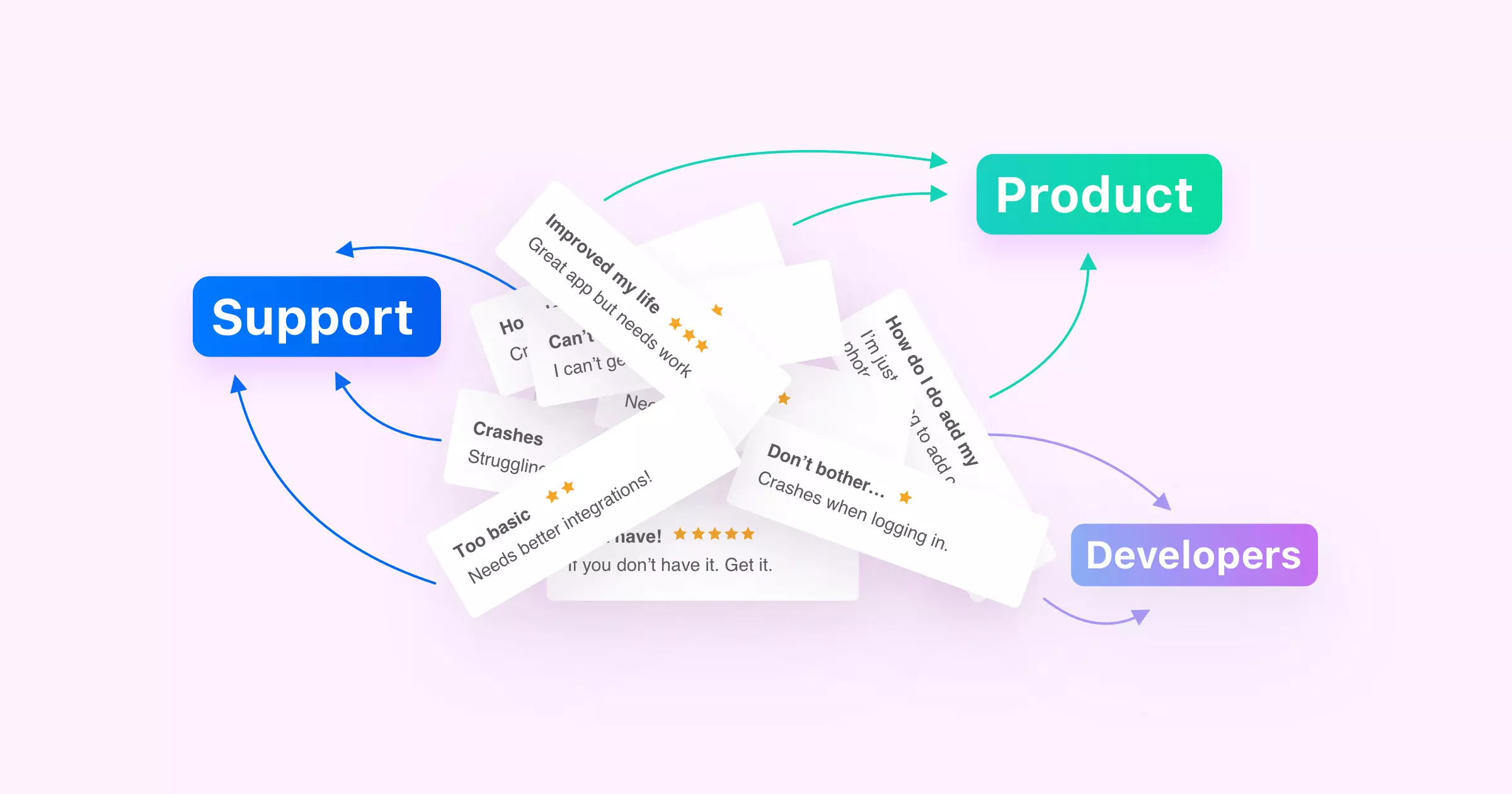
During the ASO process, developers receive valuable feedback from users about their app. This feedback aids in product improvements, updates, and enhancing the user experience.
Users generally trust apps that appear at the top of search results without ads. This is a clear reason for app marketing companies to focus on ASO. ASO is a crucial strategy for gaining a competitive edge and growing in the mobile app world.
Suggestions for ASO Improvement
Strategies to improve ASO can be categorized into direct and indirect elements.
Direct elements refer to aspects that app developers can control during the app development and deployment stages. Proper attention and management of these areas can lead to positive results.
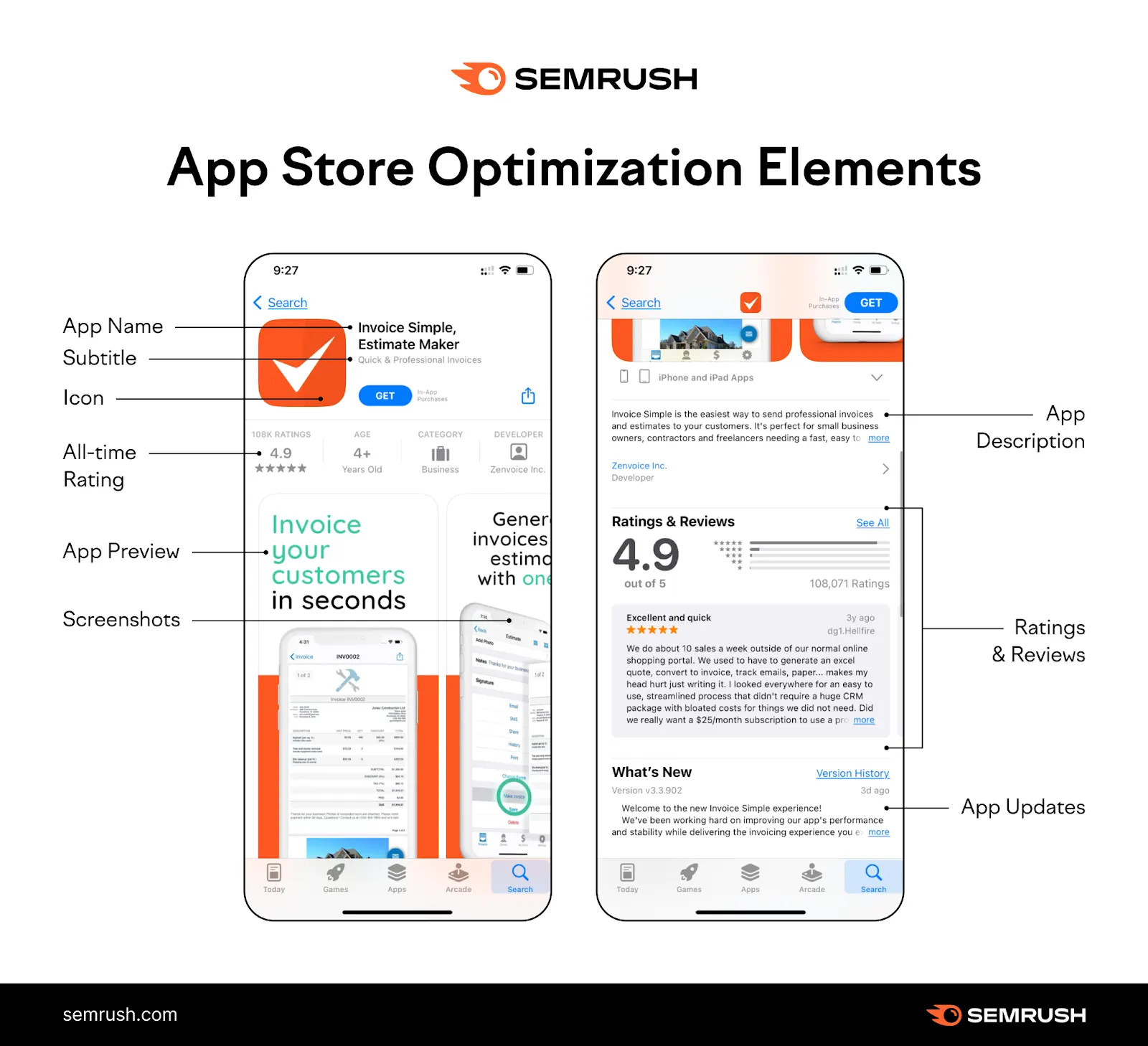
App Name: Choosing an intuitive app name is crucial. Adding high-traffic keywords to the app name can be effective.
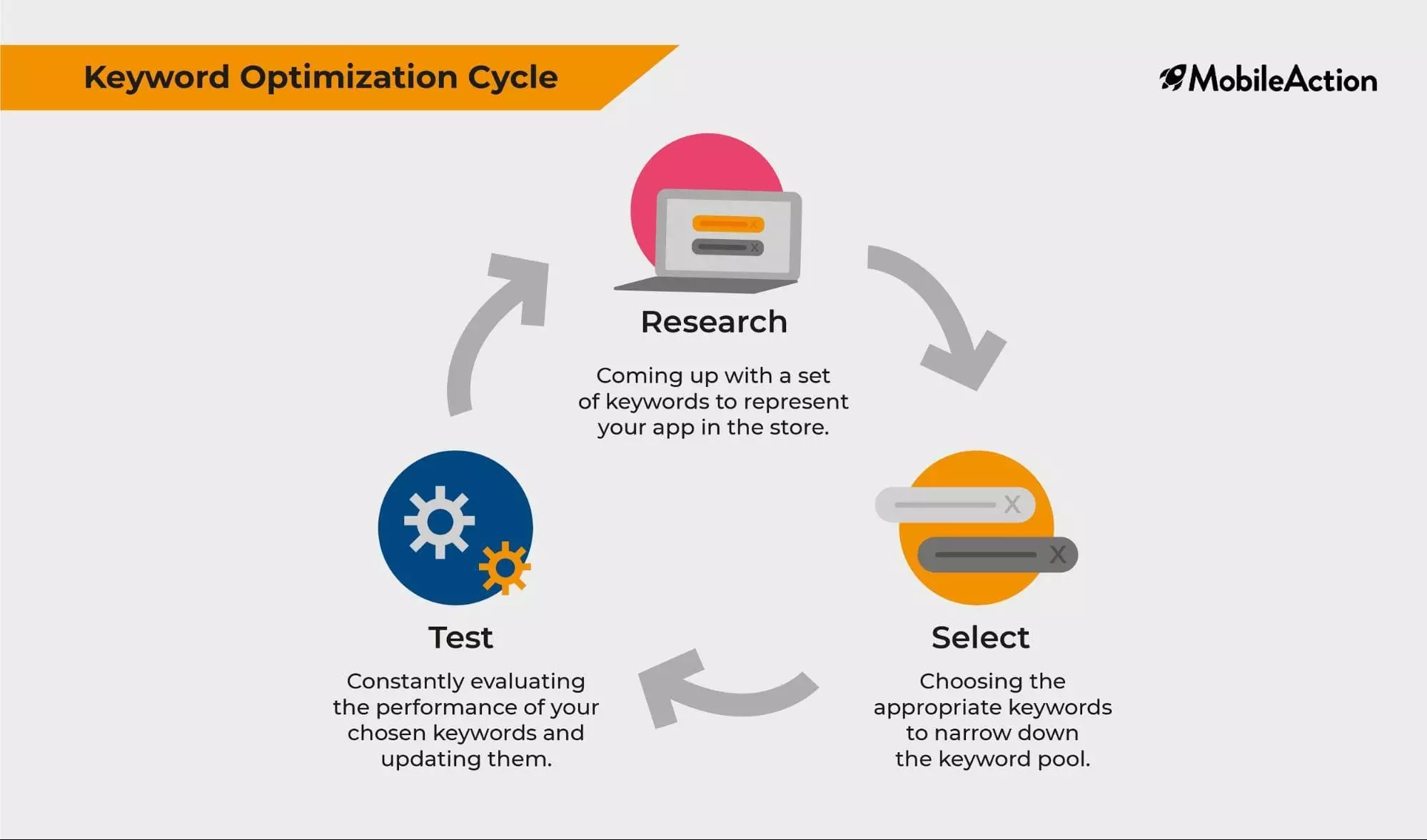
Search Keywords: These are keywords that help the app appear at the top of search results. Developers research relevant and popular keywords and include them in the app’s title, description, and other metadata. Apple has a dedicated search keyword section during app registration, similar to hashtags. Choosing the right keywords for the app service is essential.
App Description: The description should clearly explain the app’s main features and how it addresses user problems or enhances their lives. Highlight the apps key benefits and unique value propositions. The description should be clean, well-organized, and easy to read. It should be regularly updated to reflect the latest information and respond to user feedback.
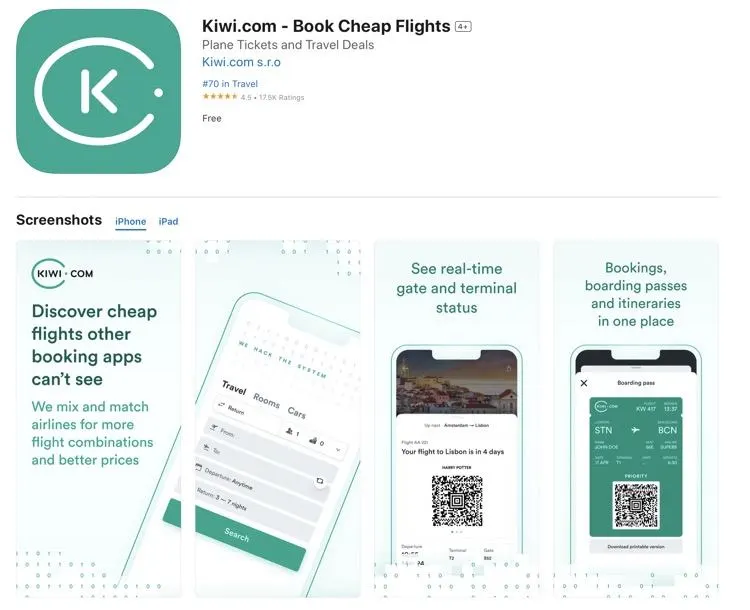
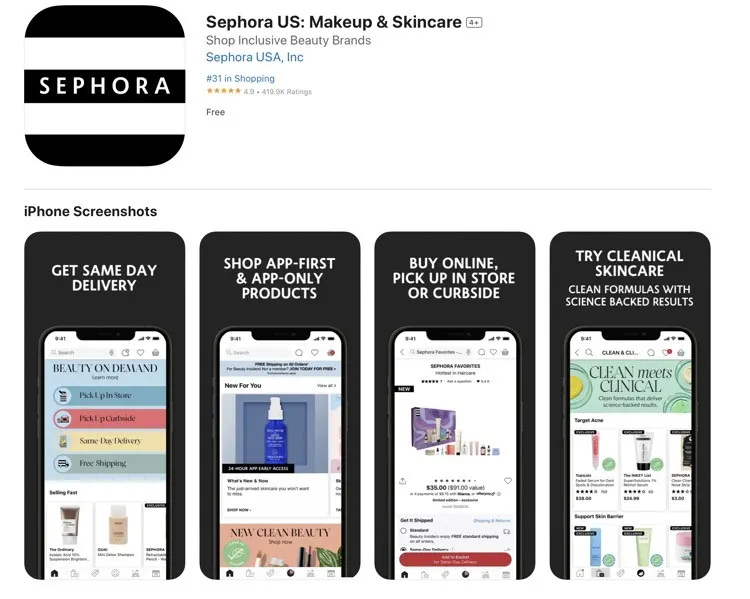
Design Elements: Visual elements such as icons, screenshots, and videos are important for attracting users’ attention. Screenshots can include short text lines to serve as intuitive service introduction areas.
Direct elements are interconnected. For example, an app name can be based on search keywords, and those keywords can be reflected in the app description and screenshots.
Include information on recent updates or improvements to show ongoing maintenance and enhancement.
Highlight positive user reviews and high ratings if possible.
Provide social proof, such as mentions in the media or endorsements from celebrities, to increase credibility.
Provide a way to contact support (e.g., customer service email) in case of issues.
Include a strong call-to-action to encourage downloads.
Indirect Elements
Indirect elements are factors beyond control but still impact ASO. Feedback from user reviews and ratings can provide insights into service improvements.
In the past, reward systems for writing reviews were common, but now it is prohibited to offer rewards for reviews in app stores. However, there are various strategies to encourage user reviews.
Three rules for encouraging app reviews are:
Do not interrupt someones experience.
Do not request reviews immediately after app download.
Delay review requests until a positive experience is likely.
Apps with numerous and positive reviews are more likely to rank higher in app charts and appear at the top of search results. Thus, app ratings and reviews play a crucial role in ASO.
Utilizing Guidelines
Apples App Store and Google Play have similar areas but also differences that significantly impact ASO. Comparing the main ranking factors of both stores and tailoring ASO strategies accordingly is important.
Apple App Store
Google Play
App Name App Subtitle App URL Keywords Installations and Engagement Reviews and Ratings App Updates In-App Purchases
App Title Short Description Full Description Installations and Engagement Reviews and Ratings In-App Purchases App Updates
Thus, while basic ASO strategies remain consistent, adapting to the specific characteristics and criteria of each app market is crucial. Both app markets provide developer pages with guidelines and methods to improve app visibility. Reviewing these pages before and after app launch can provide valuable insights.
The App Store Developer Guide provides important information about updates and app registration. App Store Connects help section also aids in app submission and management. For ASO, information about app icons, previews, and screenshots is important.
In the App Store, you can search for apps using the app name, subtitle, keywords, and company name. You can also utilize the app icon, up to 3 app previews, and up to 10 app screenshots.
The App Stores Create Product Page for developers provides detailed guidelines and suggestions regarding app name, icon, subtitle, app previews, screenshots, description, promotional text, keywords, in-app purchases, new features, ratings, and reviews. This page should be reviewed before creating the app product page.
Additionally, Apple announced that with iOS 15 and later versions, they will provide more relevant product pages through product page optimization and custom product page features. Consider using these features for ASO.
The Google Play Developer Page offers information on improving ‘app quality and discoverability,’ which is crucial for ASO. Google Plays app recommendations are based on human curation and algorithms, focusing on ‘relevance’ and ‘quality.’
One of the ‘quality’ assessment factors for an app is an effective store listing page. The store listing page provides users with their first impression of the app. Its important to clearly convey the apps features and content through the app description, screenshots, and metadata.
Google Play suggests several tips to increase app discoverability. Adding videos to the listing page and including at least three 16:9 screenshots can improve conversion rates. Additionally, providing accurate app categories and content ratings helps promote the app appropriately.
Store listing experiments allow for A/B testing different versions of icons, descriptions, and screenshots. This helps find the most effective listing page configuration for Google Play users. For effective results, test each component independently and conduct tests for at least one week.
Finally, using the User Acquisition tab in the Play Console helps you understand how users discover your app through search terms, which aids in developing ASO strategies.
Practical Approach to ASO at Growth Marketing Agency
Effective App Title and Description Writing
Titles and descriptions create the first impression between potential users and the app. An engaging title not only attracts attention but also sets the foundation for downloads. By writing app titles and descriptions professionally, you can stand out in a crowded app market.
Crafting concise yet impactful descriptions is an art. Understanding that users seek quick information, our approach ensures a persuasive narrative that highlights key features and unique value propositions.
Importance of App Icon Design
Often overlooked, app icons are as crucial as titles and descriptions in ASO. A well-designed icon conveys professionalism, credibility, and the essence of the apps function at a glance. Understanding user psychology is key to effective ASO, and a strategically designed app icon encourages clicks.
In a crowded app space, visibility is crucial. Growth Marketing Agencys ASO specialists conduct in-depth keyword research to ensure that clients apps are positioned to reach the right audience. Optimizing titles and descriptions with the right keywords enhances app searchability and helps reach users actively searching for related business.
App Review Management
App reviews play a significant role in influencing potential users and impacting searchability and credibility. At Growth Marketing Agency, our principles for managing reviews include:
Responding promptly to both positive and negative reviews to show active engagement in app improvement.
Personalizing responses to reviews, using reviewer names where possible to add a human touch.
Maintaining professionalism when responding to negative reviews, acknowledging concerns, and offering solutions.
Encouraging satisfied users to leave positive reviews through in-app feedback or other channels to balance out negative reviews and improve overall ratings.
Using reviews as valuable feedback for continuous improvement and mentioning updates based on user feedback in release notes.
ASO metrics often include keyword rankings, conversion rates, download numbers, user reviews, ratings, and retention rates. These metrics help companies understand app performance and user satisfaction.
Downloads: The number of times the app has been downloaded, indicating user interest.
Conversion Rate: The percentage of users who decide to download the app after visiting its store page.
App Ratings and Reviews: Checking average ratings and user reviews to gauge satisfaction and identify areas for improvement.
Keyword Rankings: Monitoring app rankings for relevant keywords to improve visibility.
Impressions and Click-Through Rate (CTR): Impressions indicate how often the app appears in search results, while CTR measures the percentage of users who click after seeing the app.
Retention Rate: The number of users who continue using the app after download, indicating if the app meets user expectations.
Revenue and In-App Purchases: Tracking revenue from in-app purchases to measure financial success.
Competitive Analysis: Comparing performance metrics with competitors to identify areas for improvement.
Growth Marketing Agency tracks these metrics to monitor ASO performance, identify challenges, and maintain advantages.
ASO Success Stories
Lets explore successful ASO examples that led to high visibility and downloads in app stores. These cases demonstrate effective strategies and execution.
Decrease in ad traffic due to privacy regulations such as iOS ATT (App Tracking Transparency).
Increase in retargeting restrictions.
To-be
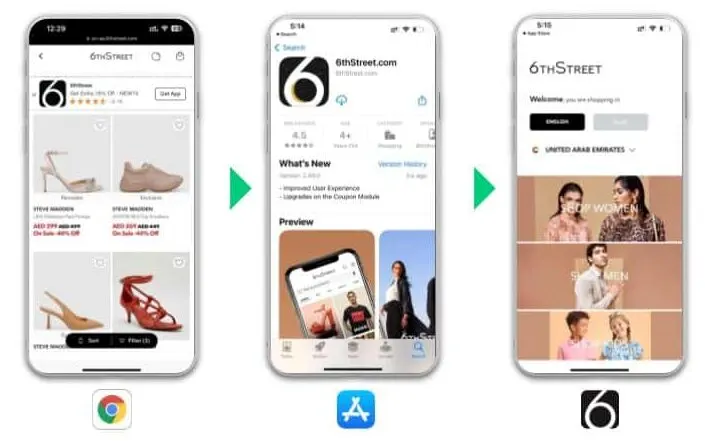
Set up app download ads with a webpage landing.
Provide introductions, descriptions, and other details about the app service on the webpage.
Build an automated webpage with a pop-up for app download at ? of the scroll-down point.
Results
13% increase in ROAS, 70% decrease in app uninstall rate.
60% increase in retention rate compared to before.
Advantages and Limitations of Website Landing Pages from an ASO Perspective
Recently, regulations on personal data tracking for app usage have become stricter. Using a website landing page is one way to address these regulations.
Websites require less personal data tracking compared to app stores, allowing users to check app information without downloading it.
A website landing page can provide more information than an app store detail page. By detailing the apps features, characteristics, usage, update history, etc., it offers users deeper insights into the app.
Additionally, including various content such as images, videos, and user reviews can engage users more effectively.
However, introducing and explaining the app through a website landing page requires an extra step compared to users downloading the app directly from the app store. This means adding an additional step to the user’s journey, which could increase the number of users who drop off. Therefore, it is essential to streamline the user path and make the transition from the website to app download as smooth as possible.
Collaboration with Specialized Agencies for ASO Improvement
ASO is an advanced marketing technique suitable for the era of smartphone popularity. It plays a crucial role in improving app visibility and download numbers. However, ASO cannot be perfected all at once. Continuous observation, improvement, and optimization are necessary to achieve results.
ASO is similar to SEO. By analyzing the app’s characteristics and market trends, and making changes and applications as needed, you can achieve good results. This helps to enhance the app’s visibility and attract more users.
Collaborating with specialized marketing agencies is important for ASO improvement. Specialized marketing agencies can analyze extensive content and develop strategies based on user behavior data. They can also find the optimal methods for the app service and use ASO expertise and tools to improve the app’s ranking and installation numbers.
By starting ASO improvement through collaboration with growth experts, you can receive optimal strategies based on in-depth analysis and experience.
Understanding the apps characteristics and market trends, along with conducting competitive analysis and keyword research, will help improve the apps visibility and download numbers.
As the allure of the Korean market grows, many foreign companies are making their move. But in this process, one crucial element often gets overlooked: SEO. Why is it so important?
Korea is an internet powerhouse. Most consumers rely heavily on online searches when making purchasing or investment decisions. Therefore, ranking high in search results directly impacts revenue. This is where SEO plays a pivotal role.
However, many foreign companies set their Korean SEO strategies without fully understanding the nuances of the Korean market, leading to mistakes.
One of the common Korean SEO mistakes that foreign companies make when entering the Korean market is using Korean URLs. We’ll focus on this misconception and explore more effective Korean SEO strategies.
Korean SEO mistake: The use of Korean URLs
Foreign companies often think, “We’re targeting the Korean market, so Korean URLs must be good, right?” Unfortunately, this is a significant misconception.
Why are Korean URLs problematic?
URL Breakage: Korean URLs are converted to Punycode, an encoding system that represents Unicode characters in ASCII, when used in the domain name system. For example, ‘??.kr’ becomes ‘xn--vg1bl39d.kr’. While this encoding allows Korean characters to be used in URLs, it can impact user experience by making the URLs less readable and recognizable, potentially causing confusion when shared.
Browser Compatibility: Some browsers may not properly recognize Korean URLs, potentially losing potential customers.
Search Engine Crawling Issues: Search engine bots may struggle to crawl Korean URLs, negatively impacting search result visibility.
The Advantages of English URLs when working on Korean SEO
So, why are English URLs a better choice?
Stable Compatibility: English URLs work reliably across all browsers and systems.
Global Accessibility: Even when targeting the Korean market, it’s wise to consider global accessibility. English URLs make this possible.
SEO-Friendly: Search engines can more easily understand and index English URLs, benefiting your overall Korean SEO efforts.?
Effective Korean SEO Strategies
Now, what should you do? Here are some effective Korean SEO strategies for the Korean market:
Combine English URLs with Korean Keywords: Keep your URLs in English, but strategically place Korean keywords within your page content. For example, use this URL structure: www.yourcompany.com/whitening-cream, while including Korean keywords like “?? ??” in your page content.
Optimize Metadata: Write your title tags and meta descriptions in Korean. These are crucial as they appear in search results.
Mobile Optimization: Korea has an extremely high mobile usage rate. Therefore, mobile-friendly website design and content structure are essential for successful Korean SEO.
Other SEO Mistakes to Avoid
Besides using Korean URLs, there are other Korean SEO mistakes that foreign companies often make. It’s crucial to avoid these as well.
Keyword Stuffing: Cramming in keywords doesn’t help SEO. It can even be considered spam. Use keywords naturally.
Low-Quality Content: Content that’s high in quantity but low in quality doesn’t help. Create high-quality content that provides real value to users.
Ignoring Page Speed: Page loading speed is a crucial SEO factor. Improve page speed through image optimization, caching, and other techniques.
Neglecting Meta Tags: Title tags and meta descriptions are SEO basics. Write unique and descriptive meta tags for each page.
Real-World Application: The Nike Korea Example
Let’s take a real-world example to illustrate the impact of using Korean URLs in Korean SEO. Nike, a global brand, has a dedicated Korean website. While they are a leader in digital marketing, even they aren’t immune to the pitfalls of Korean URLs.
Consider this product URL from Nike Korea:
Original URL: ??-??-???-?-??-???-6P0mijB1/FZ3503-100
This encoding has far-reaching implications beyond mere URL breakage:
User Experience Impact: When users see such an encoded URL, it can create confusion and frustration. The URL becomes nearly impossible to remember or manually type, leading to a poor user experience that can drive customers away.
Brand Perception: These complex URLs can inadvertently communicate a lack of attention to local user needs.?
SEO Complications: While the technical aspects of SEO, such as search engine crawling, are important, the broader SEO implications for global brands are even more critical. Korean consumers expect a seamless digital experience. When they encounter issues with sharing or accessing content due to complex URLs, it can reduce engagement and, ultimately, the effectiveness of the brand?s online presence in Korea.
Optimized Korean SEO Strategy for Nike Korea
Instead of using Korean characters in URLs, Nike could improve their Korean SEO by adopting English URLs combined with Korean keywords within the page content. For example:
Page Content: Include Korean keywords such as “?? ?? ??? ? ?? ???” within the product description and metadata.
This approach would make the URL more user-friendly, easier to share, and more compatible across different browsers and platforms, all while maintaining strong Korean SEO performance.
Conclusion: SEO is an Ongoing Process
As the Nike Korea example shows, even top brands can fall into the trap of using Korean URLs, which can hinder their Korean SEO efforts. By opting for English URLs and strategically incorporating Korean keywords within content, companies can enhance user experience and improve their search engine rankings.
Remember, Korean SEO isn’t a one-time task. Continuous monitoring and improvement are necessary to stay ahead of the competition in the ever-changing digital landscape. With the right strategy, you can achieve significant success in the Korean market.
At Growth Marketing Agency, we have decades of experience working in SEO across diverse markets. In our experience, pages with Korean URLs have consistently underperformed, often leading to issues in user engagement and search engine visibility. We’ve seen firsthand how adopting English URLs and incorporating localized content can dramatically improve results.
Why should we examine B2B startup failure cases, especially those that failed? The reason is that B2B startups operate in a highly competitive environment, where many companies experience failure. Often, these companies attribute their failure to their products not achieving market fit. In other words, they created products that no one wanted, leading to an inability to gain customers and generate revenue. However, they often miss the underlying issues at play.
Let’s take a closer look at the B2B startup failure case of Argyle Social to understand the barriers in the B2B startup market and uncover the key lessons from this marketing case.
B2B Startup Failure Case: Why Did Argyle Social Fail?
Who is Argyle Social?
Argyle Social was a company that provided a social marketing platform. It offered an interactive platform designed to help marketers improve customer engagement and lead generation on social media platforms.
Initially, the platform was well-received, recognized for its reasonable pricing in the market. At one point, it even became a preferred program among marketers due to its intuitive dashboard and effective scheduling features.
Why Argyle Social Failed?
However, despite its early success, Argyle Social eventually closed its doors.
The company’s founder, Adam Covati, made efforts to integrate their software with various social media marketing automation tools to stand out from the competition.
Although these efforts were practically useful for marketing, the company lost momentum in the market due to the aggressive marketing strategies of its competitors.
This B2B startup failure case highlights the risks associated with underestimating the power of marketing in a highly competitive landscape.
As Argyle Social became less competitive, its financial situation deteriorated to the point where it struggled to pay its employees, let alone fund the development and launch of new software.
Social media giants like Facebook and Twitter frequently updated their APIs, and Argyle Social needed to keep up with these changes to function effectively on these platforms.
While the company had the talent and technology, it lacked the manpower and funding to manage these updates. The shortage of funds led to a lack of personnel, making it impossible to maintain sufficient service levels.
Covati sought business partners, but no one was willing to invest in Argyle Social’s potential, making it a cautionary B2B startup failure case.
B2B Startups: The Importance of Marketing
Many B2B startups face crises when they fail to secure additional funding before stabilizing their operations.
Most startups find themselves in an intensely competitive environment and eventually realize they are not growing fast enough to generate the necessary revenue due to limited funds.
Argyle Social is a prime B2B startup failure case, having experienced explosive growth in its early stages but ultimately failing to sustain it.
The Downfall of Argyle Social: Neglecting Marketing
Over its four years of operation, approximately 500 companies used Argyle Social’s platform. Despite achieving a reasonable profit at a mid-market price point, Covati admitted that competing with large companies was an uphill battle.
As automation in social marketing platforms became a hot topic, Argyle Social garnered significant attention, but the competition became fiercer as more companies entered the field.
In the end, Covati conceded that they lost the fight against larger competitors. This B2B startup failure case serves as a reminder of the consequences of neglecting marketing efforts.
According to Adam Covati, the CEO of Argyle Social, “Interest from suppliers and knowledgeable customers was high, and with our intriguing integrations and technology, Argyle Social seemed promising. However, business partners believed that while our technology was interesting, it was still premature.”
He added that there was one thing he deeply regretteda critical point that could have influenced the company’s future and possibly helped them avoid failure. “Since our customers became direct marketing channels, we didn’t invest in our own marketing. The common issue for tech-based companies like ours is that we fail to recognize the importance of marketing. We didn’t realize that good technology and resources alone were not enough. Argyle Social initially invested in marketing, but in hindsight, we should have continued to invest boldly in our own marketing. However, such decisions are difficult to make when managing finances.”
Covati hoped that other B2B startups would not follow in their footsteps. He stressed that while it may be difficult for CEOs to decide where to invest their capital, skimping on self-marketing is a foolish move. Despite attracting a substantial number of customers in its early stages, Argyle Social eventually lost them to competitors who could outpace them with large-scale marketing strategies. Their financial resources were simply insufficient to compete with the extensive marketing efforts of their rivals.
Lessons from B2B Startup Marketing Cases
Invest in Your Own Marketing
Covati pointed out that it is challenging for small startups to keep up with platforms like Facebook and Twitter.
Over time, it becomes increasingly difficult to maintain competitiveness with certain services from other companies.
Every time social networks update their APIs, substantial development work is required on third-party social media platforms as well. Argyle Social attempted to automate and cut back on self-marketing to invest more in these technological developments.
However, their efforts to integrate marketing automation systems ultimately failed to yield results.
Meanwhile, their competitors secured significant capital and expanded their sales and marketing strategies, leading to yet another B2B startup failure case.
What Strategy Should Small Startups Adopt?
Self-marketing strategies, such as content marketing, are among the most critical promotional tactics for B2B startups.
This is because they can be executed without large capital investments, and when done well, they can yield substantial returns relative to the time and effort invested.
However, it is also true that if appropriate content marketing strategies are not tailored to each field, it could result in wasted time.
For early-stage B2B startup founders who lack experience, diving into content marketing for the first time can be a significant risk, leading to mistakes.
They also face limitations in terms of time and resources. In such cases, seeking direct help from self-marketing experts can be a wise approach. If you want to learn more about startup marketing strategies, consulting with experts might be a good option.
The strategy behind content marketing KPIs is a critical aspect of any business. The more strategically and efficiently you use content marketing, the more your business can experience measurable success. However, there isnt a one-size-fits-all solution, so individualized analysis is necessary.
Content marketing offers the advantage of being both cost-effective and efficient, but even the smallest budget can be a burden depending on the size of the company. Therefore, its essential to consider ROI when engaging in content marketing.
Marketers must measure and optimize the performance of their content marketing to improve engagement, which in turn allows for more effective ROI measurement.
So, what are the strategies, tactics, and recent trends in content marketing performance measurement?
The Challenge of Content Marketing KPIs
Accurately measuring marketing effectiveness is extremely challenging. Surveys reveal that two-thirds (66%) of marketers find it difficult to measure content marketing performance, while only one-third (34%) consider it somewhat easy or straightforward.
To properly measure content marketing performance, a significant amount of data must be collected. Beyond this, marketers often have differing opinions when discussing marketing effectiveness. For clarity, lets examine the three types of marketing effects:
Channel-Specific Effects
Consider a scenario where youve spent a substantial amount on paid search advertising. Youd naturally wonder how many of those conversions from paid search might have occurred organically. This is known as the channel-specific effect.
To understand channel-specific effects, you can either track the direct increase in conversions from the ads or analyze and measure the impact of ads across different channels. Another approach is conducting a randomized controlled experiment, not at a geographical level but at the user level.
For example, by dividing target users into two groupsone exposed to ads and the other notmarketers can compare the behavior of those exposed to advertising with those who werent. Some argue that such tests don’t fully capture the true channel-specific effect, but its still a strategic option for measuring content marketing performance.
Cross-Media Effects
Advertising platforms often provide various options for placing ads, which prompts marketers to consider the effectiveness of resources across different marketing channels. This is referred to as the cross-media effect.
Not all ad spend results in conversions, which is why measuring cross-media effects is complex and challenging. Most advertising platforms cannot measure cross-media effects. However, market comparison tests can analyze specific user behaviors to assess cross-media effects. If you have a generous budget, advanced modeling techniques like conversion modeling can also be employed.
Leveraging cross-media effects can help optimize the budget allocated for content marketing performance measurement.
Marketers are concerned with measuring the effectiveness of all marketing activities that have been budgeted. This is known as the marketing portfolio effect.
In other words, how effective is the marketing spend across platforms A, B, and C? The return on investment relative to the expenditure is a crucial metric for measuring performance. Accurately measuring marketing effectiveness can have a significant impact on marketing decisions.
However, precise measurement is difficult, and conflicting results are common. Like cross-media effects, marketing portfolio effects can be measured through market comparison tests.
Content Marketing KPIs and the Necessity of Martech Tools
As mentioned earlier, content marketing typically utilizes multiple channels.
Surveys show that one in five marketers uses more than six tools to track content marketing KPIs. Moreover, over half of respondents use at least three to five tools.
As technology advances and market trends evolve, the field of marketing technology is becoming increasingly sophisticated.
With the growth of AI and automation, the Martech stack has expanded rapidly, enhancing related capabilities. Additionally, the acceleration of digital and e-commerce has led to the rise of flexible, cloud-based technologies.
The Need for Robust Marketing Measurement Tools
Martech is on the rise to more effectively prove marketing impact. Due to the COVID-19 pandemic, companies have chosen to review costs and reduce budgets across all areas. This has necessitated that content marketers demonstrate the value and effectiveness of their roles more clearly and accurately.
Although the pandemic has subsided, content marketers will continue to feel pressure to report on marketing success and automation. As a result, experts suggest that finding tools that effectively measure marketing impact will become the norm. Going forward, marketers will focus on targeting potential customers, tracking and optimizing capabilities, and improving sales cycles through automation and machine learning.
These will become meaningful metrics for business improvement. While perfect measurement is challenging, marketers will increasingly be able to extract more meaningful data. Content marketers will adapt to environments where they can more effectively measure and continuously improve ROMI.
Content Marketing KPIs: Conversion Rates and Traffic
Regardless of budget size, marketers need to have a solid understanding of the concept of marketing effectiveness. To measure performance effectively, its crucial not only to use the right tools but also to clearly define metrics.
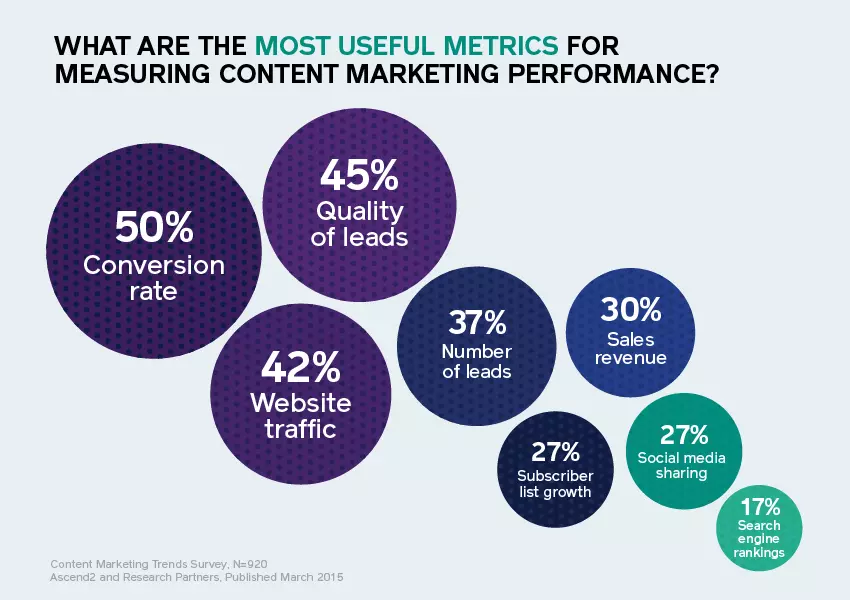
Half of the marketers agree that conversion rates (50%) and website traffic (46%) are among the most important metrics to consider when assessing the overall performance of content marketing strategies. Additionally, 39% of respondents ranked engagement on social media channels high on their list of key metrics.
Traffic and conversion rates are vital metrics, providing marketers with clear and straightforward evidence. However, not all visitors generate revenue or become customers. If the percentage of visitors converting to leads decreases, the number of visitors becomes less relevant.
Instead, marketers will focus on targeting more suitable potential customers rather than simply attracting more visitors. In this way, conversion rates and traffic can complement each other.
Marketers want visitors who have the potential to become leads. Therefore, they will target specific niche markets, excluding numerous visitors who are unlikely to convert. This allows marketers to use their time more efficiently.
Marketers should strive to build an ideal customer persona and form optimized, customer-tailored metrics. Once marketers establish metrics for a specific customer group, setting up and measuring these metrics becomes much simpler. Instead of wasting energy on filtering out irrelevant traffic, marketers can spend time nurturing traffic with a higher likelihood of conversion.
Conclusion and Next Steps
Creating great content is crucial, but its just one element of the bigger picture in marketing. Content marketers must consider the most significant challenges and then develop a strategic plan to overcome them. At Growth Marketing Agency, we believe that establishing content marketing KPIs that everyone agrees on and reviewing the marketing technology stack are essential parts of the marketing strategy. We are committed to realizing data-driven content marketing.
Still find content marketing challenging? Start by checking out Growth Marketing Agencys content marketing case study and SEO marketing case study to see the analyzed results.
Influencer marketing isn’t a new concept, but its landscape has evolved dramatically over time. Historically, only celebrities wielded this kind of influence. Today, the field is diverse, with various types of influencers making an impact. As brands strive for deeper, more authentic connections with their audiences, understanding the roles and benefits of different types of Korean influencers is crucial.
In this article, well delve into the world of Korean influencers in marketing, highlighting their unique characteristics and advantages. Well guide you in selecting the right type of Korean influencer for your marketing strategy. By exploring these elements, we aim to provide you with insights to craft effective influencer marketing strategies tailored to your brands needs.
Korean Influencers: Who Are the Truly Influential Figures?
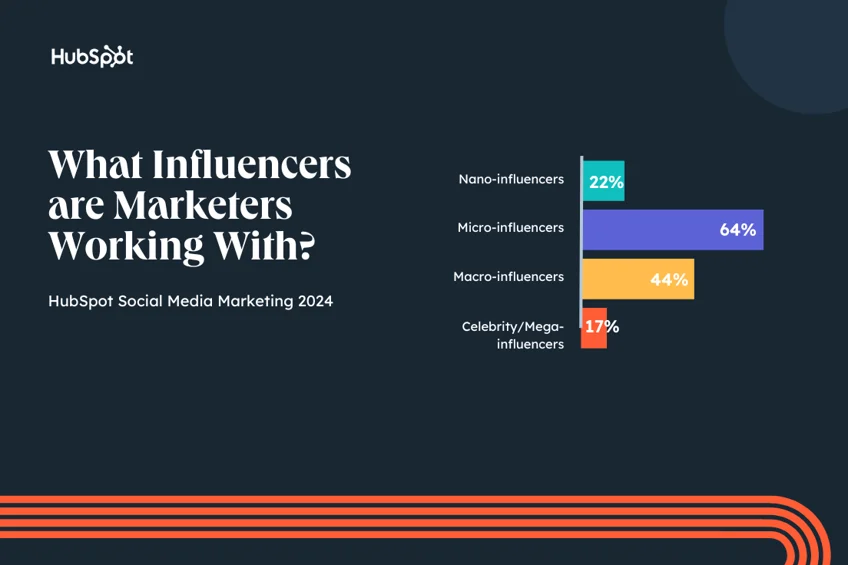
So, who exactly are the Korean influencers we commonly refer to? Simply put, they are creators with a substantial number of followers who exert influence on social media platforms. Influencers can be categorized based on their follower count as follows:
Nano Influencers: Fewer than 1,000 followers
Micro Influencers: 1,000 to 10,000 followers
Macro Influencers: 100,000 to 1 million followers
Mega Influencers: Over 1 million followers
In this discussion, we will particularly focus on micro influencers and macro influencers. Why? Because each type of Korean influencer offers distinct advantages and disadvantages that can impact your marketing strategy.
The Appeal of Korean Micro Influencers: Small but Mighty
Korean micro influencers, while having fewer followers, possess unique traits that make them especially effective. Lets explore what sets them apart:
Close Relationships with Followers The greatest advantage of micro influencers is their close relationship with their followers. Their smaller follower count allows for more personal interactions, increasing follower loyalty. Example: A micro influencer in the beauty sector might engage daily with her audience through Instagram Live, creating a conversational atmosphere that fosters high engagement.
Expertise in Specific Niches Korean micro influencers often focus on particular niches, which helps build trust with their followers. Utilization Tip: Look for Korean micro influencers whose niche aligns with your brand. For instance, an organic food brand should collaborate with influencers focused on healthy eating.
Authentic Content Creation Micro influencers generally produce natural and authentic content, building greater trust with their audience. Caution:Avoid forcing overly commercial content on Korean micro influencers, as it may backfire and diminish authenticity.
???? (a_b.haus) is a rising Korean micro influencer making waves in the interior design and home styling space. With around 7,800 followers on Instagram, she has cultivated an engaged audience passionate about home decor and interior design.
The Power of Korean Macro Influencers: The Strength of Broad Influence
Now, lets examine the characteristics of Korean macro influencers, who come with their own set of unique benefits:
Wide Influence and High Visibility The primary advantage of macro influencers is their extensive reach. With hundreds of thousands to millions of followers, they offer significant exposure from just one post. Usage Example: A fashion brand might collaborate with a famous Korean macro influencer for a new collection launch, achieving massive exposure and a spike in sales.
High-Quality Content Production Many Korean macro influencers have professional content creation teams, allowing them to deliver high-quality content consistently. Branding Tip: Leverage their capabilities by suggesting high-quality content formats like mini-documentaries or photo shoots that narrate a brand story.
Combination of Expertise and Popularity Many macro influencers start in specific niches and gradually gain broad appeal, offering both expertise and popularity. Caution: Ensure the macro influencers image aligns with your brand to avoid potential damage to your brands reputation.
Relatively Lower Engagement Rates Macro influencers typically have lower engagement rates compared to Korean micro influencers, but their large follower base means overall engagement can still be substantial. ?Strategic Approach: Plan campaigns that encourage follower participation, such as hashtag challenges or interactive events, to boost engagement.
Analyzing Effectiveness in the Korean Market: Which Is More Effective?
Lets explore which type of influencer is more effective in the Korean market.
Korean Influencers: Advantages of Micro Influencers
High Trust and Authenticity Korean consumers highly value authentic content, and Korean micro influencers genuine posts resonate well with this preference. ?Strategic Approach: Encourage authentic content like product reviews or personal use stories, but avoid over-scripting.
Advantages in Target Marketing Korean micro influencers can be more effective for niche targeting due to their followers’ specific interests. ?Strategic Approach: Partner with Korean micro influencers whose niche aligns with your product or service for optimal impact.
Korean Influencers: Advantages of Macro Influencers
Extensive Exposure In a country with high social media usage, Korean macro influencers can rapidly increase brand awareness. ?Strategic Approach: Use macro influencers for broad promotional efforts, such as new product launches.
Effective for Brand Recognition Collaborating with well-known Korean celebrities or influencers can enhance a brands image. Focus on conveying your brands story and values, rather than just product promotion, to build a premium brand image.
????? (Wonji’s Day) is a Korean macro-influencer with approximately 950,000 subscribers on YouTube. She focuses on authentic, immersive travel experiences across various countries and cultures. Travel-related companies like airlines, hotels, and tourism boards could benefit from partnering with her to promote their services to her audience of Korean travel enthusiasts.
Effective Influencer Marketing Strategies: How Should You Approach It?
Here are some key points for crafting an effective influencer marketing strategy in the Korean market:
Selecting Influencers Based on Brand Goals The crucial first step is choosing Korean influencers that align with your brand objectives. ?Strategic Approach:
For brand awareness, Korean macro influencers may be more suitable.
For targeting specific audiences or driving sales, Korean micro influencers might be more effective.
Balanced Use of Micro and Macro Influencers A balanced approach, using both Korean micro and macro influencers, can be highly effective. ?Strategic Approach:
Use macro influencers for broad promotion.
Follow up with multiple micro influencers to provide detailed product information and user experiences.
Building Authentic Relationships for Long-Term Success Establishing long-term partnerships can provide a more authentic connection with influencers’ followers. ?Strategic Approach:
Consider long-term contracts.
Engage Korean influencers in product development and regular content creation.
Incorporate their feedback into improvements.
Measuring Performance Based on Content Quality and Engagement Focus on content quality and engagement metrics rather than just exposure. Measurement Metrics:
Quality and Quantity of Comments: Look for genuine, interest-driven comments.
Shares: The number of shares indicates content value.
Click-Through Rate (CTR) and Conversion Rate: Track website visits and purchases via influencer posts.
Analysis Tools: Use analytics tools like Instagram Insights to track these metrics effectively.
Korean Influencers in Marketing: A Balanced Approach is Key
Weve explored the characteristics and effective utilization of influencers, especially micro influencers and macro influencers in the Korean market. Its challenging to declare one type as definitively better than the other. The right strategy depends on your brands goals, target audience, and product characteristics.
The key is a balanced approach. Combining the authenticity and high engagement of micro influencers with the broad reach of macro influencers can create a powerful synergistic effect. Additionally, focus on long-term relationship building rather than short-term results. Trust and authenticity are essential for achieving lasting brand success.
Finally, remember that influencer marketing strategies are ever-evolving. Staying updated with the latest trends and adapting your strategy flexibly is crucial.
Are you curious about performance marketing pitfalls and why its essential to be aware of them?
Marketing is a critical element of any business, requiring ongoing efforts and strategic planning. While the effectiveness of marketing strategies can be measured over time, not every strategy yields the desired results.
When a marketing strategy falls into common pitfalls, the costs can escalate significantly, impacting time, resources, and customer acquisition efforts, which inevitably affect sales performance.
It would be ideal if every marketing effort were guaranteed to succeed.
However, as we all know, there is no such surefire method.
While its impossible to predict with certainty whether a particular strategy will stumble into performance marketing pitfalls, there are certain factors you can avoid to reduce the risk.
Based on our extensive experience at Growth Marketing Agency, were sharing insights on how to navigate and avoid these common performance marketing pitfalls.
Why Do Performance Marketing Pitfalls Occur?
In the competitive business landscape, companies often find themselves compelled to increase their marketing budgets.
But what happens when the investment doesnt translate into the expected returns?
Successfully navigating a performance marketing campaign is more challenging than it seems.
How can you enhance the ROI of a performance marketing campaign? How can you manage the fragmented customer journey and optimize every interaction with potential customers?
One of the most significant performance marketing pitfalls is the lack of clear goals and strategy.
Without a well-defined plan, marketing efforts can become unfocused, making it difficult to achieve meaningful results. Its crucial to establish clear objectives and create a strategic roadmap that aligns with your overall business goals.
Take the time to define your digital marketing goals and develop a comprehensive strategy that includes identifying your target audience, choosing the right channels, setting performance metrics, and allocating the necessary budget and resources.
Another common performance marketing pitfall is a lack of understanding of the customer.
To run a successful campaign, you need to have a deep understanding of your potential customers’ preferences, needs, behaviors, and pain points.
Failure to target the right audience or select appropriate keywords increases the likelihood of campaign failure. Identifying the right keywords can resonate with potential customers and help clarify their intent.
Conduct thorough market research to gain deep insights into your target audience, and use data-driven insights to create buyer personas. This will guide your keyword selection and allow you to tailor your marketing messages accordingly.
Regularly updating your buyer personas by tracking and reflecting changes in customer behavior is essential to avoid these pitfalls.
Insufficient Budget and Resources
Given that performance marketing is results-driven, it requires a substantial financial investment.
Insufficient budget and resources can lead to significant performance marketing pitfalls, compromising the success of your campaigns. Allocating inadequate resources can limit the scope and impact of your campaigns, leading to diminished results.
Performance marketing heavily relies on data and analytics. One of the more subtle performance marketing pitfalls is the failure to leverage data for decision-making.
Without accurate data tracking and analysis, you may miss critical insights needed to optimize your campaigns.
To avoid this, marketers must make full use of analytical and tracking tools to accurately measure marketing performance.
Key metrics such as website traffic, engagement, conversion rates, and ROI should be continuously monitored to make informed decisions and optimize campaigns.
Coca-Cola had to revert to its previous branding strategy after facing resistance from its customers.
Branding helps build trust, credibility, and recognition with your target customers. However, inconsistent or ineffective branding can lead to digital marketing failures. If the brand message is unclear or lacks consistency, it may fail to resonate with the target audience. This can negatively impact brand awareness and customer engagement.
To avoid these performance marketing pitfalls, you must develop a strong and consistent brand identity that aligns with your overall marketing strategy. Ensure that your brand message and values are consistently reflected across all marketing efforts. Building a strong brand image requires creating a compelling brand story, designing a visually appealing website, and producing consistent content.
Failing to Adapt to Changes and Algorithms
The current market is constantly evolving with new technologies, trends, and algorithms tailored to the digital age. Businesses that fail to adapt to these changes may struggle to succeed. For instance, if you dont keep up with the latest search engine algorithms, your websites search rankings could drop, leading to a decline in traffic.
To stay competitive and avoid performance marketing pitfalls, its crucial to stay informed about the latest digital market trends and algorithm updates. Partnering with a reliable collaborator who can help monitor market trends and adjust strategies accordingly can be a great way to keep your business on track.
Lack of Patience and Persistence
Did you know that performance marketing is not a short-term solution for immediate success? The growth strategies we advocate emphasize patience and persistence, with efforts accumulating through repeated experimentation.
Businesses need to set realistic expectations and understand that marketing takes time. Patience and persistence are keycontinuously accumulate efforts and refine strategies through constant testing.
Winning Strategies to Avoid Performance Marketing Pitfalls
Continuous A/B Testing
Q: What is A/B Testing?
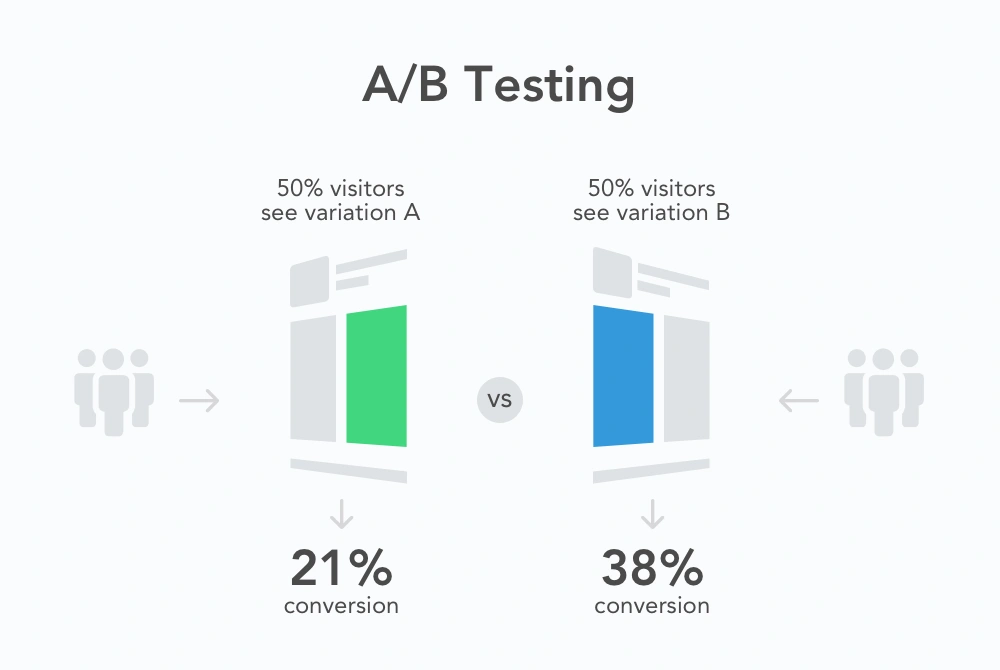
A. A/B Testing involves comparing two versions of a landing page to determine which one performs better based on target customer preferences. By implementing insights gained from A/B Testing, you can optimize conversion rates.
Why should you use A/B Testing in performance marketing? The first step in an effective marketing campaign is setting high-level goals that serve as benchmarks for evaluating the campaign. Typically, businesses aim to drive more traffic to their websites.
Experienced marketers know the importance of using analytical tools to evaluate website performance. However, even if a website regularly receives high traffic, if it doesnt lead to conversions, you might be missing something essential. A/B Testing provides valuable insights that can help prevent costly mistakes by leveraging the traffic effectively.
For example, before launching a display ad campaign that directs customers to a product page on your website, conducting A/B Testing on that product page can offer insights that can be implemented. This way, marketers can avoid wasting money on ads that dont generate profits and instead focus on converting visitors into buyers.
In summary, A/B Testing can help maximize ROI, reduce costs, and generate high-quality leads.
Data Analysis and Utilization
Collecting and analyzing data from various digital sources to gain insights into your marketing strategy is essential for any performance marketer. By fully utilizing digital marketing analytics tools, marketers can minimize bounce rates, create personalized experiences, and generate high-quality leads.
Data analysis helps eliminate guesswork in marketing strategies and maximizes value from a companys budget, thereby improving business efficiency. Data comes from various sources, and if a company lacks a pool of skilled professionals to use this data effectively, it can become a burden.
The more sophisticated the data analysis techniques used, the better a company can understand the market and its customers. This understanding leads to the development of effective strategies, more personalized customer interactions, and, ultimately, increased revenue.
Overcoming Performance Marketing Pitfalls
In conclusion, the failures in performance marketing often stem from a lack of understanding of the customer, as well as a lack of patience and persistence.
To overcome these challenges, clear goal setting, precise targeting based on customer insights, data-driven decision-making, and a persistent approach are necessary.
Performance marketing is a dynamic and ever-evolving field, and failures can occur in any business. However, it is crucial to learn from these failures, continuously experiment with strategies, and accumulate successes to improve marketing efforts.
By addressing the common causes of performance marketing pitfalls and implementing effective solutions, businesses can increase their chances of success and achieve their marketing goals. Marketers must always remember that marketing is an ongoing process of experimentation, optimization, and improvement.
Keyword strategy is crucial for the success of both organic and paid search campaigns. Deciding which primary keywords to target for advertising and how to optimize for organic search results through SEO are key factors that can determine the success of a campaign.
However, creating a strategy for every possible keyword is nearly impossible. Instead, we need to categorize keywords based on their characteristics, search intent, and search volume, and then develop targeted strategies for each category.
Search engines continuously analyze content across the internet to provide users with the best possible search results. They keep track of nearly all content on every website and webpage in real-time.
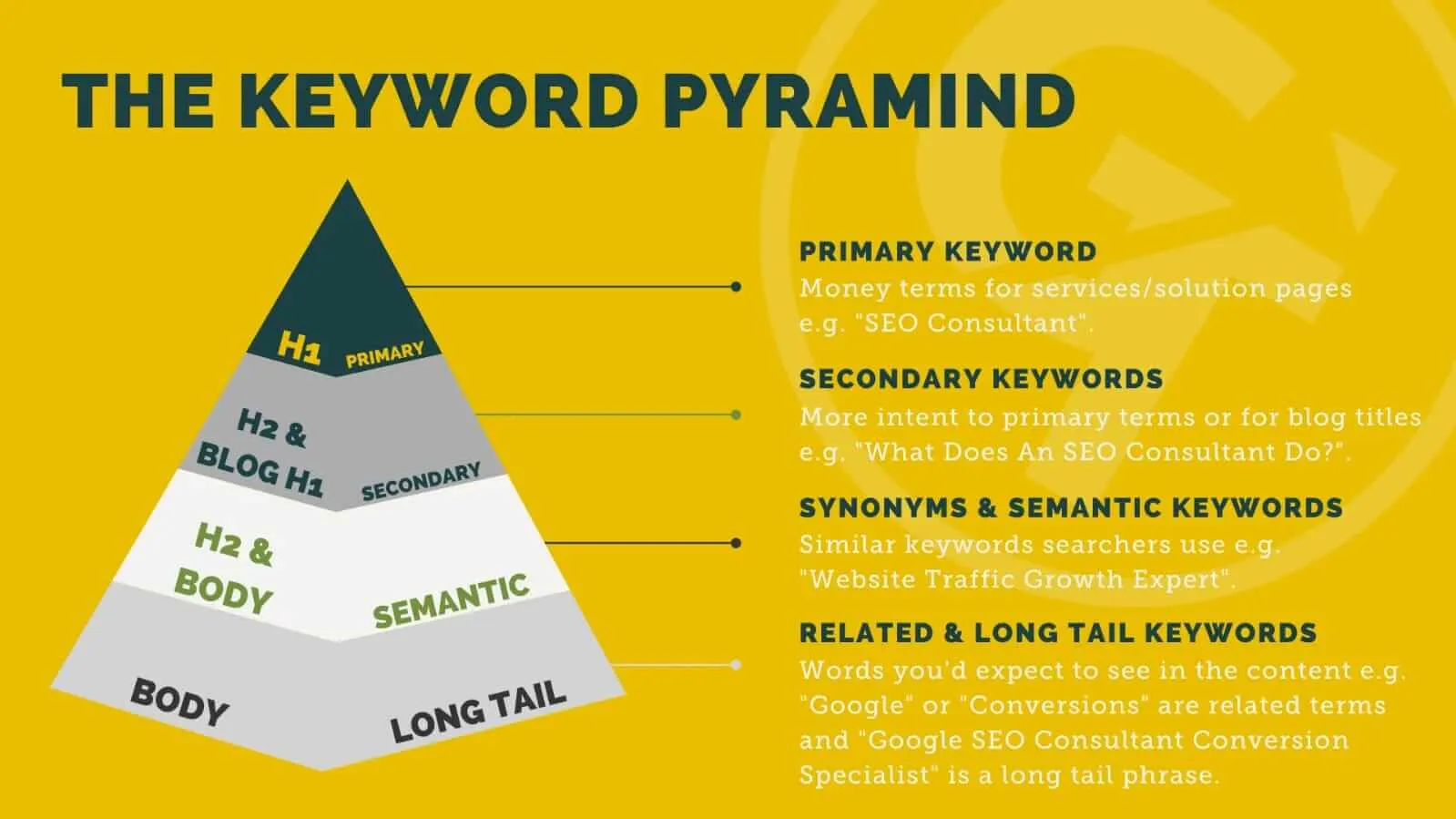
From an SEO perspective, a primary keyword, also known as a focus keyphrase, is the main term or phrase that a webpage is expected to rank for in search engine results.
In essence, a primary keyword is the main keyword that the page is optimized for. Typically, primary keywords have high search volumes and, if they rank well in the SERPs, can drive significant organic traffic.
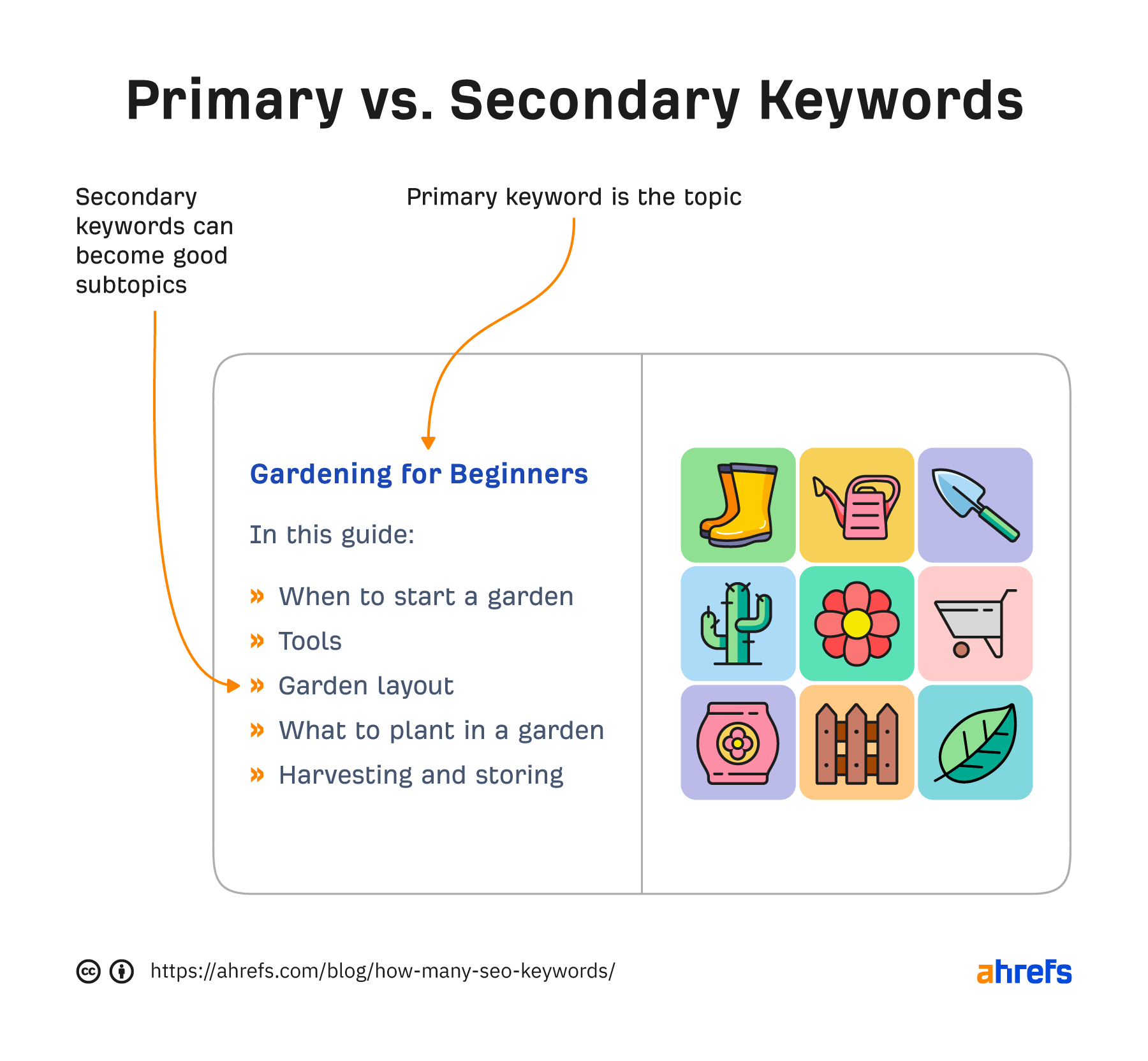
On the other hand, secondary keywords add context, value, and depth to the content. These are more closely related to the search intent. Secondary keywords include all keywords that are closely related to the primary keyword being targeted on a page. Synonyms, subtopics, and long-tail keywords can all be considered secondary keywords.
Including secondary keywords in subheaders and body text allows you to cover various aspects of a topic, helping Google better understand the content of the page.
From a performance marketing perspective, primary keywords are high-volume terms directly connected to your product or service, often with high CPC and intense competition.
In contrast, secondary keywords usually have lower search volumes, are less directly related to your product, or consist of long-tail keywords made up of two or more words. These generally have lower CPCs and face slightly less competition than primary keywords.
Primary Keywords vs. Secondary Keywords
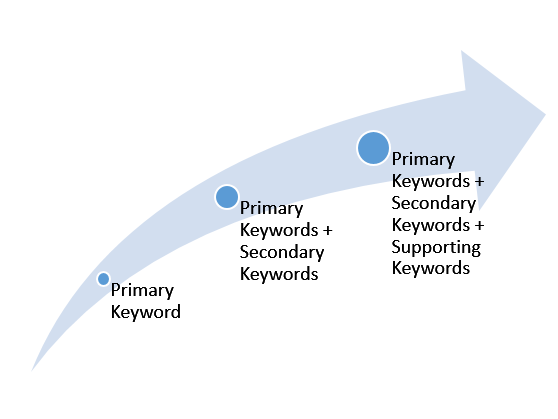
The relationship between primary and secondary keywords
The relationship between primary and secondary keywords starts with the primary keyword, then expands to include secondary keywords, and finally incorporates even more specific secondary keywords. (Source: Understanding On-Page Search Engine Optimization – SERPninja)
Primary Keywords as the Core of Content Marketing
Primary keywords are the cornerstone of content marketing. For instance, if your company sells yoga clothes, yoga clothes might be your primary keyword. This is the term that best represents your market and is also the most frequently searched term related to your business. Therefore, the most crucial aspect of content marketing is to choose the right primary keyword.
Secondary keywords, while related to the primary keyword, are more specific. For example, secondary keywords for yoga clothes could include womens yoga clothes, short-sleeve yoga clothes, yoga clothes prices, recommended yoga clothes, and yoga clothes brands. These more specific terms are easier to rank for in search engines and often have lower CPCs and less competition in search ads.
Why are Secondary Keywords as Important as Primary Keywords?
Why should you use secondary keywords in content marketing? If you create content targeting high-volume keywords and rank well, you will attract a lot of organic traffic, which seems great for content performance. However, secondary keywords play an equally important role.
For example, imagine that a company writes a high-quality blog article on IT technology, including explanations of technical terms and real-life examples. However, upon analyzing the incoming audience, they find that the article attracted as many students studying the subject as it did industry decision-makers and engineers. While it succeeded in ranking well for a high-volume primary keyword, it also attracted traffic from students who were primarily interested in learning, not buying.
Although organic traffic is generally beneficial, its more valuable when it leads to conversions. This relates to search intent. When people search for solutions to problems, they use more specific terms. Returning to the yoga clothes example, someone searching for yoga clothes might just be curious about their appearance, but someone searching for short-sleeve yoga clothes prices likely has a clear purchasing intent.
Thus, if you only focus on a primary keyword strategy, you may miss out on potential customers with a higher likelihood of conversion. By effectively utilizing secondary keywords, you can attract a more diverse audience, which can significantly improve performance.
Lastly, primary and secondary keywords are closely linked and essential components of your strategy. Primary keywords represent the core of your market, while secondary keywords help capture search intent and attract a broader range of users. By effectively setting and using primary and secondary keywords in content marketing, you can build a more successful marketing strategy.
How to Choose Effective Primary Keywords
When selecting primary keywords, consider four key factors:
Search Volume
High search volume keywords can generate more traffic for your website. Monthly search volume indicates how often users search for a term, showing the popularity of that topic.
Properly ranking your webpage for a keyword can increase its visibility. Low search volume keywords might have less competition, but they also offer fewer opportunities to appear in search results. Finding a balance is essential.
Keyword Difficulty
Choosing a primary keyword with an acceptable level of difficulty maximizes your chances of appearing in search results. Keyword difficulty is often assessed based on the quality of content already ranking for that keyword and the number and quality of backlinks pointing to those pages and domains.
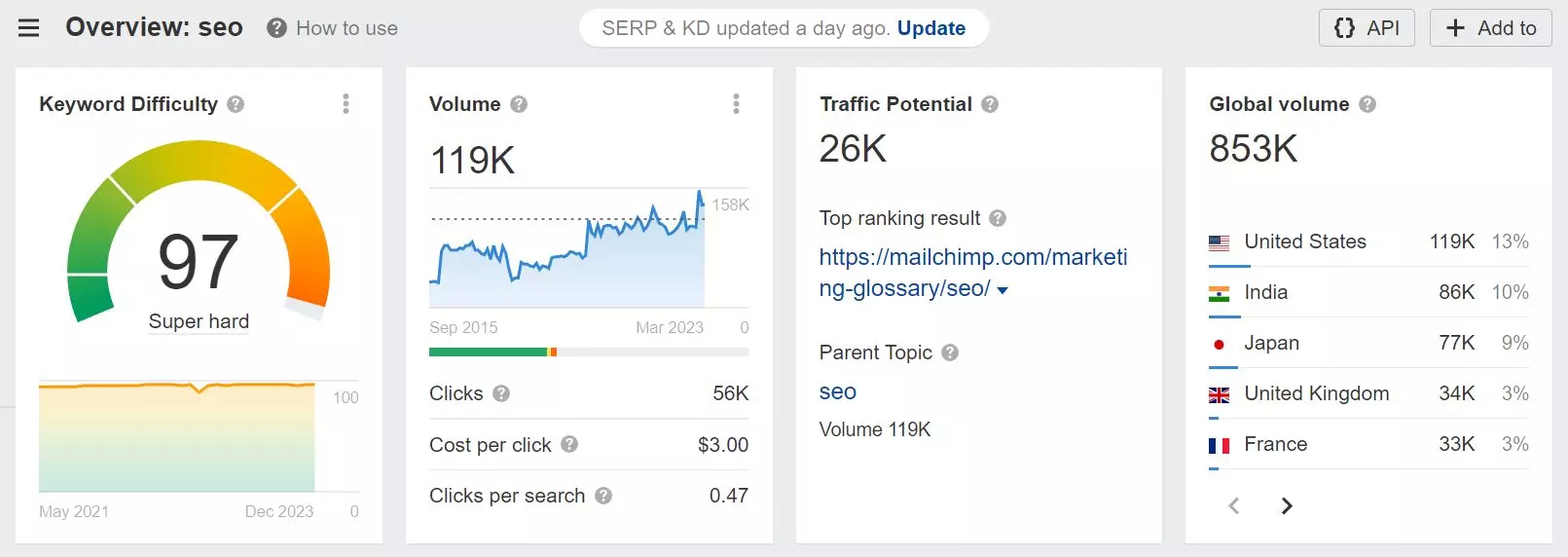
For example, let’s examine the keyword SEO using Ahrefs Keyword Explorer.
An overview of the keyword “SEO” through Ahrefs’ Keyword Explorer
The keyword has a monthly search volume of 119,000 with 56,000 clicks, especially in markets like the U.S., where Google dominates. This high volume explains why English-language documents often rank high even on Korean Google for SEO. The keyword difficulty is also very high due to intense competition.
Relevance to Your Target
To use keywords correctly, they must be highly relevant to your business. Well-chosen keywords help your website or blog rank high in search engines and reach more potential customers. If your primary or secondary keywords aren’t relevant to your business, its difficult to achieve high rankings. Keywords used in your website or blog posts must align with the content. If they dont, visitors might leave disappointed, reducing your site traffic.
Regularly reviewing and updating your keywords to match the latest trends is also crucial. As the business environment constantly changes, consistent review is needed to select the right keywords. Additionally, leveraging emerging keywords can help reach more customers.
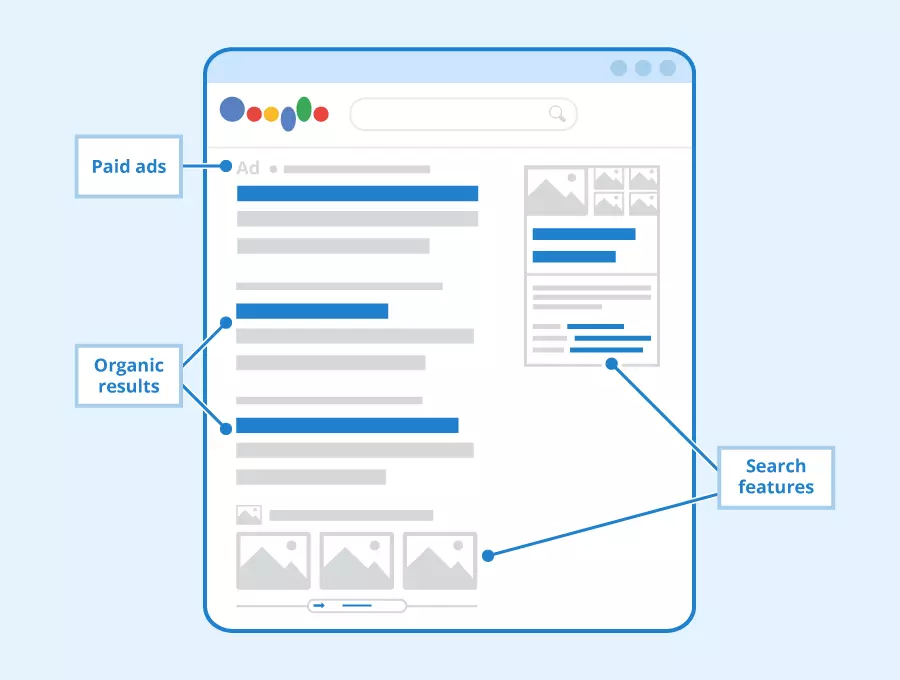
When creating content that includes a primary keyword, first ensure it matches the searcher’s intent and expectations. SERP (Search Engine Results Page) refers to the page displayed when users enter a keyword into a search engine. It lists various websites that help users find the information they seek.
Understanding search intent is vital for both content marketing and SEO. It helps in creating better SEO strategies and producing more relevant content that attracts more visitors. Its not enough to aim for high rankings; content must also align with the specific keywords users are searching for.
For instance, a search for travel destination recommendations might show top-ranking travel websites, but changing the search to overseas travel recommendations could yield different results. Understanding and selecting keywords based on search intent is a crucial aspect of SEO and content marketing.
How to Find Secondary Keywords
Autocomplete Suggestions
Even if secondary keywords have lower search volumes than primary keywords, they can be highly effective in targeting specific audiences.
For example, when searching for B2B marketing, autocomplete suggestions reveal related secondary keywords. If B2B marketing is the primary keyword, suggestions like [B2B marketing strategy], [B2B marketing trends 2024], and [B2B marketing meaning] become secondary keywords.
Related and Additional Searches
Secondary keywords can also be identified through related and additional searches displayed on Google.
Synonym Searches
inding synonyms or related terms for your primary keyword involves strategic thinking, research tools, and an understanding of the keyword’s context.
To discover related secondary keywords, follow these steps:
Clearly define your primary keyword.Understand its core meaning and context.
Consider variations and potential synonyms.
Use a dictionary to find alternative terms.
Identify long-tail keywords that are specific variations, often including synonyms.
Pay attention to language nuances and regional differences.
Explore forums, social media, and user-generated content related to your niche to understand the language and terms your audience uses.
Read industry publications and authoritative content to identify commonly used keywords and synonyms.
Gather feedback from your audience through surveys or reviews to identify additional keywords and synonyms.
Tools like Google Keyword Planner, SEMrush, Ahrefs, or Ubersuggest can be useful for finding synonyms, variations, and commonly used terms.
How to Optimize Content with Primary Keywords and Secondary Keywords (On-page SEO)
Even if you find the perfect primary keyword, it wont rank well unless its integrated effectively into your content. To gain organic traffic, you need to create content based on search intent.
In this section, well explain how to optimize content using Technical SEO or On-page SEO:
Title Tags: Include the primary keyword in the title to make the topic clear to both users and search engines. Aim to place the keyword at the beginning of the title.
First 100 Words: Use the primary keyword at least once in the first 100 words of your content to clarify the topic.
H1, H2, H3 Tags: Include primary keywords in various headers to structure your content and build a hierarchy.
Meta Description: Use primary keywords in the meta description to encourage users to click on your page when it appears in SERPs.
Alt Text: Include primary keywords in the alt text of images to improve accessibility and rank higher in image search results.
Video Content: Add the primary keyword to the video title, description, and tags to improve visibility on video search platforms.
Conclusion: Primary Keywords and Secondary Keywords are Key Elements in Marketing Strategy
In conclusion, appropriately using primary and secondary keywords is crucial for content marketing, SEO, performance marketing, and expanding website traffic. This requires careful and step-by-step planning.
First, choose the appropriate primary keyword and then find relevant secondary keywords based on it. Create high-quality content based on these keywords and incorporate them into your marketing strategy.
By doing this, you can achieve higher rankings in search engines, allowing more people to access your website. Therefore, continuous analysis and proactive management, including keeping up with the latest trends, are necessary.
Ultimately, the effective use of primary and secondary keywords is an essential requirement for successful online business operations.