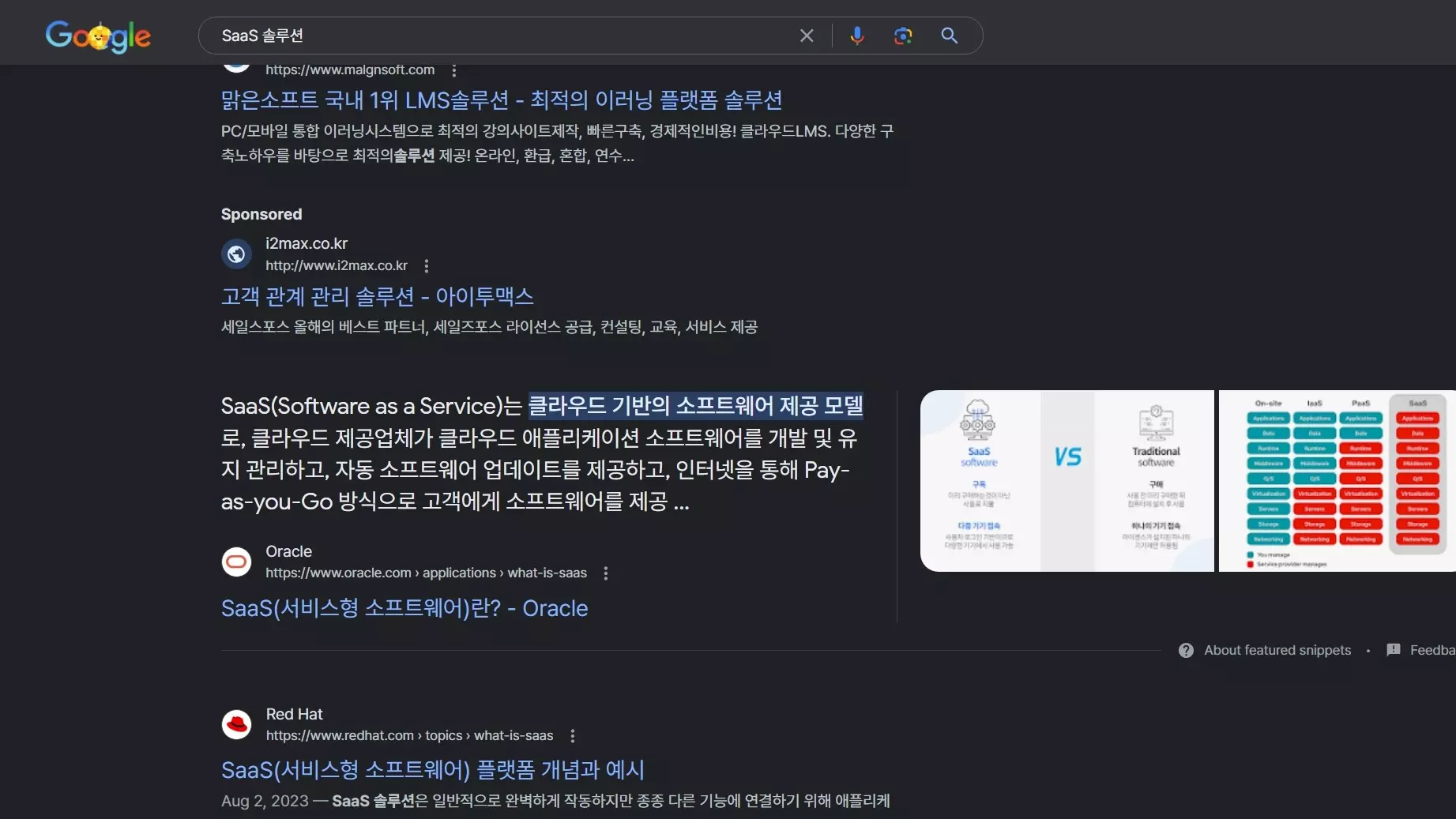
First, let’s clarify that no SEO agency, including Growth Marketing Agency, should guarantee SEO services or claim to guarantee rankings on Naver, Google, or any other search engines. It’s impossible for anyone to guarantee natural search rankings on these platforms.
No SEO agency can control how Google or Naver ranks websites. Even if someone worked as a developer responsible for the search algorithms at these companies, they could never fully understand every aspect of it. This is because the algorithms have been adjusted and refined by many people over a long period, making it impossible for one person to have complete knowledge of them.
To respond to changes in search algorithms, SEO agencies like ours take a reverse engineering approach. We analyze the changed search results, estimate the new algorithm, and do our best to optimize your website’s ranking on both Google and Naver.
Agencies that guarantee high rankings without upfront fees are likely engaging in unethical practices (like Black Hat SEO) or promising visible results that have nothing to do with the performance you expect.
Read Google and Navers official stances on SEO agency contracts that claim to “guarantee rankings” and be cautious.
If you’re wondering how to choose a good SEO agency, you can refer to our guide on selecting the right SEO agency.
What to Expect from SEO Agencies Offering Guaranteed Services
SEO agencies that offer guaranteed services usually include the following:
Guarantees for rankings on very easy keywords
Bait-and-switch tactics using paid search (keyword advertising)
Outsourced SEO services
Poor-quality copywriting
Risky backlink-building techniques
Sales teams that are better at consulting than delivering results
Focusing solely on the quantity of low-quality links
Automated SEO packages
Offering the same service to all clients
Other deceptive sales strategies
The Difference Between SEO and Paid Search
Let’s look at this in more detail. When you search for something on Google or Naver, you’ll see both organic search results and paid search results.
Paid search results appear at the top of the page, labeled as “Sponsored” or “AD.”
Google Ads / Naver Ads
These are ads purchased through Google Ads or Naver Ads to promote or sell a companys products and services. When a user clicks on one of these ads, they are taken to the business’s website.
Businesses pay Google or Naver each time a user clicks on their ad, a model known as Cost Per Click (CPC). The cost can range from as low as 100 KRW per click to over 100,000 KRW, depending on the competitiveness of the keyword in the industry.
The search engine’s algorithm determines the order of ads in the paid section. This algorithm is based on the amount the business is willing to pay for the ad and the “Quality Score” of the website.
How Do Google and Naver Determine Website Rankings?
To achieve a high rank in organic search results, Google and Naver must consider your website an authority on the searched keywords. The more general and competitive the keyword, the harder it is to rank high.
For example, “Intellectual Property Lawyer” is easier to rank for than simply “Lawyer.” While search engines dont disclose exactly how their algorithms work, industry experts agree that the following factors are crucial:
The number and quality of inbound links
The use of keywords in the website’s titles, headings, and content
The quantity and freshness of content
Website speed and usability
Online reviews and business reputation
Mentions on social media
Other factors such as site structure and code organization
For more information on how to achieve high rankings, check out Growth Marketing Agency’s guide to improving search rankings.
Are Conditional Guarantee Contracts from SEO Agencies Reliable?
First, lets briefly explain what a conditional guarantee contract is. Its a contract between the service provider and the client, where the provider guarantees a specific result, and the client receives that result. If the promised outcome isnt achieved, the client is entitled to a refund.
Why do SEO agencies recommend conditional guarantee contracts? It’s to secure their revenue.
Many companies choose SEO agencies to achieve the goal of ranking high on search engines like Naver and Google. However, if they dont achieve this goal, they often end up paying without seeing results. In such cases, a conditional guarantee contract may seem like a safer option since the client wont have to pay unless the service is successful.
However, you need to be careful when choosing an agency offering such a contract. Some agencies exploit these contracts by providing results that only seem impressive on the surface but don’t actually meet the clients goals. These contracts are often designed to shift responsibility away from the agency rather than truly benefiting the client.
Therefore, its crucial to verify if the agency is trustworthy and if the contract is properly drafted.
In the fresh food industry, for example, the “100% refund policy” was a concern for potential abuse. However, industry insiders noted that the percentage of consumers who actually requested refunds was very low. Emphasizing a 100% refund policy helped to build an image of a trustworthy company. (Source: “? ??? 100% ??”?? ??? ????? ??? : ??? ??)
As online market competition intensifies, companies must choose an SEO agency to attract more customers on platforms like Naver and Google. However, its important to ensure that the agency is trustworthy and that the contract is well-drafted.
The services provided by an SEO agency can significantly contribute to your company’s growth and development, so make your choice carefully to achieve the best results.
Growth Marketing Agency Works Differently from Other SEO Agencies
In conclusion, reputable SEO agencies cannot and should not guarantee any specific rankings on Naver or Google. Unfortunately, theres no “magic wand” for achieving top rankings.
At Growth Marketing Agency, we dont make unreliable promises of success. Instead, we stay updated on search algorithms and continuously research ways to improve your website’s ranking, consistently delivering results.
The 369 vacation system at Growth Marketing Agency is a policy where employees are required to take a three-day vacation once every quarter.
You may have heard of the term “3, 6, 9.” It refers to the feeling employees often have at the 3-month, 6-month, and 9-month marks of wanting to quit their jobs.
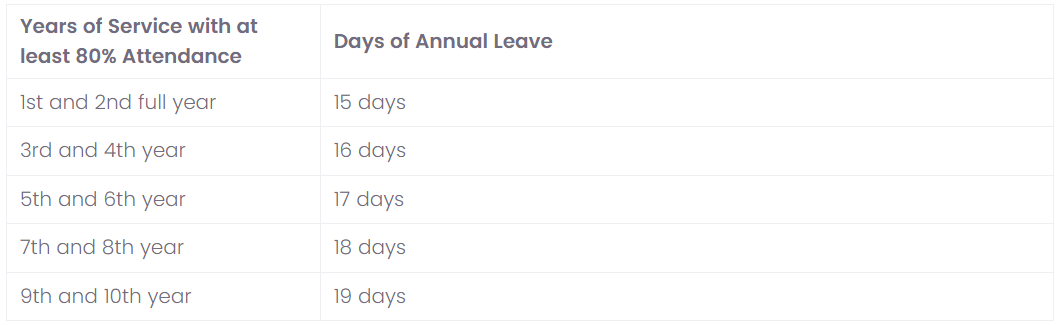
In addition to providing the 369 vacation, Growth Marketing Agency also adheres to the Labor Standards Act, granting annual leave based on the employee’s years of service. As long as it doesnt interfere with work, employees can take their annual leave whenever they want.
However, according to the Labor Standards Act, employees who have been with the company for less than a year are not entitled to annual leave by default, and they can only use one day of leave for every full month worked.
At Growth Marketing Agency, this law is only applied to employees in their first year of service, meaning that employees hired this year can start using their annual leave from the following year.
Of course, during the first year, employees are still granted one day of annual leave for each full month worked. For example, an employee who joined in May can use 7 days of annual leave by the end of the year, while an employee who joined in September can use 3 days.
In addition to annual leave, Growth Marketing Agency offers a Re-fresh 369 vacation.
As mentioned earlier, the “3, 6, 9” refers to the urge to quit at the 3-month, 6-month, and 9-month marks. The Re-fresh vacation system at Growth Marketing Agency is designed to combat this by requiring employees to take a three-day vacation once every quarterMarch, June, September, and Decemberwhether they want to or not. This mandatory break is scheduled just when employees might be feeling most worn out from continuous work, so theres no need to feel guilty about taking time off.
How Does the 369 Vacation System Work in Practice?
The Re-fresh vacation allows employees to take three days off every quarter. Combined with annual leave, national holidays, and other public holidays, the actual working days in a year are significantly reduced. To balance this, one day of annual leave is deducted for every three days of Re-fresh vacation taken. Is this difficult to calculate? Lets make it simple. A second-year employee can take 12 days off in total using the Re-fresh vacation (3 days per quarter). Out of their 15 days of annual leave, 4 days are deducted to cover the Re-fresh vacation, leaving them with 11 days of annual leave. Therefore, they end up with a total of 12 + (15-4) = 23 days off.
Re-fresh vacations are scheduled in advance every November 30th for the following year. Employees coordinate with each other to ensure that their chosen vacation periods do not disrupt the workflow. Not sure if a particular day next year will be a holiday? At Growth Marketing Agency, if its marked as a red day on the Naver calendar, its a day off. No need to worry about legal holidays, substitute holidays, or temporary holidaysif its red on the calendar, its a holiday.
What If You Plan to Travel Abroad During Your 369 Vacation?
You can plan your Re-fresh vacation at the end of November and combine it with weekends and annual leave for a longer break. For instance, you could take off from Saturday (weekend) to Sunday (weekend), followed by Monday, Tuesday, and Wednesday (Re-fresh vacation), and Thursday and Friday (annual leave), giving you 8 nights and 9 days for an overseas trip.
As long as it doesnt interfere with your work, you can combine your Re-fresh vacation with weekends, public holidays, and annual leave to enjoy a 19-day vacation.
Because employees can freely choose their vacation periods, there is no separate summer vacation period. If you find that summer vacations in July and August are too expensive, you can take your 3rd quarter Re-fresh vacation in September. Conversely, if you prefer a summer vacation, you can take time off during the peak season in July or early August. If youre into skiing or snowboarding, you can save up your annual leave and take it during the ski season while only using your Re-fresh vacation days.
The 369 Vacation Isnt Just for Overseas TravelIts Also for Simple Rest
However, it is forbidden to come to work instead of taking your Re-fresh 369 vacation!
Marketing work involves countless variables and uncertainties that can overload the brain. We believe that taking time off to recharge is crucial for maintaining work efficiency. Continuous work without breaks can actually lead to problems.
If you really want to do something productive during your vacation, why not go to the library and read a book youve been meaning to read or study a foreign language youve been wanting to learn?
Michelle Bonam, Vice President of Organizational Effectiveness at Ceridian, said, “To maintain overall health, you need time to recharge, time to disconnect, and you can only truly achieve this if you disconnect.”
We understand the desire to work hard. But if one person skips their Re-fresh 369 vacation, others might feel pressured to work even when they are supposed to be on vacation. So even if you want to work, please take your vacation and enjoy it, so others can feel comfortable doing the same. ?
Preparing for Your Re-fresh 369 Vacation
Thorough Handover
To avoid any gaps in work while youre on vacation, its essential to have a thorough handover process! If the handover isnt smooth enough, you might end up having to deal with work-related calls during your Re-fresh period.
There could also be issues if team members who need to hand over work to each other end up taking vacations at the same time. Therefore, new employees are given priority when selecting their vacation schedules.
The Evolution of the 369 Vacation
Until 2020, the previous Re-fresh system allowed all employees to take a week off (Monday to Friday) during certain periods: Lunar New Year, the companys founding anniversary (May 18th), Chuseok, and Christmas. During these periods, managers above the team leader level would take turns being on duty, while they would take their Re-fresh vacations at a separate time.
However, during the operation of this system, there were issues with managers being overloaded with work during the Re-fresh period. Therefore, starting in 2021, the system was changed to the current format, where employees take a 3-day Re-fresh vacation once per quarter.
What is Facebook ASC (Advantage Shopping Campaign)?
The Advantage+ Shopping Campaign is part of Meta’s Advantage+ product line, designed to reduce setup time and increase efficiency by leveraging machine learning to reach valuable targets. It is the most effective solution for performance-focused advertisers aiming to boost online sales.
Facebook’s ASC Campaign is a shopping ad product aimed at facilitating product purchases on various Meta platforms, including Facebook and Instagram.
Meta, known for its world-class machine learning capabilities in advertising, automatically handles ad placements, targeting, and product recommendations. This minimizes the workload for the account manager while maximizing campaign performance.
Given the lengthy name of the Facebook Advantage+ Shopping Campaign, industry insiders often refer to it as the “Facebook ASC” or “Meta ASC” campaign.
Why is the Facebook ASC Campaign Important? (Effectiveness)
Explosive Conversion Rates and ROAS (Return on Ad Spend)
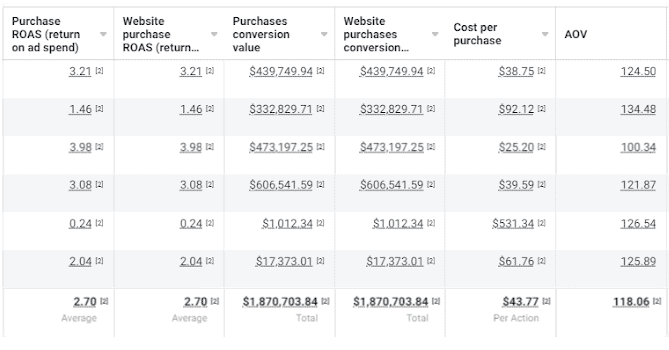
The screenshot above shows the Facebook ad manager screen for a client of the company. This single image can explain the importance of the Facebook ASC campaign, which is clear due to its outstanding performance. Particularly in the competitive e-commerce sector, the campaign achieved an ROAS of 4,244%, making its effectiveness indisputable.
Increased Overall Sales and Improved ROI
Using the ASC campaign generates additional sales beyond what traditional marketing strategies would achieve. Instead of just maintaining the ROAS achieved by conventional strategies, ASC campaigns drive additional sales, increasing net profits. Why wouldn’t you run an ASC campaign if it could boost your net profits?
Our advertising goal isn’t just to generate a high ROAS; it’s to increase the company’s net profit. This is discussed in detail in our posts on advertising budget limits and the pitfalls of ROI and ROAS.
Reduction in Advertising Planning Resources
Another significant benefit of ASC campaigns is that, unlike other advertising campaigns that require continuous planning, testing, and targeting, once the strategy is set, you can operate the campaign with minimal planning resources. This makes it an extremely attractive option.
Case Studies of Facebook ASC Campaigns
At Growth Marketing Agency, we study the outcomes of ASC campaigns through actual case studies. We will share some examples from both our clients and foreign companies.
Client Case Study A
Among the five campaigns shown in the screenshot, the one with a 4,244% ROAS is an ASC campaign. The other campaigns, maintained for over two years, involved continuous A/B testing of ad creatives, targeting, and placements, requiring significant effort from the account manager.
Overwhelming ROAS Compared to Non-ASC Campaigns
Whats remarkable is that shortly after setting up the ASC campaign, it surpassed the performance of the other campaigns, achieving over 4,000% ROAS.
Even though the second to fourth campaigns were strong enough to be proud references, their performance pales in comparison to the ASC campaign.
We documented these results in a report, recommending the client allocate additional budget to continue the ASC campaign. As a result, the ASC campaign’s high ROAS was maintained consistently, even with seasonal fluctuations in overall sales volume.
Client As Product Price Range: 150,000 KRW to 180,000 KRW
Target CPS (Cost Per Sale): 40,000 KRW
Daily Budget: 10,000 KRW to 100,000 KRW per campaign
In October 2023, a performance marketing agency in the United States ran an ASC campaign for a company providing AI-related services. They compared this ASC campaign to a manually set up campaign with precise targeting under identical budget conditions.
ASC Campaign Outperforms Even with Less Favorable Ad Creatives
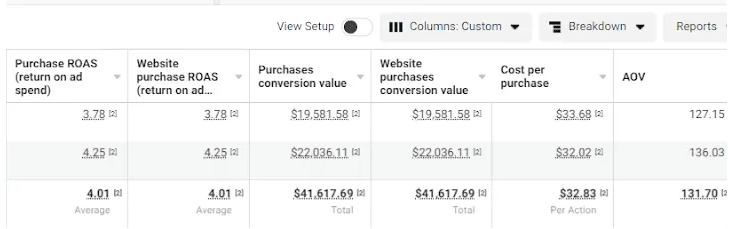
The ASC campaign recorded a 425% ROAS, outperforming the manually set campaign, which achieved 378% ROAS. In further testing during the BFCM (Black Friday & Cyber Monday) campaign, they excluded promotional offers from the ASC campaign while including them in the manual campaign.
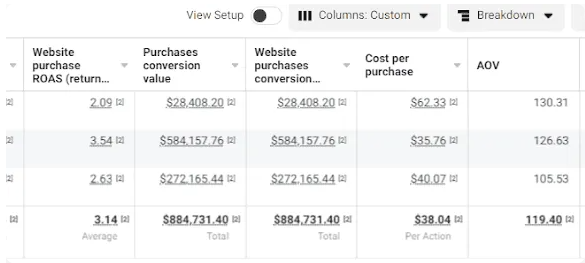
Ultimately, the ASC campaign recorded a 314% ROAS, while the manual campaign recorded 270% ROAS, leading the company to decide to continue running the ASC campaign permanently.
How Facebook ASC Campaigns Achieve Results
Machine Learning that Understands Consumers Better than Marketers
Its no exaggeration to say that Facebooks ad AI is among the best in the world. This powerful AI tracks consumer behavior and incorporates this data into ad settings.
For example, if a user searches for interior accessories on Google, visits a caf with a beautiful interior, and likes or comments on related posts on Instagram, the AI will display shopping ads featuring the interior accessories that the user is most likely to purchase.
While marketers should never stop trying to understand consumers, Metas machine learning already understands them better than humans and has surpassed human capabilities in adjusting ad settings based on this understanding.
Myths and Facts about Facebook ASC Campaigns
Is ASC Only Effective for Certain Companies?
No. In our experience, every company that we’ve worked with has been able to operate ASC campaigns, and we havent encountered a case where it wasnt possible. If ASC campaigns can’t be set up or are ineffective, its likely due to setup issues.
If Meta Pixels are not set up
If the Conversion API is not configured
If there are errors in the Meta Pixel or Conversion API setup
If data tracking and analysis are not performed accurately
It would be difficult to expect performance from an ASC campaign. If you think ASC setup is impossible, try setting it up with us. If its not feasible, theres no cost to you.
Cant Choose the Ad Placement?
The ASC campaign relies on Metas machine learning to decide on ad placements, target exposure, and creatives without human intervention, so its natural that you cant choose the placement.
Some people believe that Meta is pushing ASC to boost Facebook ad revenue because Facebook placements perform worse than Instagram. However, based on our experience, in most cases, the ASC campaign will outperform a standard campaign limited to Instagram.
Do You Need to Set a Daily Budget of at Least 150,000 KRW?
Incorrect. We have examples where setting a daily budget of around 20,000 KRW significantly improved ROAS. In one of our clients cases, which recorded a 4,244% ROAS, they achieved over 33 million KRW in purchase conversions with a budget of just 780,000 KRW over 28 days.
While a higher budget might be necessary for certain companies and products to achieve high performance, this isnt always the case.
Conclusion
Facebooks ASC Campaign (Advantage+ Shopping Campaign) is an excellent advertising product capable of delivering impressive results.
While not every company or product will see high performance with ASC campaigns, its essential to conduct meaningful tests to confirm the results.
However, remember that ASC campaigns should not replace existing campaigns but rather diversify campaign approaches and maximize sales.
We plan to share more case studies on ASC campaign management. ASC campaigns are particularly beneficial for small to mid-sized companies that cannot hire many specialized marketing staff, offering significant advantages. If you need help with ASC campaign setup, please get in touch with us.
In today’s B2B marketing landscape, website development and management are crucial elements. A well-crafted B2B website can serve as a billboard or brochure, showcasing a company’s expertise in the online market.
Potential clients often search online for service providers, and about 80% of people check websites during this process. Therefore, to ensure a company has a chance to succeed in the market, its website must be easily discoverable by customers.
To attract new visitors to your website, it’s essential to build solid content and carefully targeted strategies. Additionally, web and graphic design can influence visitors’ perceptions and help differentiate your business quickly and intuitively. Finally, usability across various devices, including mobile, should be considered.
This article will introduce methods for developing a successful B2B marketing website that fosters growth.
Successful B2B websites focus on providing value to potential customers through informative blog articles, case studies, or product demos. By building trust and demonstrating expertise, a B2B website can establish customer relationships that lead to long-term business partnerships.
Let’s delve into the specific roles of a B2B website:
Building Relationships with Customers A website can be used to build relationships with customers through blog posts, social media integration, and other interactive content. This can leave a lasting impression on potential customers and increase the likelihood of doing business together.
Educating Potential Customers A website can educate potential customers about your products, services, and industry expertise. This positions your company as a thought leader and helps build trust with potential clients.
Increasing Brand Awareness A consistent and integrated online presence can help increase brand awareness, which is crucial for acquiring new customers and growing your business.
Generating Leads and Conversions A website can capture leads through contact forms, subscription boxes, and other calls to action. This helps build a list of potential customers interested in your offerings.
Driving Sales In some cases, a website can be used to close sales. For example, if you sell SaaS products or e-commerce goods, you can allow customers to make purchases directly on your website.
Improving Search Engine Rankings A well-optimized website can improve search engine rankings, making it easier for potential customers to find your website when searching for relevant keywords.
Driving Traffic from Other Marketing Channels A website can be used to drive traffic from other marketing channels, such as social media, email marketing, and paid advertising, helping you reach more potential customers and amplify your marketing messages.
An inefficiently structured B2B website can significantly impact sales. Customers who cannot find the information they need on your website are likely to give up on learning about your company, leading to reduced engagement and business loss.
Additionally, poorly structured websites can negatively affect search engine optimization (SEO) and online visibility, making it harder for potential customers to find your website in the first place.
Ultimately, a poorly designed website can damage a company’s reputation and credibility. Potential customers may view a poorly designed website as unprofessional and may not take the company seriously, leading to a lack of trust.
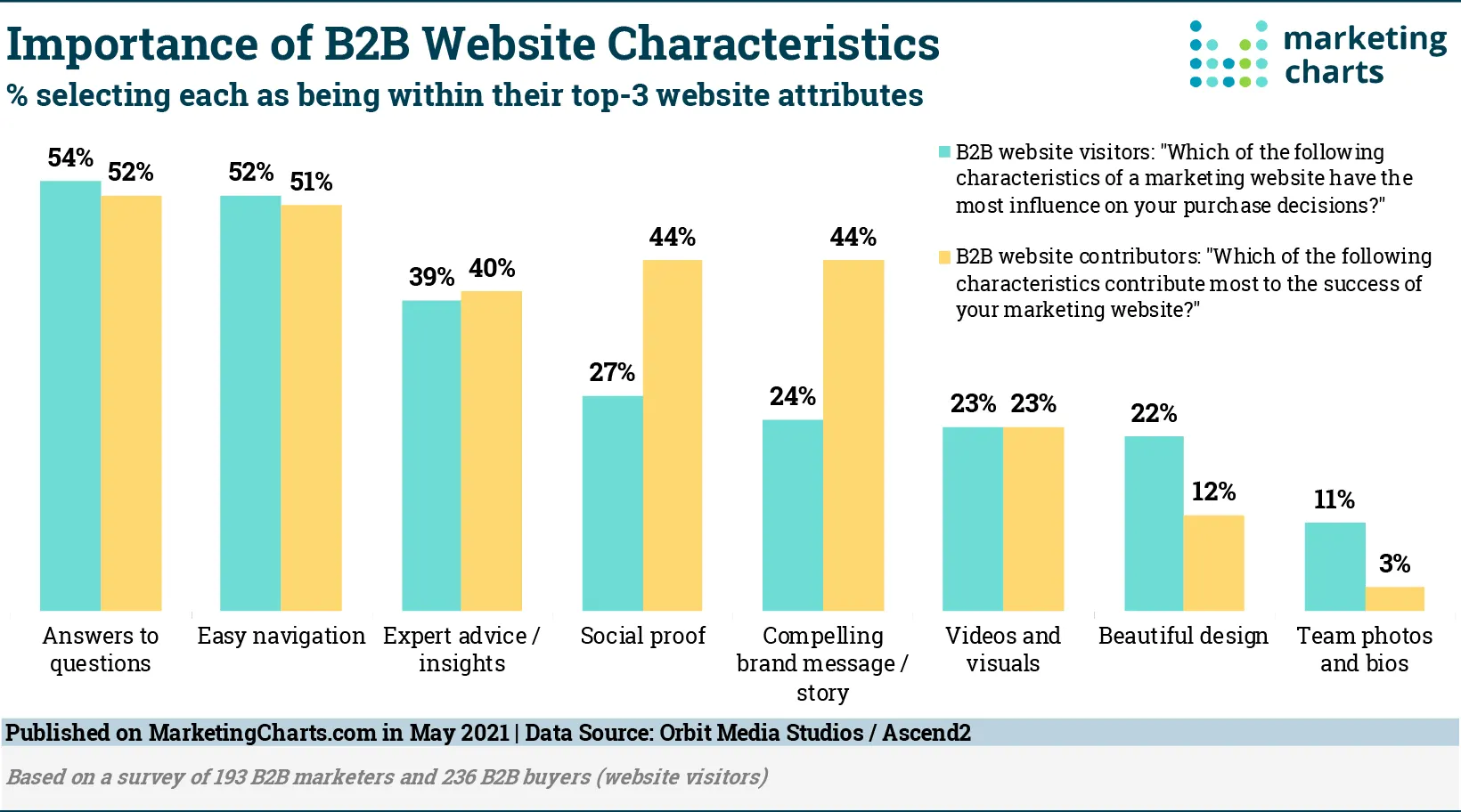
B2B decision-makers generally trust and favor well-structured, user-friendly websites. Therefore, building such a website is crucial for enhancing user experience, increasing conversion rates, and establishing yourself as a trustworthy industry leader.
Now that we understand the importance of a B2B website, creating a functional and aesthetically pleasing website is challenging, especially when trying to capture the attention of business decision-makers. B2B targets traditionally have more information than general consumers and tend to be short on time.
If your website is difficult to navigate, they will quickly move on to the next one. To capture their attention, your B2B website must be highly relevant and engaging enough to generate leads.
To achieve this, we at Growth Marketing Agency follow the steps outlined below when analyzing and developing a B2B website.
Market Research
Whether you’re just starting a website or planning a redesign, making informed decisions at every stage is crucial. Comprehensive market research is a prerequisite for this.
The purpose of running your business is likely to provide excellent products or services that meet the needs of a specific target audience. You probably aim to build a customer base, increase revenue, and expand your business.
To align your web design strategy with these goals, it’s essential to carefully review common objectives like the following:
Do you want your website to be a simple lead-generation tool, directing inquiries to your sales team? Or do you want it to guide B2B visitors through the entire sales cycle and convert them into potential customers? Answers to these questions will determine the amount and type of functionality required.
If your website is simply collecting consumer information for follow-up, you are less likely to encounter backend or infrastructure issues compared to an e-commerce site.
On the other hand, a sales-oriented website needs to be integrated with existing IT strategies and requires management of inventory, shipping, and other logistics.
Once you’ve identified all the website’s requirements, such as functions and pages, you can move on to the sitemap development stage, where each page and function is meticulously analyzed within the marketing funnel.
Goal-Oriented Processes
If you already have a website and are planning updates, it makes sense to hold off on creating an update list until you have an analysis report. By leveraging analysis, you can avoid wasting time on updates to pages and sections that performed well or weren’t directly related to your business goals.
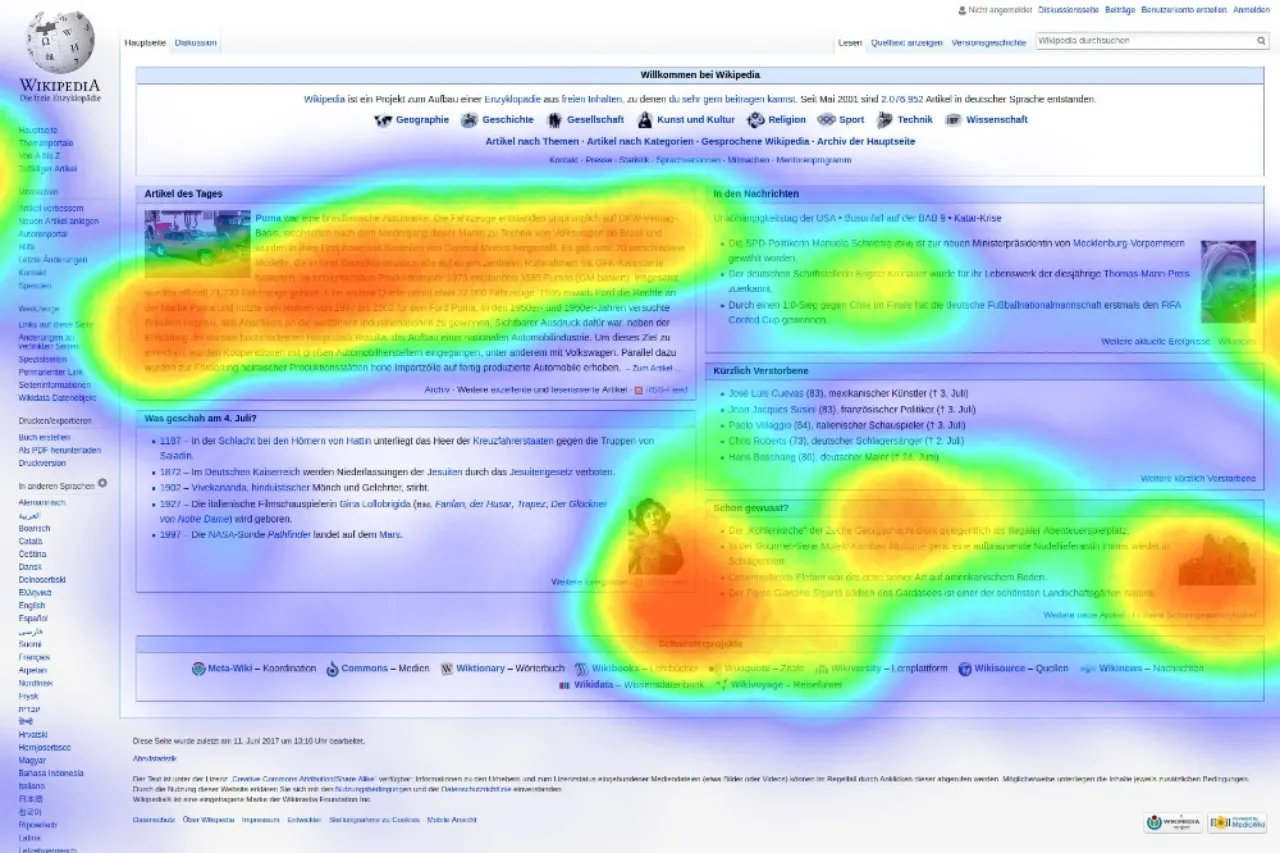
Similarly, if the data reveals high bounce rates or low engagement on specific pages, you can reprioritize those pages. Using real-time data, consider installing a “Heat map,” which visualizes the parts of a page that generate the most interaction and attract the most attention.
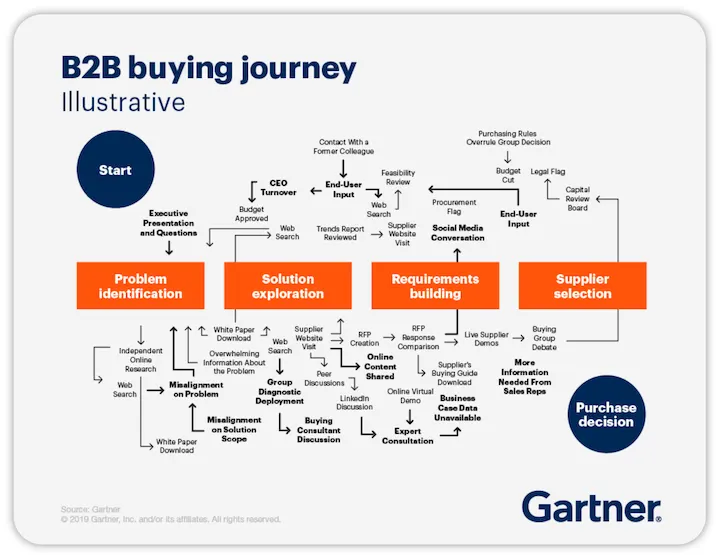
When building a website, it’s essential to define your marketing audience clearly. B2B customers are more cautious than general consumers and often make decisions that reflect the opinions of other key stakeholders.
In some cases, a customer may need approval from up to 10 colleagues before making a purchase decision. Therefore, a B2B website must be designed to meet the needs of various stakeholders.
Consider how those who need to get approval before taking action will evaluate your website. If the information is unconvincing or fails to distinguish your business from competitors, it’s unlikely that the first impression will be shared with your company’s decision-makers.
Your goal here is to create a concise environment that provides a clear and logical overview of your company’s services, how they differ from competitors, and what actions users can take to obtain more information. By creating a buyer persona targeting your ideal customer, you can ensure that your development goals remain focused on those seeking to maximize benefits through partnerships with your brand.
UI/UX, Content, SEO
Now it’s time to structure the layout of your website. Generally, less is more when it comes to web design. A website that allows customers to find the desired content or resources within three clicks is considered the most structured.
Are you planning to place “Contact Us” buttons and other CTAs throughout your website? However, in certain business models, building relationships with potential customers may be more important.
For example, resources such as expertise, experience, and testimonials fall into this category. Here are a few steps for developing a structured build strategy.
Prioritizing UX and UI
B2B customers are put off by websites that are difficult to navigate. They are more likely to browse your website from a desktop computer and may return multiple times via mobile or tablet.
If your website has slow image loading times or refreshes without reason, you may lose potential customers.
Therefore, it is crucial to prioritize key principles of user experience (UX) and user interface (UI).
In B2B marketing, however, UX is not just about creating a simple and clear site. Customers must be able to conveniently gather information, with a focus on creating a repeatable contract strategy that ensures continuity.
Crafting Core Content and SEO
High-quality content provides value to visitors and emphasizes your company’s expertise and reliability. As a result, visitors may become more interested in building a long-term relationship with your company rather than simply obtaining information.
Built upon this foundation, Search Engine Optimization (SEO) helps your website rank higher in search engines. This leads to more visibility in search results, which in turn results in more clicks and visits from potential customers.
Here is a simple SEO strategy to consider when developing a website:
Off-Page Strategy: Acquiring high-value backlinks and building brand authority
White Papers and Case Studies
Documents such as white papers, case studies, and testimonials are highly effective indicators in B2B marketing. They demonstrate that the company holds an authoritative position in the industry and that other consumers trust the company. This approach is suitable for products or services with a lengthy sales cycle or those that require significant investment.
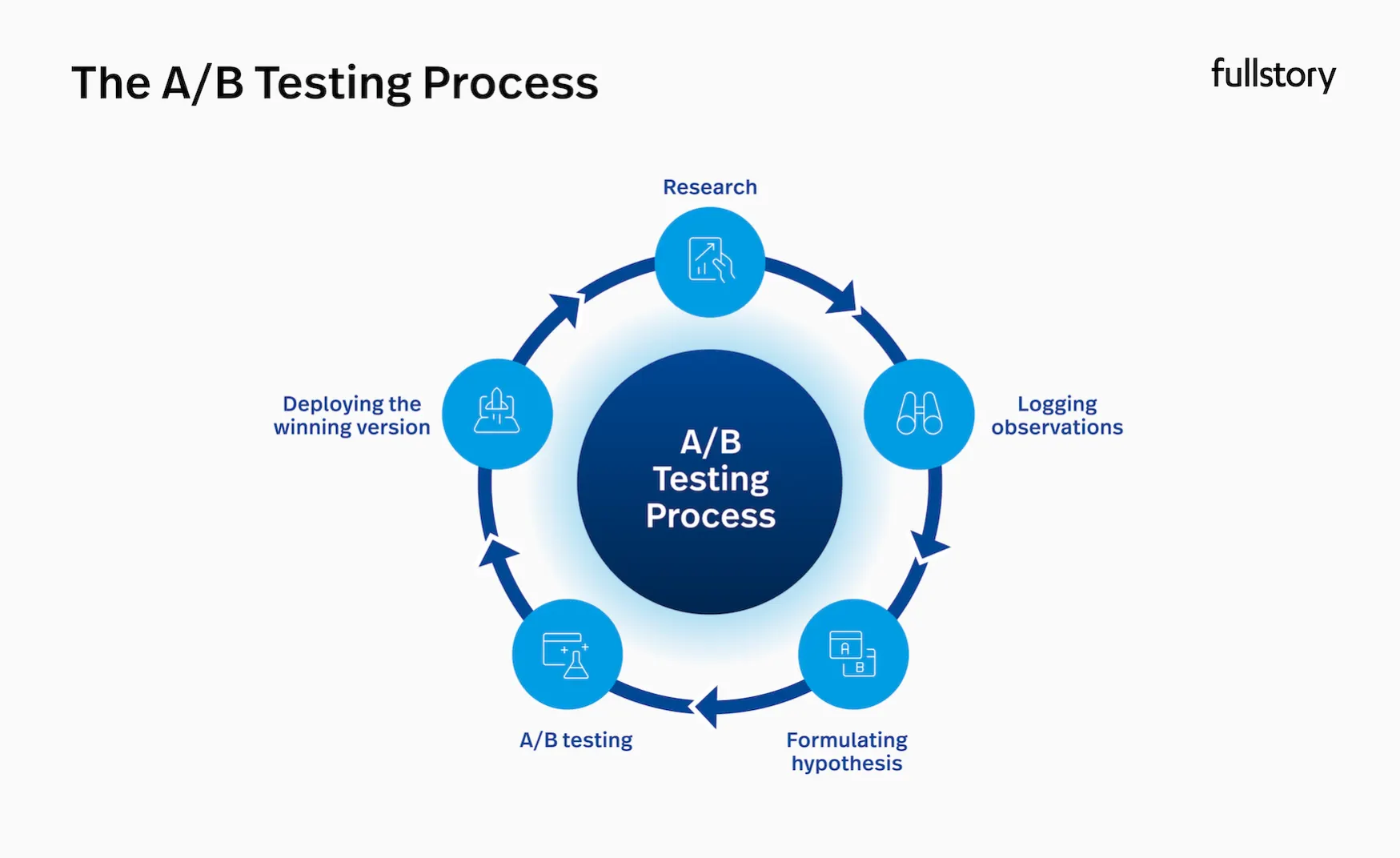
B2B websites and homepages play a crucial role in a company’s digital strategy, and their performance and efficiency significantly impact the company’s success. One of the most effective methods for optimizing such websites is A/B testing.
A/B testing is an experimental approach where users are presented with two different versions (A and B) to compare which version produces better results. This method can be applied to various elements, such as web page design, content, and functionality.
Because A/B testing is based on real user data, it is more objective and reliable than subjective judgment. Additionally, it helps identify which elements improve or hinder the user experience.
Optimized web pages increase customer engagement and conversion rates. Ultimately, experimenting in small steps before making significant changes reduces potential risks.
The A/B test implementation plan in the website development process includes:
Analyzing test results and drawing conclusions
Clearly defining the goal of the experiment
Establishing and prioritizing test hypotheses
Selecting and setting up test tools
Conducting A/B tests in stages
Conclusion
Your website serves as the primary source of information about your company and is a powerful marketing tool. Therefore, it is vital to develop your website with a well-planned strategy, ensuring that your online presence is optimized for growth and success.
These steps represent an overview of a B2B website development approach. However, each business has different goals, and careful planning, consideration of market research, target audience, UX/UI design, and content marketing strategies should be tailored to your specific needs.
By following these steps and continually optimizing and refining your website, you can build a strong online presence that drives growth, enhances credibility, and generates more business opportunities.
Marketing is often considered most challenging when it involves a keyword research process that is not too competitive and close to potential customers. To effectively secure actual leads, the keyword must not only be less competitive but also penetrate the wants of potential customers.
Here, a keyword refers to specific words or phrases that describe the core content or topic of a website, article, or advertisement.
Search engines cannot recognize all content on a web page, so they first look at keywords. Based on these keywords, they determine the relevance of a page to a user’s search query.
This article introduces the keyword research process and how to utilize it.
What is Keyword Research?
Definition of Keyword Research
Keyword research is a task performed for SEO (Search Engine Optimization). It involves finding the keywords potential customers use to search for our products or services and using this information to build a keyword strategy.
Without keyword research, you might miss popular keywords that target customers are already searching for or end up competing with large industry giants.
No matter how excellent your strategy is, it will be difficult to achieve good results if you face two major setbacks.
The Importance of Keywords
Keywords are crucial in SEO because they help search engines understand the content of a website. Search engines use complex algorithms to determine which websites are relevant to specific search terms. Therefore, creating content related to keywords improves the site’s ranking in search results.
Research shows that people generally do not look beyond the first page of search results. The more a site is exposed to higher search result rankings, the more traffic it will attract.
Keyword Research Process
Getting Started
Before beginning the keyword research process, we need to collect both our brand’s keywords and competitors’ keywords.
These keywords are the most commonly used when people search for our brand or competitors.
You can find these keywords through brainstorming, Google Keyword Planner, checking competitors websites and social media accounts.
Examples include:
[Brand] + @
[Product Name] + @
[Competitor Brand] + @
[Competitor Product Name] + @
Initially, start by gathering suggestive and related keywords based on the brand and competitor keywords you have collected.
Practical Application
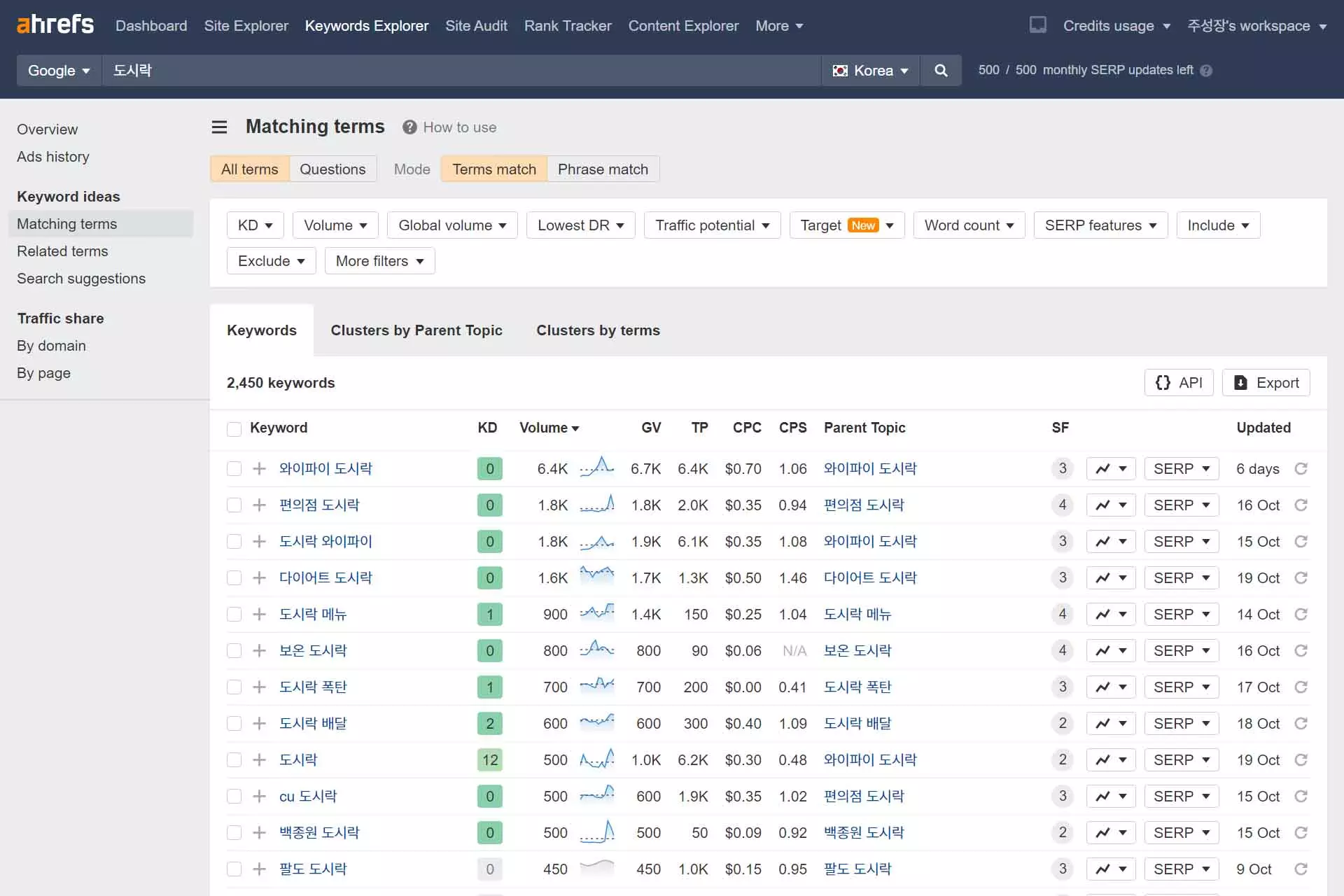
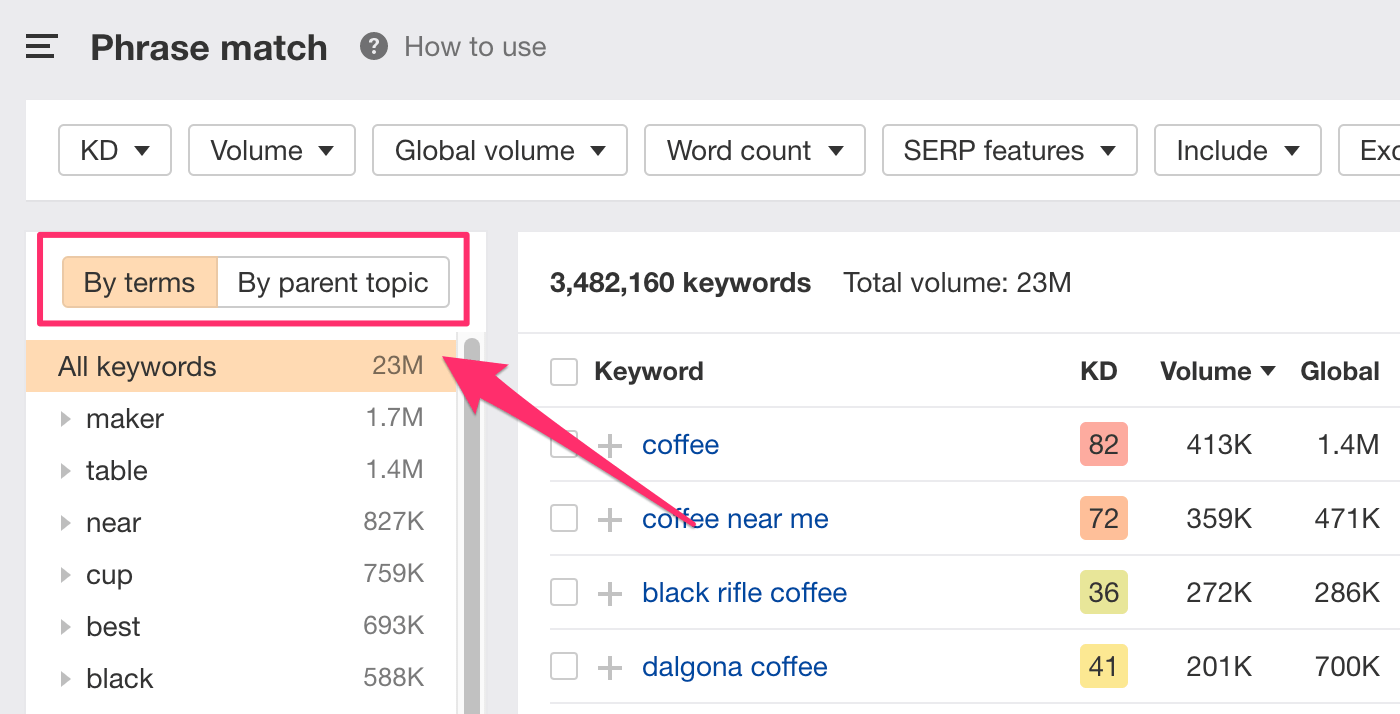
Using keyword research tools, you can get recommendations for related search terms based on the keywords you search. These keywords are sorted by volume, and you can understand the search intent behind them. Free tools like Naver’s keyword tool and Googles Keyword Planner, or paid tools like Ahrefs and Semrush, can be used.
By analyzing search queries from users searching for specific keywords, brands, or product names, you can gain insights into search intent.
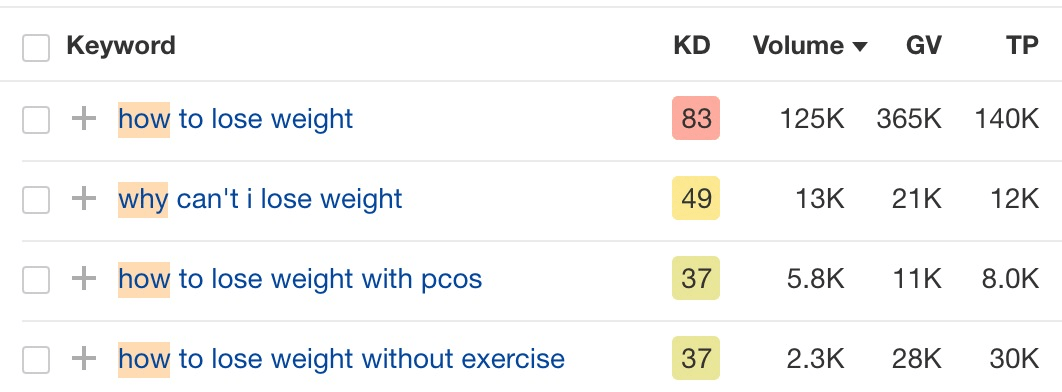
Informational queries are used by search users to gain more knowledge about a topic and often include words like how, what, why, tips, and ideas. Utilizing these informational queries with broad target keywords helps better understand user intent.
Brand Keywords
The second step is to collect non-brand keywords that do not include the brand.
For example, collect category keywords like functional cosmetics, phones with good camera performance, gift recommendations for people in their 20s, and restaurants for first meetings.
Most of the time in keyword research is spent on this task because it involves uncovering actual user wants.
This process helps marketers understand what factors consumers consider important in their purchase decisions.
To find search engine and related keywords, you can use keyword research tools like Google Keyword Planner, Ahrefs, and SEMrush. You can also use Google suggestions found at the bottom of search results pages.
After collecting a list of keywords, group them into categories. This helps understand the various types of keywords people use to search for information about brands, products, and industries.
You can group keywords based on the following criteria:
Topic: Product Keywords, Category Keywords, Industry Keywords
Competition: Highly Competitive Keywords, Medium Competition Keywords, Low Competition Keywords
After organizing the keywords, analyze them to identify which ones are most important for your business. Check monthly search volume, CPC information, ad competition, top URLs in search results, and format information for each keyword or topic.
Based on the analysis, prioritize keywords and focus on the ones that are most important for your business. You can create different keyword lists for each marketing campaign, such as for SEO, PPC, or social media campaigns.
Campaign Optimization
Based on keyword research results, you can develop campaign strategies for content, SEO, search ads, and more.
Marketers must decide whether to address each topic through content and SEO or to enter the competition with search ads. This process is called campaign optimization.
If the content on your operating website is already well-exposed in search results, there may be no need to run ads for that keyword.
Conversely, if you need to start marketing for keywords with high volume and conversion rates, and if your content isnt appearing favorably in search results, you should consider using search ads to compensate for the lack of organic traffic.
This highlights why content marketing and performance marketing are inseparable.
Gaining Target Insights Based on Keyword Research
Now that you understand the keyword research method, lets explore how to gain consumer insights based on it.
Through the keyword research process, we can generate lists of search keywords used by consumers in their purchase decision-making process. Additionally, we can check monthly search volumes, gender ratios, age distributions, and ad competition.
However, this direct information is not all the insights keyword research can reveal.
Combining Keywords
Search keywords consisting of two or more words often include target keywords referring to the products or services a consumer intends to purchase.
Simultaneously, margin keywords can be used to infer the searcher’s interests, goals, and circumstances.
By grouping similar meaning keywords based on these margin keywords, we can understand what consumers are focusing on within an industry.
By reverse analyzing search results for keywords in the main interest topic groups, we can understand what purpose consumers have when searching for that topic.
This leads to understanding consumer search intent, known as Keyword Intent.
For example, if someone searches for building AI models, it likely indicates a search for professional services. However, if they simply search for artificial intelligence, they may only be seeking information about AI.
Google aims to answer user queries as efficiently as possible, so its likely to rank content that aligns with user intent higher.
By analyzing the top URLs in search results for specific topic group keywords, you can determine which media touchpoints influence consumers the most. You can also gain insights into the content formats consumers prefer.
At this stage, keyword research expands into intent analysis.
Conclusion
In conclusion, through the keyword research process, marketers can gather:
Lists of consumer search keywords
Monthly search volume for a year
Consumer interest topics and intent
Media touchpoint information for consumers
Sequence information among search keywords
Marketers can use this data to predict and suggest where to provide content and how to approach consumers with advertising methods.
This allows for the creation of more specific content and campaign strategies.
Understanding the contexts and situations in which consumers search for specific keywords is crucial for business success. Marketers need to connect with consumers through optimal media mixes, delivering content that resonates with them.
If marketers can accurately understand and empathize with personas’ lives and plan content accordingly, they will be able to successfully run campaigns.
This is why Growth Marketing Agency invests so much time in precise target analysis. We focus on analyzing search intent through expanded keyword research processes to understand customer interests. This aims to identify the Contextual Consumer Persona, providing a clearer view of the consumers buying journey.
브랜드 인지도 제고, 서비스 초기 리뷰 확보, 베타테스터 확보, 브랜드 엠버서더 확보, 새로운 아이디어 발견 등 서포터즈 운영 목적은 매우 다양합니다. 하지만, 의외로 많은 서포터즈가 명확한 목적 없이 운영되기도 합니다.
서포터즈 운영을 통해 무엇을 얻고자 하는지 명확한 목표를 설정하는 것이 서포터즈를 제대로 운영하기 위해 첫 번째로 해야 할 일입니다.
서포터즈에게 어떤 미션을 줄까? | 미션 설정하기
원하는 인재상이 누구인가와 연결되는 부분이기도 한데요. 서포터즈 대원들이 수행할 수 있는 미션, 그들이 잘할 수 있는 미션에 대한 이해가 필요합니다. 몇 가지 예시 사례를 말씀드리겠습니다.
A기업에서 진행하는 대학생 서포터즈에서 A기업의 마케팅 기획서 작성과 PT를 미션으로 부여했다고 가정해 보겠습니다. 이때 서포터즈 대원들에게 기획서 작성과 PT에 대한 교육이 충분하게 이루어지지 않았다면, 서포터즈 대원들이 만들 수 있는 결과물은 대학생 과제물 수준에 그칠 겁니다.
B기업에서 진행하는 대학생 서포터즈에서 B기업의 상품에 대한 리뷰 유튜브 영상 콘텐츠 제작을 미션으로 부여했다고 가정해 보겠습니다.
서포터즈 대원들이 제작한 리뷰 유튜브 영상 콘텐츠는 ‘리뷰를 전문하는 유튜버’ 수준이 아니라, ‘평범한 대학생’ 수준의 리뷰 콘텐츠가 제작되고, 업로드된 유튜브 채널 역시 구독자가 많고 기본적인 조회수가 확보되는 채널이 아닙니다.
먼저 원하는 인재상에 대한 정의가 필요합니다. 특정 분야를 전공하고 있는 대학생이 인재상이 될 수도 있고, 특정 분야에 관심이 많은 소비자가 인재상이 될 수도 있고, 유튜브나 블로그 등 특정 미디어에서 영향력을 가진 사람이 인재상이 될 수도 있습니다.
이러한 인재상을 확정하려면 서포터즈가 어떤 활동을 할지, 그것을 통해 얻으려고 하는 구체적 목표가 무엇인지를 규정해야 합니다.
그다음은 이 서포터즈 대원들에게 어떤 메리트를 줄 수 있는지에 대해 고민해야 합니다. 일반적으로 대학생 서포터즈의 경우, 이력서와 자기소개서에서 어필할만한 대외활동 경험과 대외활동 시 수상이력들을 중요하게 생각합니다.
따라서 자사의 서포터즈의 메리트를 높이기 위해 시상 범위를 늘리는 등의 방법을 선택할 수도 있습니다.
일반인 서포터즈의 경우, 일반적으로 금전적 보상을 원하는 경우가 많기 때문에 이 경우, 상품이나 서비스를 제공한 대가로 리뷰 등을 의뢰하는 형태의 체험단이나 협찬의 형태가 비용적으로 더 나은 경우도 있습니다.
서포터즈 운영 과정의 꽃, 발대식과 해단식은 어떻게 준비해야 할까?
오프라인 행사를 위해서는 비용과 시간이 필요합니다만 더 큰 문제는 참석률입니다.
대다수의 서포터즈 대원들이 학생이거나 직장인이므로 본업이 있고, 거주지에서 행사장소가 먼 타 지역이라면, 오프라인 행사에 참여하지 못할 수도 있습니다.
이러한 부분들을 고려하여 모집 단계에서부터 거주지역을 특정 지역으로 한정하거나, 행사일정을 주말이나 공휴일로 잡거나 대학생 서포터즈의 경우 방학 시즌에 맞춰 진행하거나 온라인 화상 미팅 툴을 활용하여 온라인으로 동시에 행사를 진행하는 방법도 있습니다.
행사 준비는 일정 → 장소 → 진행인력 → 비품준비 → 그 외 기타 사항 순으로 준비하면 실수를 줄일 수 있습니다.
서포터즈와 어떻게 소통해야 할까?
소수의 담당직원이 다수의 서포터즈 대원들과 소통하기 위해서는 효율적인 소통 창구가 필요할 겁니다. 네이버 카페, 카톡의 오픈채팅, 방, 카톡채널 등 다양한 방법이 있지만, 가장 중요한 것은 소통이 체계적으로 일원화 관리되어야 한다는 점입니다.
예컨대, 서포터즈를 담당하는 직원이 한 명뿐인데 부득이한 사정으로 담당자가 일을 할 수 없는 상황이 되어 부랴부랴 인수인계를 하거나 서포터즈 담당 직원이 두 명인데 A직원과 B직원이 서로 다른 이야기를 서포터즈 대원에게 전달하는 등 소통이 체계적으로 일원화되지 않으면 다양한 문제가 발생할 수 있습니다.
따라서, 소통에 대해서는 쳬계적으로 기록이 남는 방법을 선택하고, 어떻게 일원화할 것인지에 대해 룰이 정리된 상태로 업무를 시작해야 합니다.
서포터즈 운영 전, 주의해야 할 점은?
업무특성에 따라 모든 것이 확정되지 않은 상태로 진행해야 하는 업무가 분명히 존재합니다.
다만, 서포터즈의 경우 모든 세부사항이 확정되지 않더라도 최소한 상기 5개 항목에 대해서 명확하게 정리되지 않은 상태로 업무에 착수하게 되면, 진행 과정에서 다양한 문제가 발생할 수 있습니다.
특히, 서포터즈 대원에게 신뢰를 잃는다면, 이는 너무나 큰 손해입니다. 자사에서는 비용을 투입하여 서포터즈를 진행했는데 고생만 하고 안티팬이 한 명 생긴 것과 다르지 않기 때문입니다.
결론
성장은 다양한 서포터즈 진행 경험을 갖고 있습니다. 다만, 서포터즈 특성상 매 프로젝트마다, 진행하는 기업이나 기관마다, 각 서포터즈의 특성마다 업무 하는 방식이 천차만별이기 때문에 서포터즈 업무는 매뉴얼화하기 어려운 것이 사실입니다.
즉, 담당자의 역량과 경험이 중요합니다. 만약, 서포터즈에 대한 경험이 없는 상태로 직접 운영해야 한다면, 상기 다섯 가지 질문에 대해 충분히 검토한 후, 진행하시는 것을 권장드립니다.
인게이지먼트(Engagement) 중심의 마케팅이란, 고객이 직접 관심을 갖고 참여할 만한 콘텐츠를 사용해 고객들에게 접근하는 마케팅 전략입니다.
인게이지먼트 중심 전략은 브랜드와의 상호작용을 유도해 고객과의 연결성을 생성하고 장기적인 관계를 구축해 그들을 잠재 고객에서 충성 고객으로 이어질 수 있도록 합니다.
기업들은 단순히 웹사이트를 통한 콘텐츠 제공 뿐만 아니라 이메일, 기업 블로그, 소셜 미디어 등 다양한 채널을 통해 고객에게 다양하고 개인화된 콘텐츠를 제공합니다.
여기서 인게이지먼트(Engagement)는 더 많은 콘텐츠 보기(Page View), 장시간 체류, 공유하기, 댓글달기, 좋아요 누르기 등 모든 형태의 반응을 말합니다.
고객 참여를 효과적으로 구현한다면 잠재 고객은 자신이 해당 브랜드를 이해한다고 느끼고 해당 브랜드에 소속감마저 느끼게 됩니다.
이는 브랜드의 인지도를 높이고 신뢰를 높이는데 큰 도움을 줍니다.
또한 잠재 고객들에게 유용한 정보를 제공하고 문제를 해결하는데 도움을 준다면 그들의 삶을 더욱 윤택해지게 하겠죠.
디지털화에 따른 데이터 분석 활용
B2B 마케터들은 어느 순간부터 구글 애널리틱스와 같은 디지털 도구를 적극적으로 활용하기 시작했습니다. 데이터의 중요성을 인식하고 직관적인 마케팅에서 보다 분석적인 마케팅이 효과적임을 깨달았던 것이죠.
그러나 구글 애널리틱스로는 익명의 방문자를 알아낼 수 없다는 단점이 있었습니다. 따라서 소수의 트래픽에 집중해야 하는 B2B 서비스에는 제대로 활용할 수 없다는 문제도 있었습니다.
이로 인해 마케터들은 더 디테일한 데이터 분석에 대해 강한 필요성을 느끼고 있습니다.
B2B 마케팅 트렌드 ‘양보다 질’에 집중하기
노출량은 매출액과 비례하지 않는다
이제 마케터들은 무의미한 노출 기반의 마케팅 보다는 인게이지먼트(Engagement) 마케팅과 같은 참여형 혹은 가치 전달형 마케팅에 집중을 하고 있습니다.
특히나 많은 고객이 필요한 B2C보다 정확한 잠재고객, 특정 기업들에 집중해야 하는 B2B마케팅 트렌드에서 변화가 뚜렷하게 드러나고 있습니다.
결론적으로 양적인 확장보다는 타겟팅된 고객에게 집중하는 것이 더욱 효과적임을 기업들은 느끼고 있습니다. 이제 기업들은 잠재 고객들에게 어떤 가치를 전달할 것인지, 어떻게 참여율을 높일 것인지에 대한 관점에서 마케팅을 시도하고 있습니다.
인바운드 마케팅
인바운드 마케팅이란 잠재고객의 공감을 불러일으키는 유용한 컨텐츠와 경험을 제공하는 마케팅을 말합니다. 이는 광고에 의존하는 게 아니라 직접 고객에게 다가가 거래를 성사하게 만들도록 돕는 디지털 마케팅이라고 할 수 있습니다.
해외 통계에 따르면 마케터들은 인바운드 마케팅을 통해 평균 사이트 전환율을 2배 가량 올린 경험이 있다고 합니다. (B2B 인바운드 마케팅 사례 연구). 성장마케팅 역시 이러한 인바운드 유입을 개선하는 마케팅을 통해 SQL (Sales Quality Lead)을 평균 3배 이상 증가시켰으며, 크게는 18배 이상 증가 시킨 레퍼런스도 가지고 있습니다.
B2B 인바운드 마케팅 전략을 실행할 때는 다음과 같은 단계로 전환이 이루어진다고 볼 수 있습니다.
Attract
잠재고객들이 관심을 가지는 키워드를 적극적으로 활용한 콘텐츠를 통해서 브랜드 인지도를 높이고 유입을 발생시킵니다.
Convert
방문자의 요구 사항에 대한 솔루션을 제시합니다.
Close
잠재 고객 및 방문자를 고객으로 전환시킵니다.
Delight
고객과 파트너쉽을 맺어 협력관계를 유지합니다.
최종 단계까지 도달해 만족감을 느낀 고객은 최고의 홍보 대사가 되기도 합니다. 그들은 충성 고객이 되어 회사에 상상하지 못한 이득을 가져다주기도 합니다.
2024년, 지금 우리의 마케팅은 온라인에서 요구사항을 충족시킬 수 있는 제품 혹은 서비스를 검색하고 있는 잠재 고객에게 쉽고 매력적이게 발견되어야 합니다. 그리고, 경쟁사와의 비교에서 우위를 점할 수 있는 USP (Unique Selling Point)를 효과적으로 설득하는 내용과 구조를 갖춰야 하겠죠.
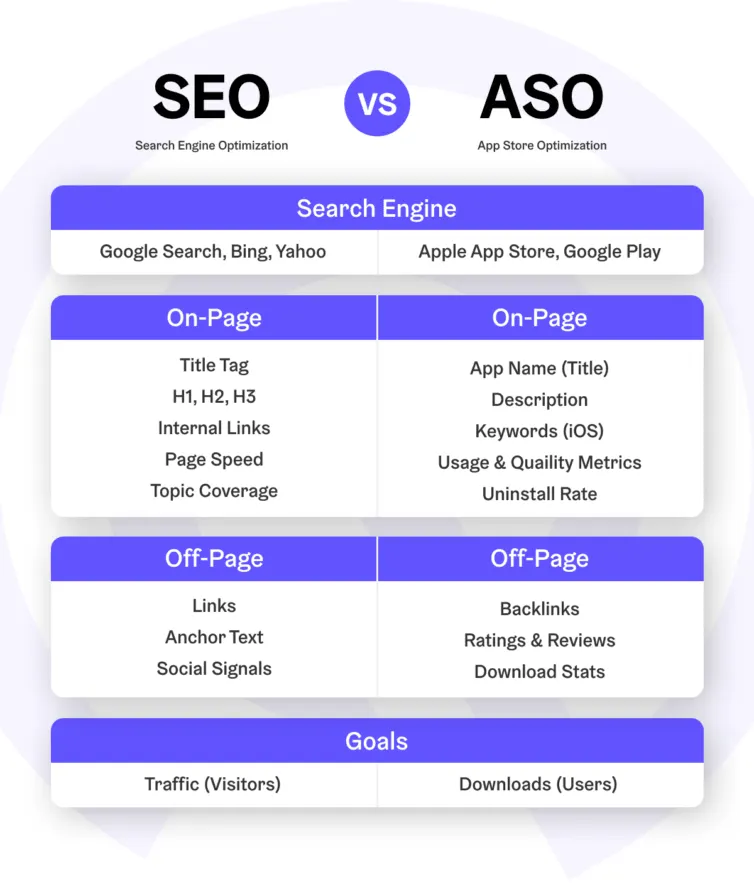
ASO is a concept similar to search engine optimization (SEO) for websites. ASO focuses on increasing the apps visibility, encouraging organic downloads, and demonstrating to users that the app meets their needs.
Why ASO is Important
Apps have become an essential part of our daily lives. On average, people spend over 30 hours per month using apps. Additionally, 25% of users find the apps they need through app store searches. Most users who search within app stores do so to find apps that fulfill their needs, making ASO increasingly important.
With millions of applications available in app stores, users typically rely on search functions to find the apps they want. By improving ASO, apps can achieve higher rankings in search results, significantly enhancing their visibility. Higher visibility means a greater likelihood of discovery and downloads, which directly correlates with increased download numbers and user base growth.
Compared to traditional paid promotion methods like advertising or marketing campaigns, ASO is relatively cost-effective. It can make a significant difference in the long run.
A well-executed ASO strategy not only yields short-term results but also contributes to long-term success. It helps maintain high ratings, positive reviews, and sustained downloads, while continuously implementing refined and up-to-date strategies.
During the ASO process, developers receive valuable feedback from users about their app. This feedback aids in product improvements, updates, and enhancing the user experience.
Users generally trust apps that appear at the top of search results without ads. This is a clear reason for app marketing companies to focus on ASO. ASO is a crucial strategy for gaining a competitive edge and growing in the mobile app world.
Suggestions for ASO Improvement
Strategies to improve ASO can be categorized into direct and indirect elements.
Direct elements refer to aspects that app developers can control during the app development and deployment stages. Proper attention and management of these areas can lead to positive results.
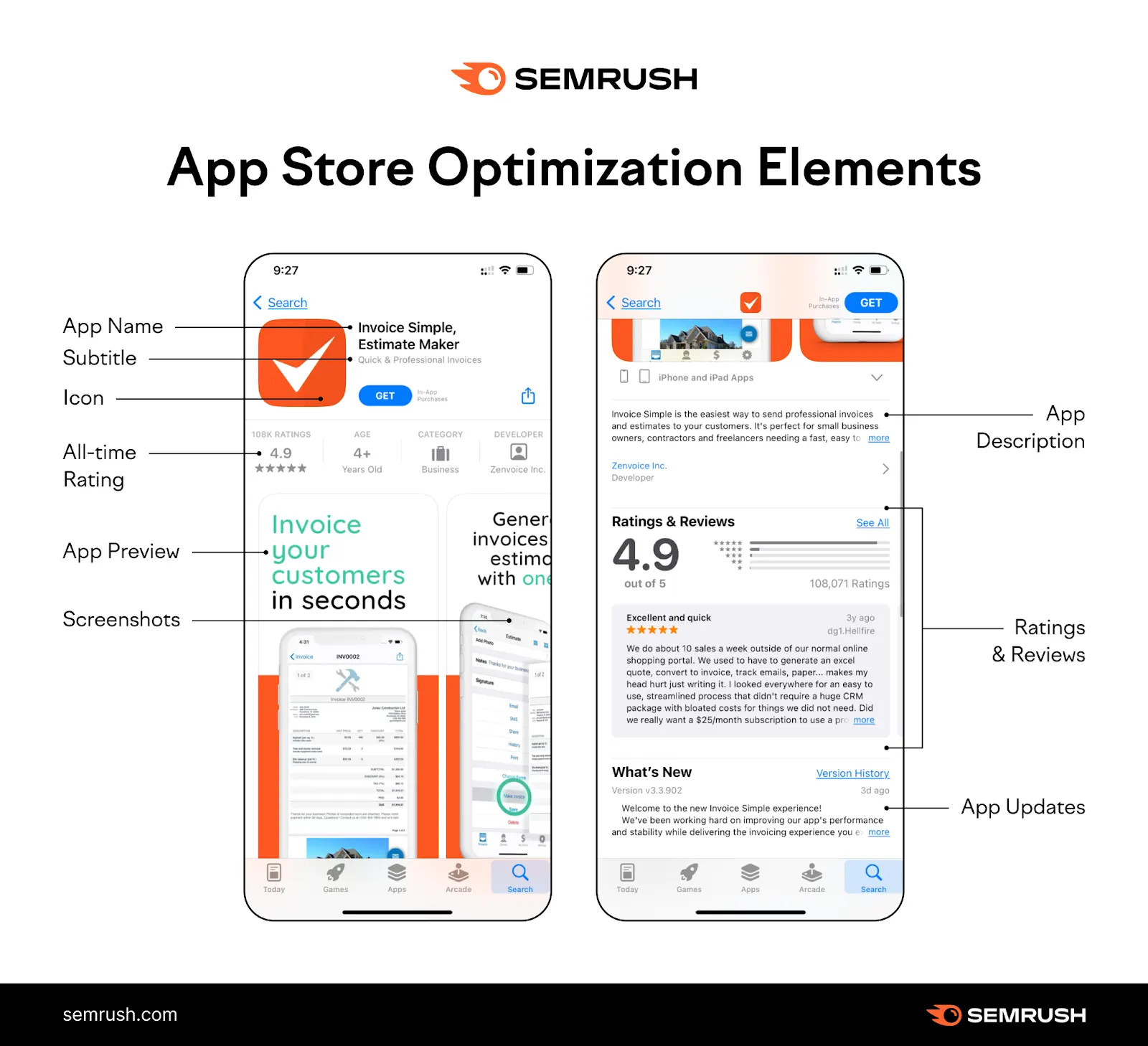
App Name: Choosing an intuitive app name is crucial. Adding high-traffic keywords to the app name can be effective.
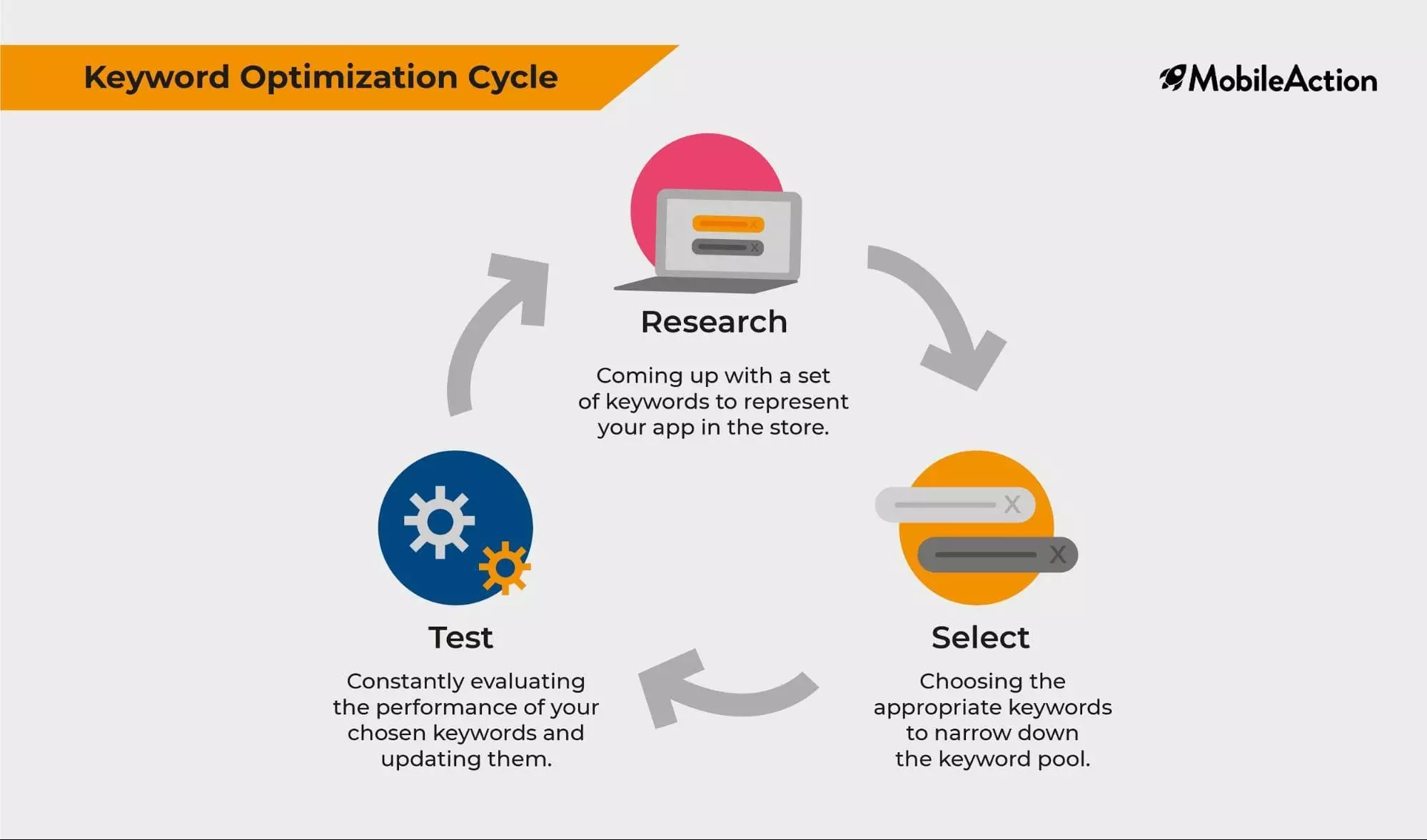
Search Keywords: These are keywords that help the app appear at the top of search results. Developers research relevant and popular keywords and include them in the app’s title, description, and other metadata. Apple has a dedicated search keyword section during app registration, similar to hashtags. Choosing the right keywords for the app service is essential.
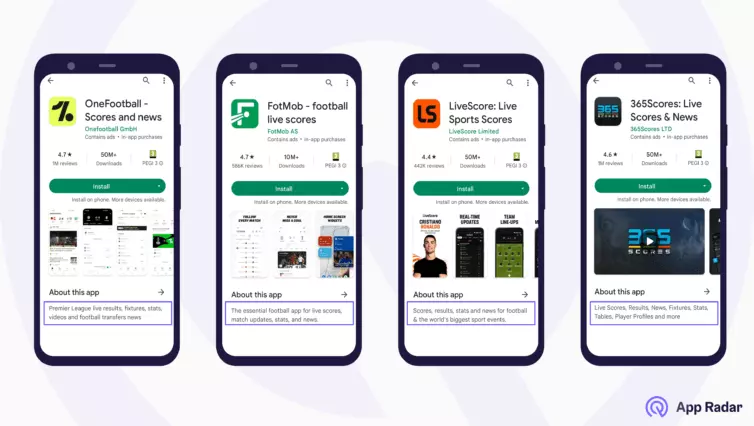
App Description: The description should clearly explain the app’s main features and how it addresses user problems or enhances their lives. Highlight the apps key benefits and unique value propositions. The description should be clean, well-organized, and easy to read. It should be regularly updated to reflect the latest information and respond to user feedback.
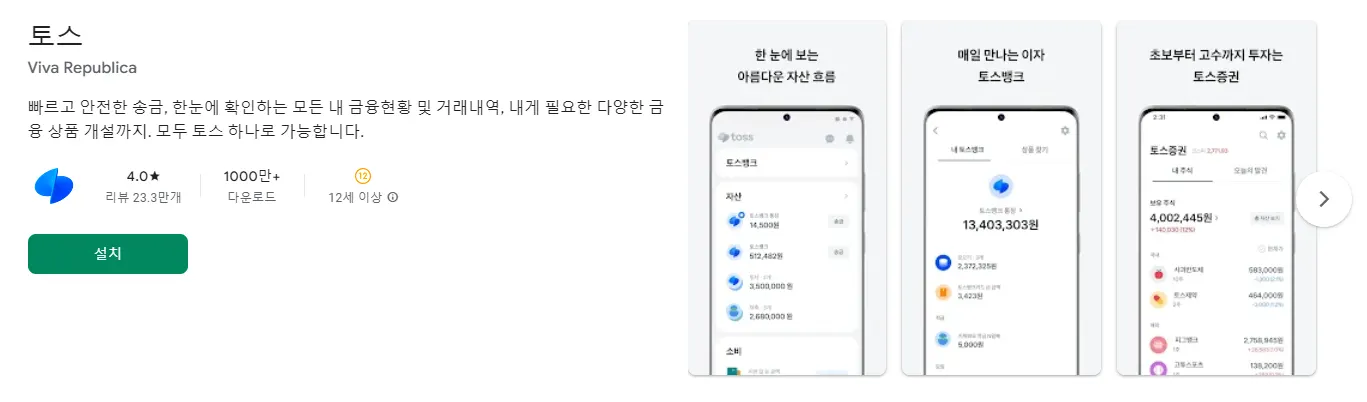
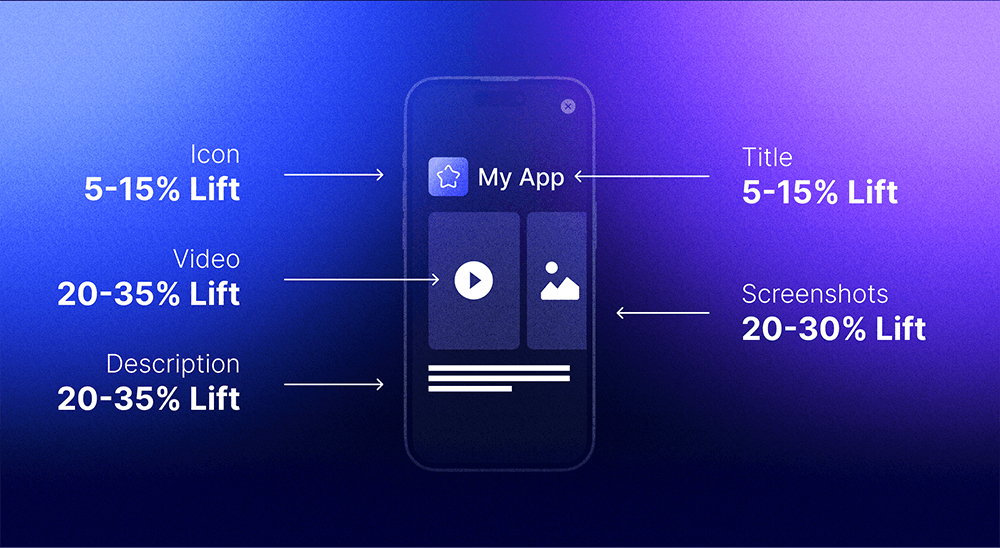
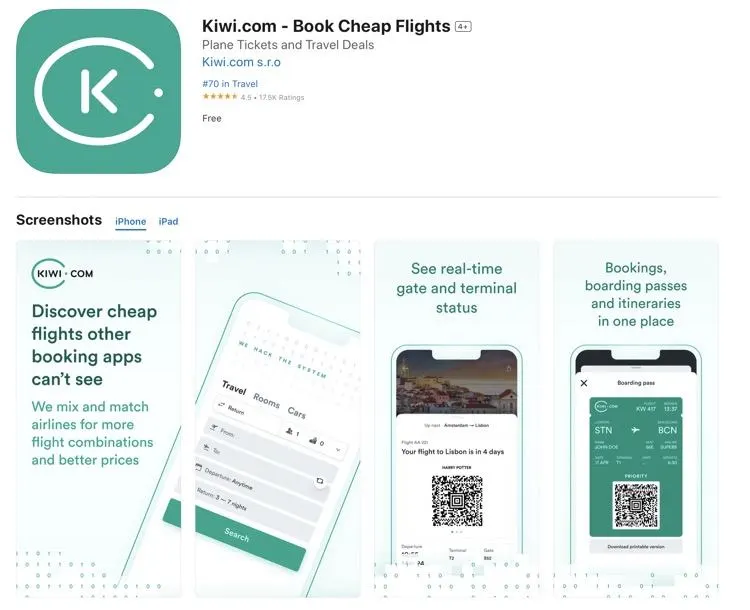
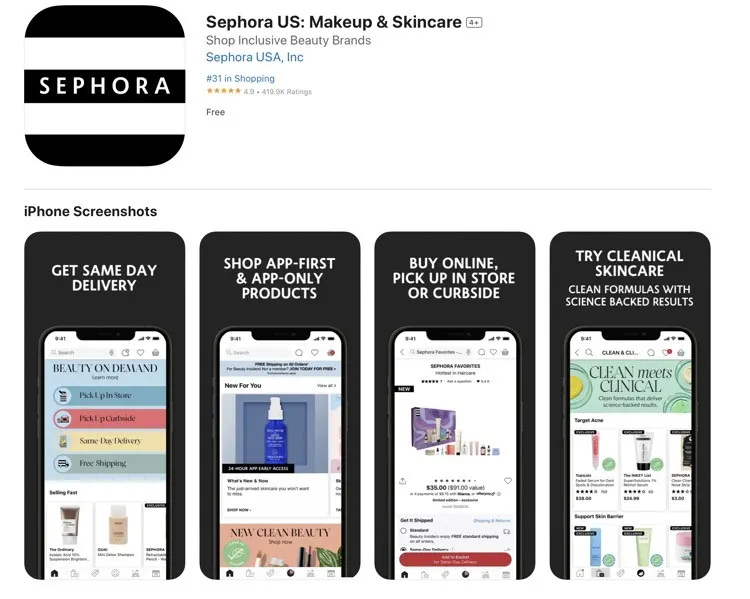
Design Elements: Visual elements such as icons, screenshots, and videos are important for attracting users’ attention. Screenshots can include short text lines to serve as intuitive service introduction areas.
Direct elements are interconnected. For example, an app name can be based on search keywords, and those keywords can be reflected in the app description and screenshots.
Include information on recent updates or improvements to show ongoing maintenance and enhancement.
Highlight positive user reviews and high ratings if possible.
Provide social proof, such as mentions in the media or endorsements from celebrities, to increase credibility.
Provide a way to contact support (e.g., customer service email) in case of issues.
Include a strong call-to-action to encourage downloads.
Indirect Elements
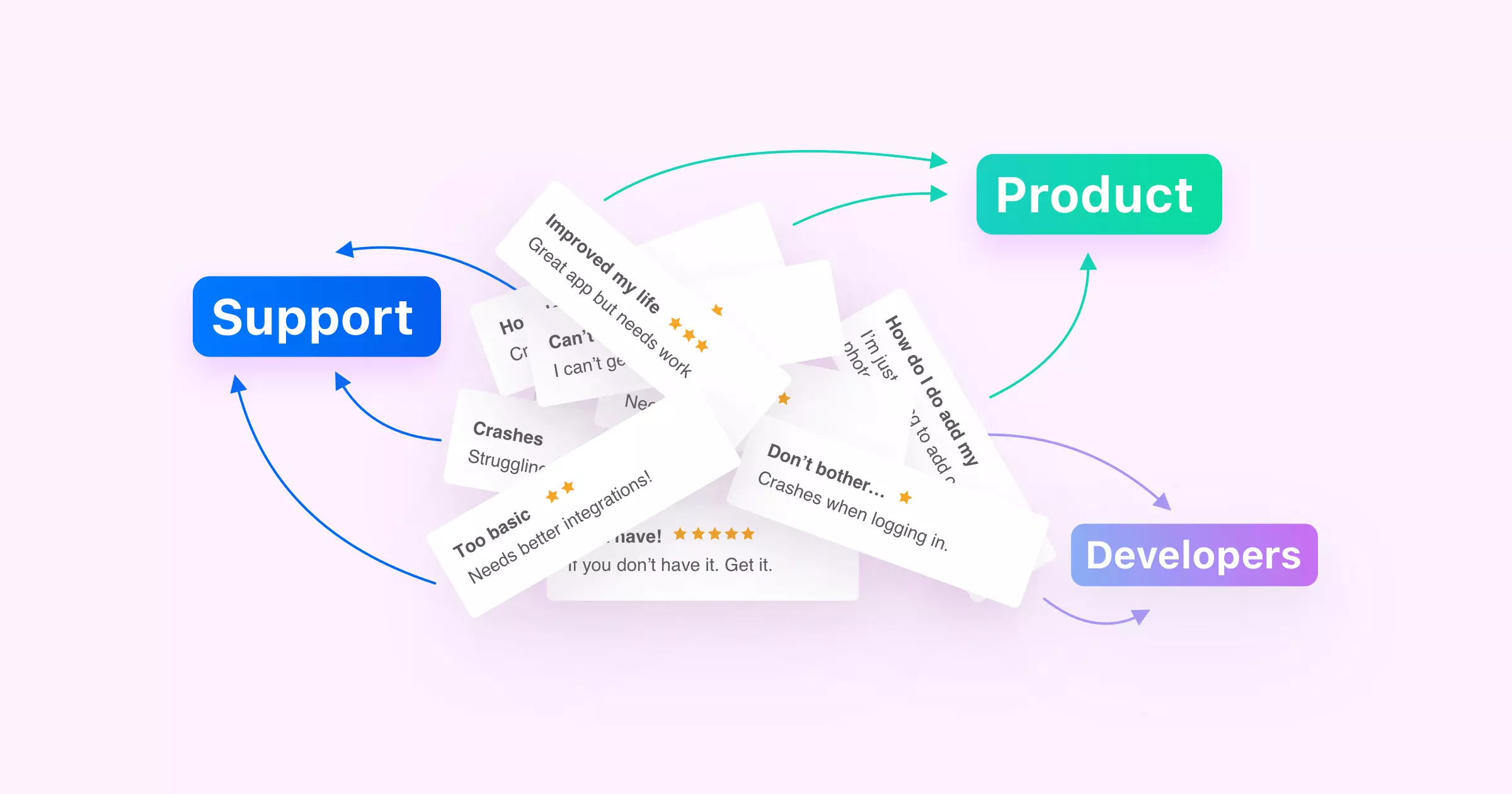
Indirect elements are factors beyond control but still impact ASO. Feedback from user reviews and ratings can provide insights into service improvements.
In the past, reward systems for writing reviews were common, but now it is prohibited to offer rewards for reviews in app stores. However, there are various strategies to encourage user reviews.
Three rules for encouraging app reviews are:
Do not interrupt someones experience.
Do not request reviews immediately after app download.
Delay review requests until a positive experience is likely.
Apps with numerous and positive reviews are more likely to rank higher in app charts and appear at the top of search results. Thus, app ratings and reviews play a crucial role in ASO.
Utilizing Guidelines
Apples App Store and Google Play have similar areas but also differences that significantly impact ASO. Comparing the main ranking factors of both stores and tailoring ASO strategies accordingly is important.
Apple App Store
Google Play
App Name App Subtitle App URL Keywords Installations and Engagement Reviews and Ratings App Updates In-App Purchases
App Title Short Description Full Description Installations and Engagement Reviews and Ratings In-App Purchases App Updates
Thus, while basic ASO strategies remain consistent, adapting to the specific characteristics and criteria of each app market is crucial. Both app markets provide developer pages with guidelines and methods to improve app visibility. Reviewing these pages before and after app launch can provide valuable insights.
The App Store Developer Guide provides important information about updates and app registration. App Store Connects help section also aids in app submission and management. For ASO, information about app icons, previews, and screenshots is important.
In the App Store, you can search for apps using the app name, subtitle, keywords, and company name. You can also utilize the app icon, up to 3 app previews, and up to 10 app screenshots.
The App Stores Create Product Page for developers provides detailed guidelines and suggestions regarding app name, icon, subtitle, app previews, screenshots, description, promotional text, keywords, in-app purchases, new features, ratings, and reviews. This page should be reviewed before creating the app product page.
Additionally, Apple announced that with iOS 15 and later versions, they will provide more relevant product pages through product page optimization and custom product page features. Consider using these features for ASO.
The Google Play Developer Page offers information on improving ‘app quality and discoverability,’ which is crucial for ASO. Google Plays app recommendations are based on human curation and algorithms, focusing on ‘relevance’ and ‘quality.’
One of the ‘quality’ assessment factors for an app is an effective store listing page. The store listing page provides users with their first impression of the app. Its important to clearly convey the apps features and content through the app description, screenshots, and metadata.
Google Play suggests several tips to increase app discoverability. Adding videos to the listing page and including at least three 16:9 screenshots can improve conversion rates. Additionally, providing accurate app categories and content ratings helps promote the app appropriately.
Store listing experiments allow for A/B testing different versions of icons, descriptions, and screenshots. This helps find the most effective listing page configuration for Google Play users. For effective results, test each component independently and conduct tests for at least one week.
Finally, using the User Acquisition tab in the Play Console helps you understand how users discover your app through search terms, which aids in developing ASO strategies.
Practical Approach to ASO at Growth Marketing Agency
Effective App Title and Description Writing
Titles and descriptions create the first impression between potential users and the app. An engaging title not only attracts attention but also sets the foundation for downloads. By writing app titles and descriptions professionally, you can stand out in a crowded app market.
Crafting concise yet impactful descriptions is an art. Understanding that users seek quick information, our approach ensures a persuasive narrative that highlights key features and unique value propositions.
Importance of App Icon Design
Often overlooked, app icons are as crucial as titles and descriptions in ASO. A well-designed icon conveys professionalism, credibility, and the essence of the apps function at a glance. Understanding user psychology is key to effective ASO, and a strategically designed app icon encourages clicks.
In a crowded app space, visibility is crucial. Growth Marketing Agencys ASO specialists conduct in-depth keyword research to ensure that clients apps are positioned to reach the right audience. Optimizing titles and descriptions with the right keywords enhances app searchability and helps reach users actively searching for related business.
App Review Management
App reviews play a significant role in influencing potential users and impacting searchability and credibility. At Growth Marketing Agency, our principles for managing reviews include:
Responding promptly to both positive and negative reviews to show active engagement in app improvement.
Personalizing responses to reviews, using reviewer names where possible to add a human touch.
Maintaining professionalism when responding to negative reviews, acknowledging concerns, and offering solutions.
Encouraging satisfied users to leave positive reviews through in-app feedback or other channels to balance out negative reviews and improve overall ratings.
Using reviews as valuable feedback for continuous improvement and mentioning updates based on user feedback in release notes.
ASO metrics often include keyword rankings, conversion rates, download numbers, user reviews, ratings, and retention rates. These metrics help companies understand app performance and user satisfaction.
Downloads: The number of times the app has been downloaded, indicating user interest.
Conversion Rate: The percentage of users who decide to download the app after visiting its store page.
App Ratings and Reviews: Checking average ratings and user reviews to gauge satisfaction and identify areas for improvement.
Keyword Rankings: Monitoring app rankings for relevant keywords to improve visibility.
Impressions and Click-Through Rate (CTR): Impressions indicate how often the app appears in search results, while CTR measures the percentage of users who click after seeing the app.
Retention Rate: The number of users who continue using the app after download, indicating if the app meets user expectations.
Revenue and In-App Purchases: Tracking revenue from in-app purchases to measure financial success.
Competitive Analysis: Comparing performance metrics with competitors to identify areas for improvement.
Growth Marketing Agency tracks these metrics to monitor ASO performance, identify challenges, and maintain advantages.
ASO Success Stories
Lets explore successful ASO examples that led to high visibility and downloads in app stores. These cases demonstrate effective strategies and execution.
Decrease in ad traffic due to privacy regulations such as iOS ATT (App Tracking Transparency).
Increase in retargeting restrictions.
To-be
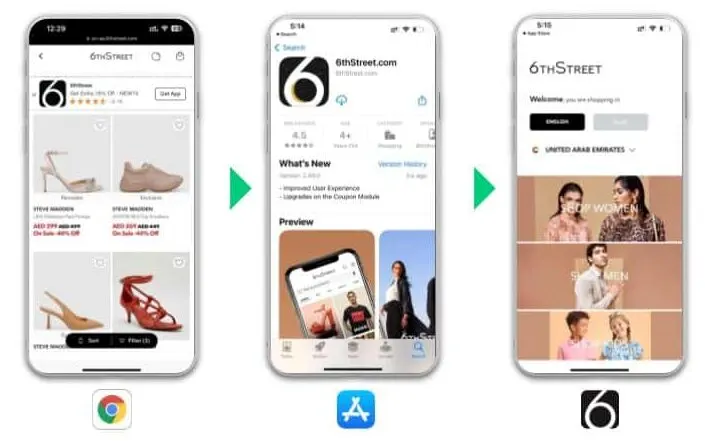
Set up app download ads with a webpage landing.
Provide introductions, descriptions, and other details about the app service on the webpage.
Build an automated webpage with a pop-up for app download at ? of the scroll-down point.
Results
13% increase in ROAS, 70% decrease in app uninstall rate.
60% increase in retention rate compared to before.
Advantages and Limitations of Website Landing Pages from an ASO Perspective
Recently, regulations on personal data tracking for app usage have become stricter. Using a website landing page is one way to address these regulations.
Websites require less personal data tracking compared to app stores, allowing users to check app information without downloading it.
A website landing page can provide more information than an app store detail page. By detailing the apps features, characteristics, usage, update history, etc., it offers users deeper insights into the app.
Additionally, including various content such as images, videos, and user reviews can engage users more effectively.
However, introducing and explaining the app through a website landing page requires an extra step compared to users downloading the app directly from the app store. This means adding an additional step to the user’s journey, which could increase the number of users who drop off. Therefore, it is essential to streamline the user path and make the transition from the website to app download as smooth as possible.
Collaboration with Specialized Agencies for ASO Improvement
ASO is an advanced marketing technique suitable for the era of smartphone popularity. It plays a crucial role in improving app visibility and download numbers. However, ASO cannot be perfected all at once. Continuous observation, improvement, and optimization are necessary to achieve results.
ASO is similar to SEO. By analyzing the app’s characteristics and market trends, and making changes and applications as needed, you can achieve good results. This helps to enhance the app’s visibility and attract more users.
Collaborating with specialized marketing agencies is important for ASO improvement. Specialized marketing agencies can analyze extensive content and develop strategies based on user behavior data. They can also find the optimal methods for the app service and use ASO expertise and tools to improve the app’s ranking and installation numbers.
By starting ASO improvement through collaboration with growth experts, you can receive optimal strategies based on in-depth analysis and experience.
Understanding the apps characteristics and market trends, along with conducting competitive analysis and keyword research, will help improve the apps visibility and download numbers.
As the allure of the Korean market grows, many foreign companies are making their move. But in this process, one crucial element often gets overlooked: SEO. Why is it so important?
Korea is an internet powerhouse. Most consumers rely heavily on online searches when making purchasing or investment decisions. Therefore, ranking high in search results directly impacts revenue. This is where SEO plays a pivotal role.
However, many foreign companies set their Korean SEO strategies without fully understanding the nuances of the Korean market, leading to mistakes.
One of the common Korean SEO mistakes that foreign companies make when entering the Korean market is using Korean URLs. We’ll focus on this misconception and explore more effective Korean SEO strategies.
Korean SEO mistake: The use of Korean URLs
Foreign companies often think, “We’re targeting the Korean market, so Korean URLs must be good, right?” Unfortunately, this is a significant misconception.
Why are Korean URLs problematic?
URL Breakage: Korean URLs are converted to Punycode, an encoding system that represents Unicode characters in ASCII, when used in the domain name system. For example, ‘??.kr’ becomes ‘xn--vg1bl39d.kr’. While this encoding allows Korean characters to be used in URLs, it can impact user experience by making the URLs less readable and recognizable, potentially causing confusion when shared.
Browser Compatibility: Some browsers may not properly recognize Korean URLs, potentially losing potential customers.
Search Engine Crawling Issues: Search engine bots may struggle to crawl Korean URLs, negatively impacting search result visibility.
The Advantages of English URLs when working on Korean SEO
So, why are English URLs a better choice?
Stable Compatibility: English URLs work reliably across all browsers and systems.
Global Accessibility: Even when targeting the Korean market, it’s wise to consider global accessibility. English URLs make this possible.
SEO-Friendly: Search engines can more easily understand and index English URLs, benefiting your overall Korean SEO efforts.?
Effective Korean SEO Strategies
Now, what should you do? Here are some effective Korean SEO strategies for the Korean market:
Combine English URLs with Korean Keywords: Keep your URLs in English, but strategically place Korean keywords within your page content. For example, use this URL structure: www.yourcompany.com/whitening-cream, while including Korean keywords like “?? ??” in your page content.
Optimize Metadata: Write your title tags and meta descriptions in Korean. These are crucial as they appear in search results.
Mobile Optimization: Korea has an extremely high mobile usage rate. Therefore, mobile-friendly website design and content structure are essential for successful Korean SEO.
Other SEO Mistakes to Avoid
Besides using Korean URLs, there are other Korean SEO mistakes that foreign companies often make. It’s crucial to avoid these as well.
Keyword Stuffing: Cramming in keywords doesn’t help SEO. It can even be considered spam. Use keywords naturally.
Low-Quality Content: Content that’s high in quantity but low in quality doesn’t help. Create high-quality content that provides real value to users.
Ignoring Page Speed: Page loading speed is a crucial SEO factor. Improve page speed through image optimization, caching, and other techniques.
Neglecting Meta Tags: Title tags and meta descriptions are SEO basics. Write unique and descriptive meta tags for each page.
Real-World Application: The Nike Korea Example
Let’s take a real-world example to illustrate the impact of using Korean URLs in Korean SEO. Nike, a global brand, has a dedicated Korean website. While they are a leader in digital marketing, even they aren’t immune to the pitfalls of Korean URLs.
Consider this product URL from Nike Korea:
Original URL: ??-??-???-?-??-???-6P0mijB1/FZ3503-100
This encoding has far-reaching implications beyond mere URL breakage:
User Experience Impact: When users see such an encoded URL, it can create confusion and frustration. The URL becomes nearly impossible to remember or manually type, leading to a poor user experience that can drive customers away.
Brand Perception: These complex URLs can inadvertently communicate a lack of attention to local user needs.?
SEO Complications: While the technical aspects of SEO, such as search engine crawling, are important, the broader SEO implications for global brands are even more critical. Korean consumers expect a seamless digital experience. When they encounter issues with sharing or accessing content due to complex URLs, it can reduce engagement and, ultimately, the effectiveness of the brand?s online presence in Korea.
Optimized Korean SEO Strategy for Nike Korea
Instead of using Korean characters in URLs, Nike could improve their Korean SEO by adopting English URLs combined with Korean keywords within the page content. For example:
Page Content: Include Korean keywords such as “?? ?? ??? ? ?? ???” within the product description and metadata.
This approach would make the URL more user-friendly, easier to share, and more compatible across different browsers and platforms, all while maintaining strong Korean SEO performance.
Conclusion: SEO is an Ongoing Process
As the Nike Korea example shows, even top brands can fall into the trap of using Korean URLs, which can hinder their Korean SEO efforts. By opting for English URLs and strategically incorporating Korean keywords within content, companies can enhance user experience and improve their search engine rankings.
Remember, Korean SEO isn’t a one-time task. Continuous monitoring and improvement are necessary to stay ahead of the competition in the ever-changing digital landscape. With the right strategy, you can achieve significant success in the Korean market.
At Growth Marketing Agency, we have decades of experience working in SEO across diverse markets. In our experience, pages with Korean URLs have consistently underperformed, often leading to issues in user engagement and search engine visibility. We’ve seen firsthand how adopting English URLs and incorporating localized content can dramatically improve results.