Influencer marketing isn’t a new concept, but its landscape has evolved dramatically over time. Historically, only celebrities wielded this kind of influence. Today, the field is diverse, with various types of influencers making an impact. As brands strive for deeper, more authentic connections with their audiences, understanding the roles and benefits of different types of Korean influencers is crucial.
In this article, well delve into the world of Korean influencers in marketing, highlighting their unique characteristics and advantages. Well guide you in selecting the right type of Korean influencer for your marketing strategy. By exploring these elements, we aim to provide you with insights to craft effective influencer marketing strategies tailored to your brands needs.
Korean Influencers: Who Are the Truly Influential Figures?
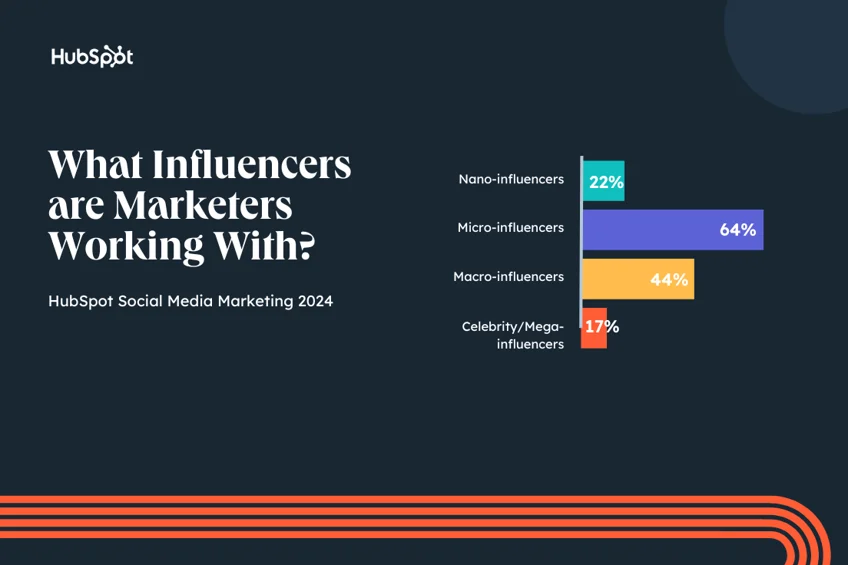
So, who exactly are the Korean influencers we commonly refer to? Simply put, they are creators with a substantial number of followers who exert influence on social media platforms. Influencers can be categorized based on their follower count as follows:
Nano Influencers: Fewer than 1,000 followers
Micro Influencers: 1,000 to 10,000 followers
Macro Influencers: 100,000 to 1 million followers
Mega Influencers: Over 1 million followers
In this discussion, we will particularly focus on micro influencers and macro influencers. Why? Because each type of Korean influencer offers distinct advantages and disadvantages that can impact your marketing strategy.
The Appeal of Korean Micro Influencers: Small but Mighty
Korean micro influencers, while having fewer followers, possess unique traits that make them especially effective. Lets explore what sets them apart:
Close Relationships with Followers The greatest advantage of micro influencers is their close relationship with their followers. Their smaller follower count allows for more personal interactions, increasing follower loyalty. Example: A micro influencer in the beauty sector might engage daily with her audience through Instagram Live, creating a conversational atmosphere that fosters high engagement.
Expertise in Specific Niches Korean micro influencers often focus on particular niches, which helps build trust with their followers. Utilization Tip: Look for Korean micro influencers whose niche aligns with your brand. For instance, an organic food brand should collaborate with influencers focused on healthy eating.
Authentic Content Creation Micro influencers generally produce natural and authentic content, building greater trust with their audience. Caution:Avoid forcing overly commercial content on Korean micro influencers, as it may backfire and diminish authenticity.
???? (a_b.haus) is a rising Korean micro influencer making waves in the interior design and home styling space. With around 7,800 followers on Instagram, she has cultivated an engaged audience passionate about home decor and interior design.
The Power of Korean Macro Influencers: The Strength of Broad Influence
Now, lets examine the characteristics of Korean macro influencers, who come with their own set of unique benefits:
Wide Influence and High Visibility The primary advantage of macro influencers is their extensive reach. With hundreds of thousands to millions of followers, they offer significant exposure from just one post. Usage Example: A fashion brand might collaborate with a famous Korean macro influencer for a new collection launch, achieving massive exposure and a spike in sales.
High-Quality Content Production Many Korean macro influencers have professional content creation teams, allowing them to deliver high-quality content consistently. Branding Tip: Leverage their capabilities by suggesting high-quality content formats like mini-documentaries or photo shoots that narrate a brand story.
Combination of Expertise and Popularity Many macro influencers start in specific niches and gradually gain broad appeal, offering both expertise and popularity. Caution: Ensure the macro influencers image aligns with your brand to avoid potential damage to your brands reputation.
Relatively Lower Engagement Rates Macro influencers typically have lower engagement rates compared to Korean micro influencers, but their large follower base means overall engagement can still be substantial. ?Strategic Approach: Plan campaigns that encourage follower participation, such as hashtag challenges or interactive events, to boost engagement.
Analyzing Effectiveness in the Korean Market: Which Is More Effective?
Lets explore which type of influencer is more effective in the Korean market.
Korean Influencers: Advantages of Micro Influencers
High Trust and Authenticity Korean consumers highly value authentic content, and Korean micro influencers genuine posts resonate well with this preference. ?Strategic Approach: Encourage authentic content like product reviews or personal use stories, but avoid over-scripting.
Advantages in Target Marketing Korean micro influencers can be more effective for niche targeting due to their followers’ specific interests. ?Strategic Approach: Partner with Korean micro influencers whose niche aligns with your product or service for optimal impact.
Korean Influencers: Advantages of Macro Influencers
Extensive Exposure In a country with high social media usage, Korean macro influencers can rapidly increase brand awareness. ?Strategic Approach: Use macro influencers for broad promotional efforts, such as new product launches.
Effective for Brand Recognition Collaborating with well-known Korean celebrities or influencers can enhance a brands image. Focus on conveying your brands story and values, rather than just product promotion, to build a premium brand image.
????? (Wonji’s Day) is a Korean macro-influencer with approximately 950,000 subscribers on YouTube. She focuses on authentic, immersive travel experiences across various countries and cultures. Travel-related companies like airlines, hotels, and tourism boards could benefit from partnering with her to promote their services to her audience of Korean travel enthusiasts.
Effective Influencer Marketing Strategies: How Should You Approach It?
Here are some key points for crafting an effective influencer marketing strategy in the Korean market:
Selecting Influencers Based on Brand Goals The crucial first step is choosing Korean influencers that align with your brand objectives. ?Strategic Approach:
For brand awareness, Korean macro influencers may be more suitable.
For targeting specific audiences or driving sales, Korean micro influencers might be more effective.
Balanced Use of Micro and Macro Influencers A balanced approach, using both Korean micro and macro influencers, can be highly effective. ?Strategic Approach:
Use macro influencers for broad promotion.
Follow up with multiple micro influencers to provide detailed product information and user experiences.
Building Authentic Relationships for Long-Term Success Establishing long-term partnerships can provide a more authentic connection with influencers’ followers. ?Strategic Approach:
Consider long-term contracts.
Engage Korean influencers in product development and regular content creation.
Incorporate their feedback into improvements.
Measuring Performance Based on Content Quality and Engagement Focus on content quality and engagement metrics rather than just exposure. Measurement Metrics:
Quality and Quantity of Comments: Look for genuine, interest-driven comments.
Shares: The number of shares indicates content value.
Click-Through Rate (CTR) and Conversion Rate: Track website visits and purchases via influencer posts.
Analysis Tools: Use analytics tools like Instagram Insights to track these metrics effectively.
Korean Influencers in Marketing: A Balanced Approach is Key
Weve explored the characteristics and effective utilization of influencers, especially micro influencers and macro influencers in the Korean market. Its challenging to declare one type as definitively better than the other. The right strategy depends on your brands goals, target audience, and product characteristics.
The key is a balanced approach. Combining the authenticity and high engagement of micro influencers with the broad reach of macro influencers can create a powerful synergistic effect. Additionally, focus on long-term relationship building rather than short-term results. Trust and authenticity are essential for achieving lasting brand success.
Finally, remember that influencer marketing strategies are ever-evolving. Staying updated with the latest trends and adapting your strategy flexibly is crucial.
Are you curious about performance marketing pitfalls and why its essential to be aware of them?
Marketing is a critical element of any business, requiring ongoing efforts and strategic planning. While the effectiveness of marketing strategies can be measured over time, not every strategy yields the desired results.
When a marketing strategy falls into common pitfalls, the costs can escalate significantly, impacting time, resources, and customer acquisition efforts, which inevitably affect sales performance.
It would be ideal if every marketing effort were guaranteed to succeed.
However, as we all know, there is no such surefire method.
While its impossible to predict with certainty whether a particular strategy will stumble into performance marketing pitfalls, there are certain factors you can avoid to reduce the risk.
Based on our extensive experience at Growth Marketing Agency, were sharing insights on how to navigate and avoid these common performance marketing pitfalls.
Why Do Performance Marketing Pitfalls Occur?
In the competitive business landscape, companies often find themselves compelled to increase their marketing budgets.
But what happens when the investment doesnt translate into the expected returns?
Successfully navigating a performance marketing campaign is more challenging than it seems.
How can you enhance the ROI of a performance marketing campaign? How can you manage the fragmented customer journey and optimize every interaction with potential customers?
One of the most significant performance marketing pitfalls is the lack of clear goals and strategy.
Without a well-defined plan, marketing efforts can become unfocused, making it difficult to achieve meaningful results. Its crucial to establish clear objectives and create a strategic roadmap that aligns with your overall business goals.
Take the time to define your digital marketing goals and develop a comprehensive strategy that includes identifying your target audience, choosing the right channels, setting performance metrics, and allocating the necessary budget and resources.
Another common performance marketing pitfall is a lack of understanding of the customer.
To run a successful campaign, you need to have a deep understanding of your potential customers’ preferences, needs, behaviors, and pain points.
Failure to target the right audience or select appropriate keywords increases the likelihood of campaign failure. Identifying the right keywords can resonate with potential customers and help clarify their intent.
Conduct thorough market research to gain deep insights into your target audience, and use data-driven insights to create buyer personas. This will guide your keyword selection and allow you to tailor your marketing messages accordingly.
Regularly updating your buyer personas by tracking and reflecting changes in customer behavior is essential to avoid these pitfalls.
Insufficient Budget and Resources
Given that performance marketing is results-driven, it requires a substantial financial investment.
Insufficient budget and resources can lead to significant performance marketing pitfalls, compromising the success of your campaigns. Allocating inadequate resources can limit the scope and impact of your campaigns, leading to diminished results.
Performance marketing heavily relies on data and analytics. One of the more subtle performance marketing pitfalls is the failure to leverage data for decision-making.
Without accurate data tracking and analysis, you may miss critical insights needed to optimize your campaigns.
To avoid this, marketers must make full use of analytical and tracking tools to accurately measure marketing performance.
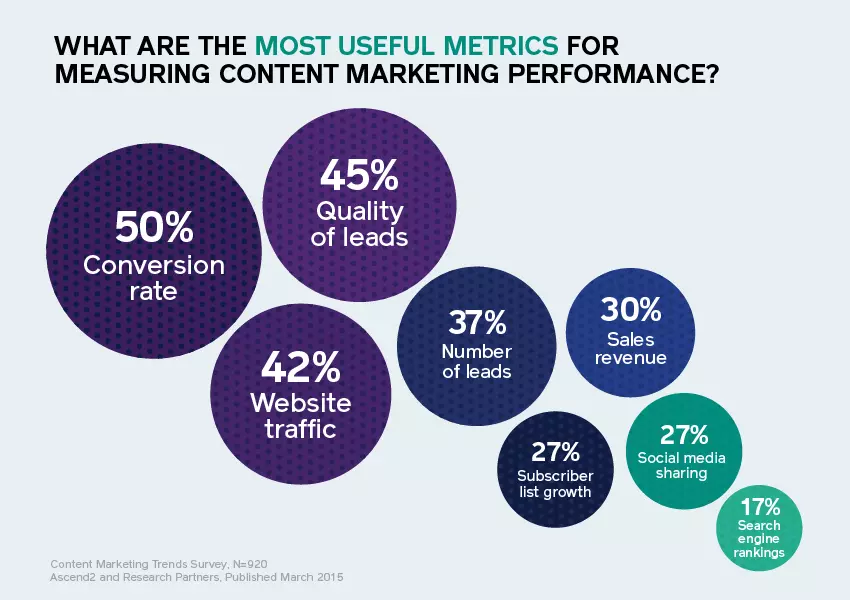
Key metrics such as website traffic, engagement, conversion rates, and ROI should be continuously monitored to make informed decisions and optimize campaigns.
Coca-Cola had to revert to its previous branding strategy after facing resistance from its customers.
Branding helps build trust, credibility, and recognition with your target customers. However, inconsistent or ineffective branding can lead to digital marketing failures. If the brand message is unclear or lacks consistency, it may fail to resonate with the target audience. This can negatively impact brand awareness and customer engagement.
To avoid these performance marketing pitfalls, you must develop a strong and consistent brand identity that aligns with your overall marketing strategy. Ensure that your brand message and values are consistently reflected across all marketing efforts. Building a strong brand image requires creating a compelling brand story, designing a visually appealing website, and producing consistent content.
Failing to Adapt to Changes and Algorithms
The current market is constantly evolving with new technologies, trends, and algorithms tailored to the digital age. Businesses that fail to adapt to these changes may struggle to succeed. For instance, if you dont keep up with the latest search engine algorithms, your websites search rankings could drop, leading to a decline in traffic.
To stay competitive and avoid performance marketing pitfalls, its crucial to stay informed about the latest digital market trends and algorithm updates. Partnering with a reliable collaborator who can help monitor market trends and adjust strategies accordingly can be a great way to keep your business on track.
Lack of Patience and Persistence
Did you know that performance marketing is not a short-term solution for immediate success? The growth strategies we advocate emphasize patience and persistence, with efforts accumulating through repeated experimentation.
Businesses need to set realistic expectations and understand that marketing takes time. Patience and persistence are keycontinuously accumulate efforts and refine strategies through constant testing.
Winning Strategies to Avoid Performance Marketing Pitfalls
Continuous A/B Testing
Q: What is A/B Testing?
A. A/B Testing involves comparing two versions of a landing page to determine which one performs better based on target customer preferences. By implementing insights gained from A/B Testing, you can optimize conversion rates.
Why should you use A/B Testing in performance marketing? The first step in an effective marketing campaign is setting high-level goals that serve as benchmarks for evaluating the campaign. Typically, businesses aim to drive more traffic to their websites.
Experienced marketers know the importance of using analytical tools to evaluate website performance. However, even if a website regularly receives high traffic, if it doesnt lead to conversions, you might be missing something essential. A/B Testing provides valuable insights that can help prevent costly mistakes by leveraging the traffic effectively.
For example, before launching a display ad campaign that directs customers to a product page on your website, conducting A/B Testing on that product page can offer insights that can be implemented. This way, marketers can avoid wasting money on ads that dont generate profits and instead focus on converting visitors into buyers.
In summary, A/B Testing can help maximize ROI, reduce costs, and generate high-quality leads.
Data Analysis and Utilization
Collecting and analyzing data from various digital sources to gain insights into your marketing strategy is essential for any performance marketer. By fully utilizing digital marketing analytics tools, marketers can minimize bounce rates, create personalized experiences, and generate high-quality leads.
Data analysis helps eliminate guesswork in marketing strategies and maximizes value from a companys budget, thereby improving business efficiency. Data comes from various sources, and if a company lacks a pool of skilled professionals to use this data effectively, it can become a burden.
The more sophisticated the data analysis techniques used, the better a company can understand the market and its customers. This understanding leads to the development of effective strategies, more personalized customer interactions, and, ultimately, increased revenue.
Overcoming Performance Marketing Pitfalls
In conclusion, the failures in performance marketing often stem from a lack of understanding of the customer, as well as a lack of patience and persistence.
To overcome these challenges, clear goal setting, precise targeting based on customer insights, data-driven decision-making, and a persistent approach are necessary.
Performance marketing is a dynamic and ever-evolving field, and failures can occur in any business. However, it is crucial to learn from these failures, continuously experiment with strategies, and accumulate successes to improve marketing efforts.
By addressing the common causes of performance marketing pitfalls and implementing effective solutions, businesses can increase their chances of success and achieve their marketing goals. Marketers must always remember that marketing is an ongoing process of experimentation, optimization, and improvement.
Keyword strategy is crucial for the success of both organic and paid search campaigns. Deciding which primary keywords to target for advertising and how to optimize for organic search results through SEO are key factors that can determine the success of a campaign.
However, creating a strategy for every possible keyword is nearly impossible. Instead, we need to categorize keywords based on their characteristics, search intent, and search volume, and then develop targeted strategies for each category.
Search engines continuously analyze content across the internet to provide users with the best possible search results. They keep track of nearly all content on every website and webpage in real-time.
From an SEO perspective, a primary keyword, also known as a focus keyphrase, is the main term or phrase that a webpage is expected to rank for in search engine results.
In essence, a primary keyword is the main keyword that the page is optimized for. Typically, primary keywords have high search volumes and, if they rank well in the SERPs, can drive significant organic traffic.
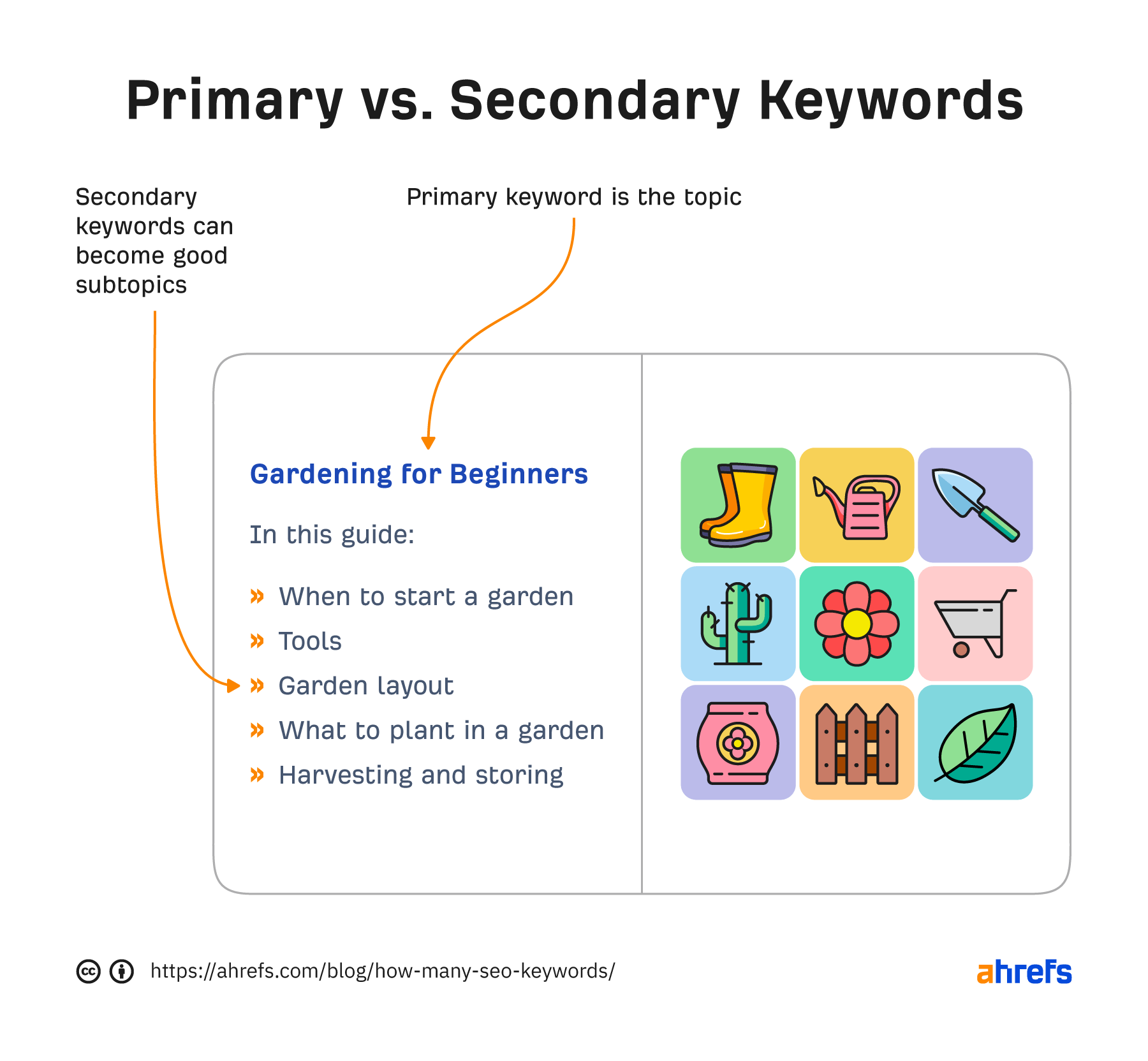
On the other hand, secondary keywords add context, value, and depth to the content. These are more closely related to the search intent. Secondary keywords include all keywords that are closely related to the primary keyword being targeted on a page. Synonyms, subtopics, and long-tail keywords can all be considered secondary keywords.
Including secondary keywords in subheaders and body text allows you to cover various aspects of a topic, helping Google better understand the content of the page.
From a performance marketing perspective, primary keywords are high-volume terms directly connected to your product or service, often with high CPC and intense competition.
In contrast, secondary keywords usually have lower search volumes, are less directly related to your product, or consist of long-tail keywords made up of two or more words. These generally have lower CPCs and face slightly less competition than primary keywords.
Primary Keywords vs. Secondary Keywords
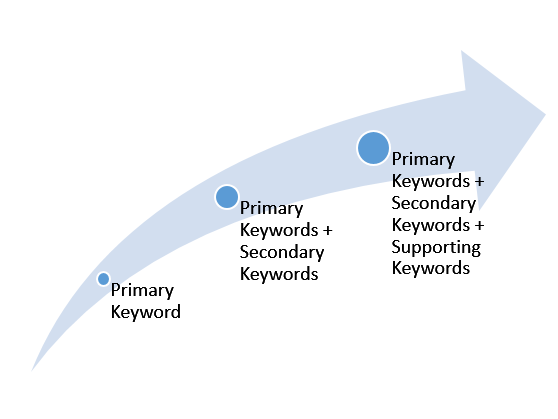
The relationship between primary and secondary keywords
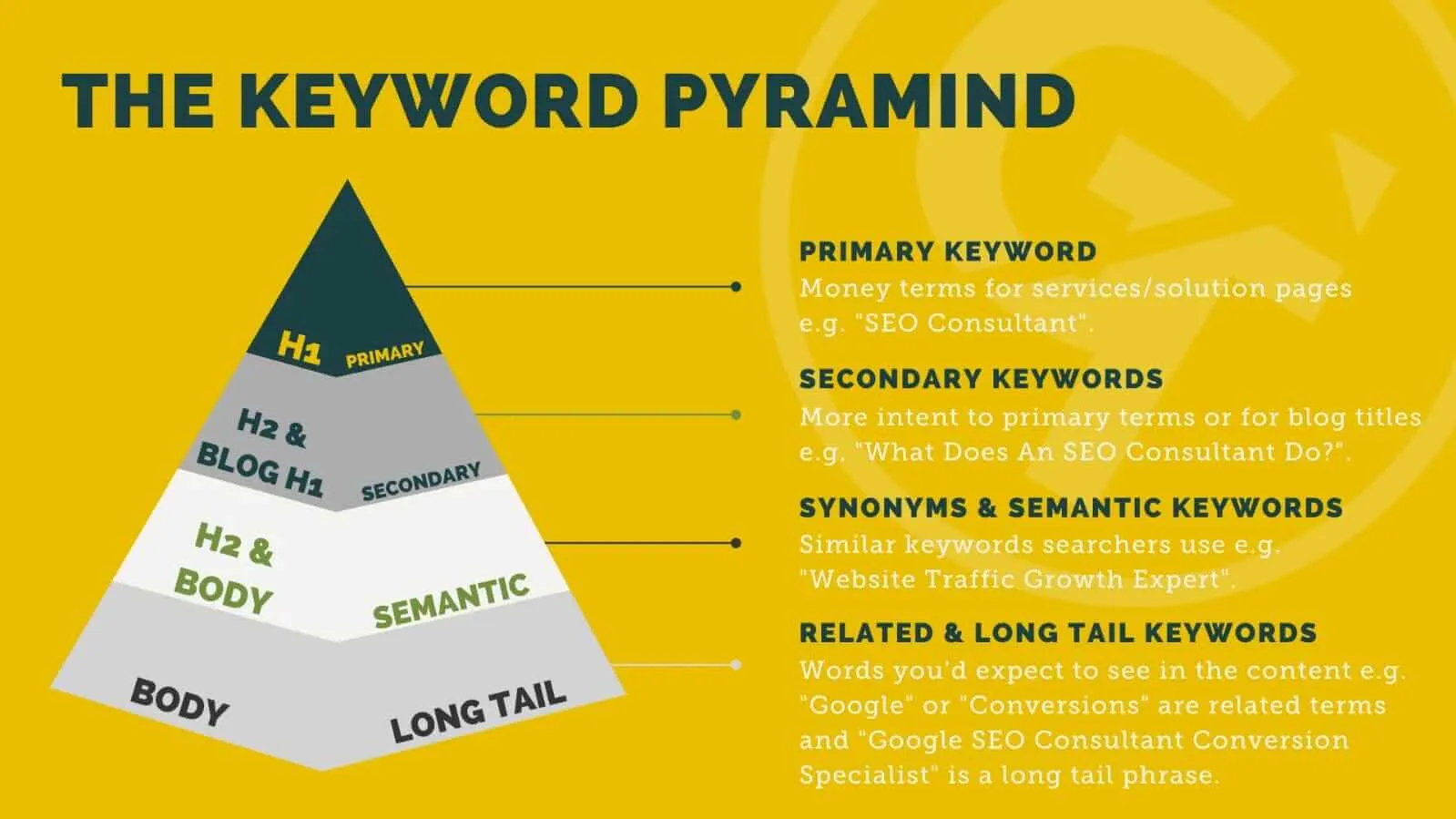
The relationship between primary and secondary keywords starts with the primary keyword, then expands to include secondary keywords, and finally incorporates even more specific secondary keywords. (Source: Understanding On-Page Search Engine Optimization – SERPninja)
Primary Keywords as the Core of Content Marketing
Primary keywords are the cornerstone of content marketing. For instance, if your company sells yoga clothes, yoga clothes might be your primary keyword. This is the term that best represents your market and is also the most frequently searched term related to your business. Therefore, the most crucial aspect of content marketing is to choose the right primary keyword.
Secondary keywords, while related to the primary keyword, are more specific. For example, secondary keywords for yoga clothes could include womens yoga clothes, short-sleeve yoga clothes, yoga clothes prices, recommended yoga clothes, and yoga clothes brands. These more specific terms are easier to rank for in search engines and often have lower CPCs and less competition in search ads.
Why are Secondary Keywords as Important as Primary Keywords?
Why should you use secondary keywords in content marketing? If you create content targeting high-volume keywords and rank well, you will attract a lot of organic traffic, which seems great for content performance. However, secondary keywords play an equally important role.
For example, imagine that a company writes a high-quality blog article on IT technology, including explanations of technical terms and real-life examples. However, upon analyzing the incoming audience, they find that the article attracted as many students studying the subject as it did industry decision-makers and engineers. While it succeeded in ranking well for a high-volume primary keyword, it also attracted traffic from students who were primarily interested in learning, not buying.
Although organic traffic is generally beneficial, its more valuable when it leads to conversions. This relates to search intent. When people search for solutions to problems, they use more specific terms. Returning to the yoga clothes example, someone searching for yoga clothes might just be curious about their appearance, but someone searching for short-sleeve yoga clothes prices likely has a clear purchasing intent.
Thus, if you only focus on a primary keyword strategy, you may miss out on potential customers with a higher likelihood of conversion. By effectively utilizing secondary keywords, you can attract a more diverse audience, which can significantly improve performance.
Lastly, primary and secondary keywords are closely linked and essential components of your strategy. Primary keywords represent the core of your market, while secondary keywords help capture search intent and attract a broader range of users. By effectively setting and using primary and secondary keywords in content marketing, you can build a more successful marketing strategy.
How to Choose Effective Primary Keywords
When selecting primary keywords, consider four key factors:
Search Volume
High search volume keywords can generate more traffic for your website. Monthly search volume indicates how often users search for a term, showing the popularity of that topic.
Properly ranking your webpage for a keyword can increase its visibility. Low search volume keywords might have less competition, but they also offer fewer opportunities to appear in search results. Finding a balance is essential.
Keyword Difficulty
Choosing a primary keyword with an acceptable level of difficulty maximizes your chances of appearing in search results. Keyword difficulty is often assessed based on the quality of content already ranking for that keyword and the number and quality of backlinks pointing to those pages and domains.
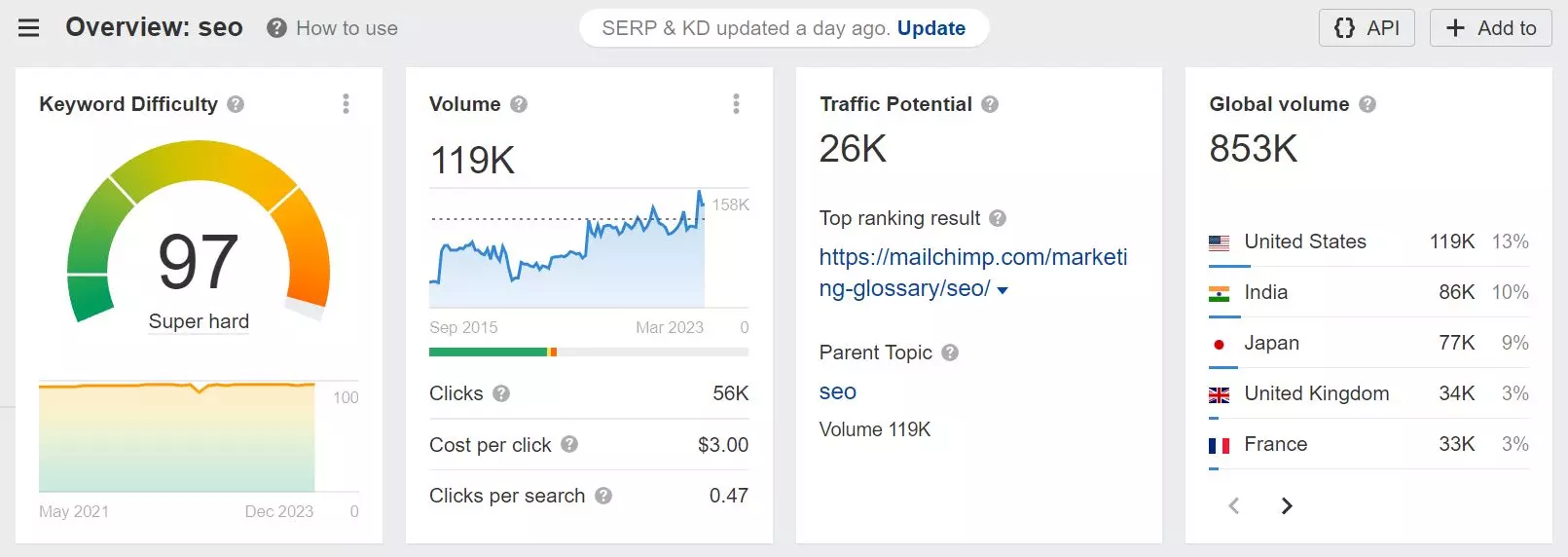
For example, let’s examine the keyword SEO using Ahrefs Keyword Explorer.
An overview of the keyword “SEO” through Ahrefs’ Keyword Explorer
The keyword has a monthly search volume of 119,000 with 56,000 clicks, especially in markets like the U.S., where Google dominates. This high volume explains why English-language documents often rank high even on Korean Google for SEO. The keyword difficulty is also very high due to intense competition.
Relevance to Your Target
To use keywords correctly, they must be highly relevant to your business. Well-chosen keywords help your website or blog rank high in search engines and reach more potential customers. If your primary or secondary keywords aren’t relevant to your business, its difficult to achieve high rankings. Keywords used in your website or blog posts must align with the content. If they dont, visitors might leave disappointed, reducing your site traffic.
Regularly reviewing and updating your keywords to match the latest trends is also crucial. As the business environment constantly changes, consistent review is needed to select the right keywords. Additionally, leveraging emerging keywords can help reach more customers.
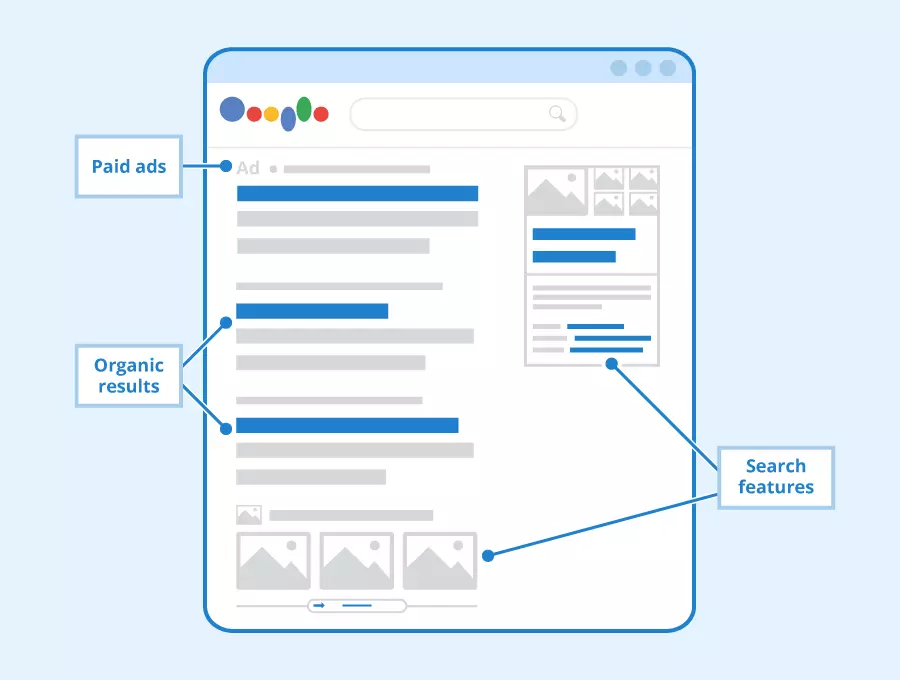
When creating content that includes a primary keyword, first ensure it matches the searcher’s intent and expectations. SERP (Search Engine Results Page) refers to the page displayed when users enter a keyword into a search engine. It lists various websites that help users find the information they seek.
Understanding search intent is vital for both content marketing and SEO. It helps in creating better SEO strategies and producing more relevant content that attracts more visitors. Its not enough to aim for high rankings; content must also align with the specific keywords users are searching for.
For instance, a search for travel destination recommendations might show top-ranking travel websites, but changing the search to overseas travel recommendations could yield different results. Understanding and selecting keywords based on search intent is a crucial aspect of SEO and content marketing.
How to Find Secondary Keywords
Autocomplete Suggestions
Even if secondary keywords have lower search volumes than primary keywords, they can be highly effective in targeting specific audiences.
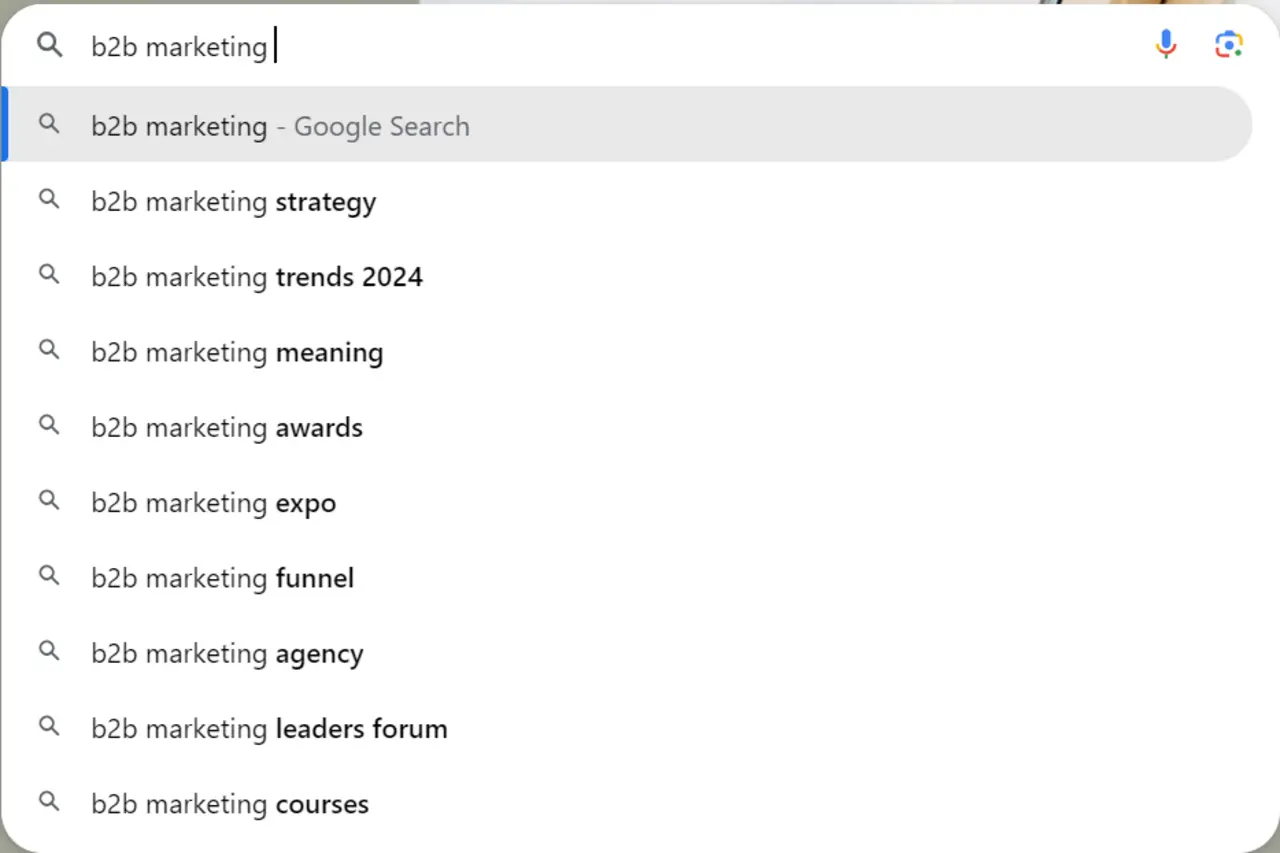
For example, when searching for B2B marketing, autocomplete suggestions reveal related secondary keywords. If B2B marketing is the primary keyword, suggestions like [B2B marketing strategy], [B2B marketing trends 2024], and [B2B marketing meaning] become secondary keywords.
Related and Additional Searches
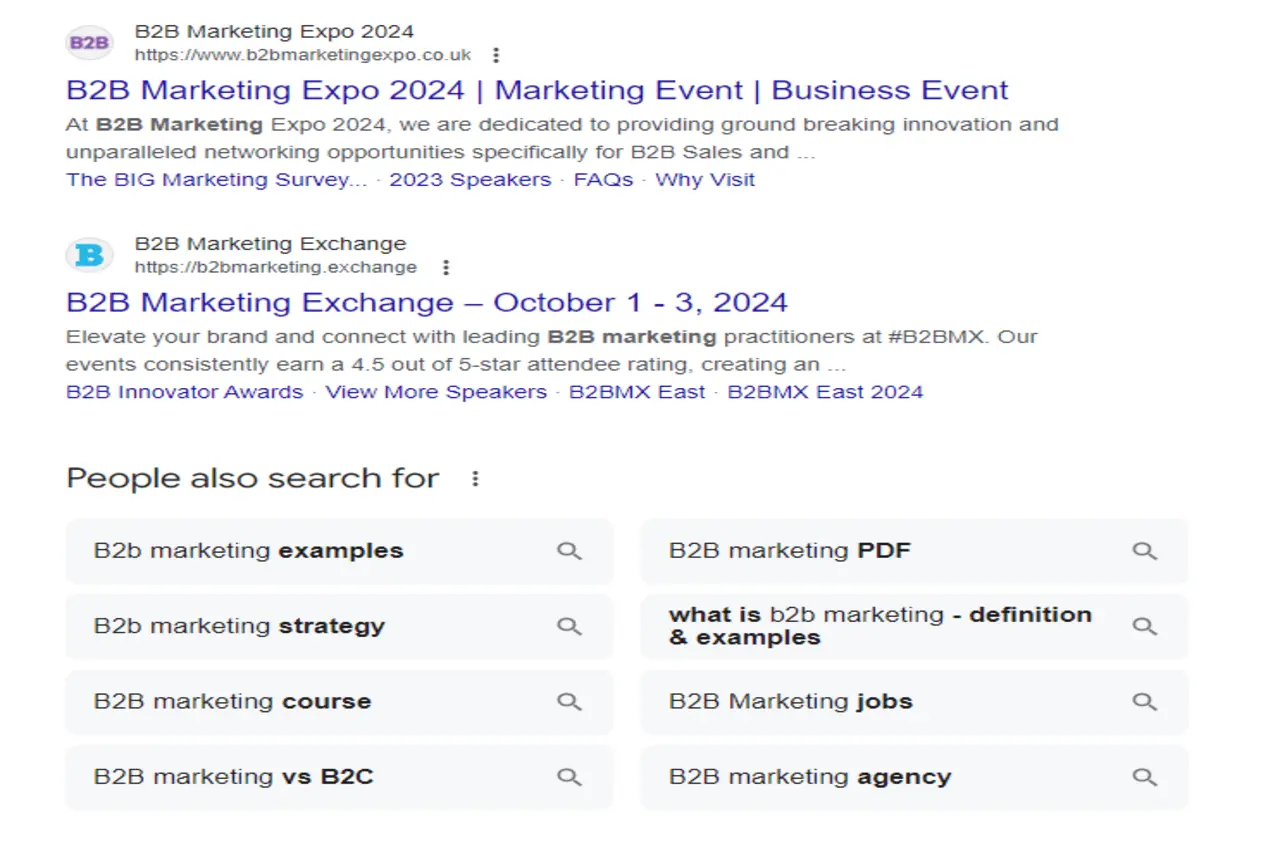
Secondary keywords can also be identified through related and additional searches displayed on Google.
Synonym Searches
inding synonyms or related terms for your primary keyword involves strategic thinking, research tools, and an understanding of the keyword’s context.
To discover related secondary keywords, follow these steps:
Clearly define your primary keyword.Understand its core meaning and context.
Consider variations and potential synonyms.
Use a dictionary to find alternative terms.
Identify long-tail keywords that are specific variations, often including synonyms.
Pay attention to language nuances and regional differences.
Explore forums, social media, and user-generated content related to your niche to understand the language and terms your audience uses.
Read industry publications and authoritative content to identify commonly used keywords and synonyms.
Gather feedback from your audience through surveys or reviews to identify additional keywords and synonyms.
Tools like Google Keyword Planner, SEMrush, Ahrefs, or Ubersuggest can be useful for finding synonyms, variations, and commonly used terms.
How to Optimize Content with Primary Keywords and Secondary Keywords (On-page SEO)
Even if you find the perfect primary keyword, it wont rank well unless its integrated effectively into your content. To gain organic traffic, you need to create content based on search intent.
In this section, well explain how to optimize content using Technical SEO or On-page SEO:
Title Tags: Include the primary keyword in the title to make the topic clear to both users and search engines. Aim to place the keyword at the beginning of the title.
First 100 Words: Use the primary keyword at least once in the first 100 words of your content to clarify the topic.
H1, H2, H3 Tags: Include primary keywords in various headers to structure your content and build a hierarchy.
Meta Description: Use primary keywords in the meta description to encourage users to click on your page when it appears in SERPs.
Alt Text: Include primary keywords in the alt text of images to improve accessibility and rank higher in image search results.
Video Content: Add the primary keyword to the video title, description, and tags to improve visibility on video search platforms.
Conclusion: Primary Keywords and Secondary Keywords are Key Elements in Marketing Strategy
In conclusion, appropriately using primary and secondary keywords is crucial for content marketing, SEO, performance marketing, and expanding website traffic. This requires careful and step-by-step planning.
First, choose the appropriate primary keyword and then find relevant secondary keywords based on it. Create high-quality content based on these keywords and incorporate them into your marketing strategy.
By doing this, you can achieve higher rankings in search engines, allowing more people to access your website. Therefore, continuous analysis and proactive management, including keeping up with the latest trends, are necessary.
Ultimately, the effective use of primary and secondary keywords is an essential requirement for successful online business operations.
The SEO keyword analysis process forms the cornerstone of effective search engine optimization. It plays a crucial role in shaping a websites visibility, traffic, and overall online success.
Through meticulous keyword research, businesses can identify the exact words and phrases that users input into search engines.
By strategically integrating these keywords into content, the likelihood of appearing in search results increases.
Related Searches That Reveal User Intent
Understanding user intent is equally important. By targeting keywords that align with what users are seeking, a website can drive more organic traffic.
Relevant traffic not only increases the number of visitors but also enhances the likelihood of converting them into customers.
In this article, well explore a case where Warner Bros. failed in SEO, leading to a missed box office opportunity.
Warner Bros. and the Failure of SEO Keyword Research
Founded in April 1923, Warner Bros. has spent a century bringing various stories to people.
Warner Bros. is an American film studio involved in both film production and distribution. Under the Warner name, the company has influenced sectors like American TV dramas, animations, games, and music.
It’s one of the major six Hollywood studios that achieved consecutive box office hits in the 2000s, including well-known titles like Superman, The Dark Knight, The Lord of the Rings, and Harry Potter.
Warner Bros. produced a new film based on Harley Quinn, the notorious girlfriend of the Joker and one of the popular DC characters.
However, despite the strong character, the movie delivered disappointing results.
The Reason for Failure?
The movie was originally titled Birds of Prey: And the Fantabulous Emancipation of One Harley Quinn.
Despite Harley Quinn being the main character, Warner Bros. did not include her name at the beginning of the movie title.
It wasnt until later that Warner Bros. realized Harley Quinn was a crucial keyword, leading them to change the movie title to Harley Quinn: Birds of Prey. Unfortunately, by then, it was too late.
Without Harley Quinns name at the start of the title, audiences had difficulty realizing that she was the main character of the film.
The movie was expected to gross $60 million, but it only achieved $33 million.
All of This Stemmed from Ignoring the Importance of Keywords
People searching for the movie were likely interested in Harley Quinn. Although the title was eventually changed, it was criticized as being too late.
Warner Bros. was also criticized for neglecting competitor research. It was essential to understand what keywords and content moviegoers were interested in at the time.
Analyzing the Search Engine Result Pages (SERP) to understand search intent is one of the most important considerations when building SEO.
Conclusion from the SEO Keyword Analysis Failure
The lesson Warner Bros. learned from this case is that an SEO perspective is essential when choosing content titles.
Like other companies launching new services or product lines, Warner Bros. should have involved SEO experts in this process. Had they done so, Birds of Prey might have performed better at the box office.
Keyword research serves as a guide for content creation, highlighting topics important to the target audience. This not only optimizes content for search engines but, more importantly, provides significant value to potential customers.
Ultimately, SEO keyword research is not a one-time task. It requires continuous activity, allowing companies to adapt to evolving user preferences and industry environments.
Why are Marketing Analytics Tools Important for B2B Marketing?
Utilizing marketing analytics tools is crucial for understanding website performance and identifying opportunities for marketing improvement. Specifically, using GA4, a leading example of marketing analytics tools, allows you to track and analyze various aspects of your website, such as traffic sources, audience demographics, user behavior, and conversion rates. This tracking and analysis provide a clear understanding of how your website is acquiring potential customers.
For instance, if your goal is lead conversion, marketing analytics tools can offer insights into how to improve your website to secure more leads. If your goal is sales conversion, these tools can help you find methods for increasing conversion value.
In fact, for B2C businesses, the importance of marketing analytics tools is often well understood among practitioners, who are typically familiar with tracking tools and data utilization. However, for B2B businesses, the target customer base is relatively smaller, and website traffic is also less substantial compared to B2C businesses. As a result, the importance of marketing analytics tools is sometimes overlooked or tracking may not be implemented at all.
Why Should You Implement Marketing Analytics Tools?
Google Analytics 4 vs. Universal Analytics: Whats the Difference?
As many of you may know, as of July 1, 2023, the service for Universal Analytics (UA) has ended, and GA4 has taken its place. Therefore, discussing the UA version of Google Analytics is now of limited relevance.
? Consequently, we will focus on GA4, which is a leading marketing analytics tool.
Cross-Platform Tracking
GA4 is capable of tracking users across websites and apps, providing a complete view of the user journey.
This is particularly important for B2B marketers, who often deal with customers interacting with the brand across multiple devices and channels.
With GA4s cross-platform tracking capabilities, marketers can fully understand the customer journey regardless of where it starts or ends.
GA4 employs machine learning to predict future customer behaviors, such as the likelihood of churn or the probability of purchase.
This enables B2B marketers to identify and target the most valuable customers, allowing for more effective marketing campaigns and personalized customer experiences.
Privacy-Focused Design
GA4 is designed with a stronger emphasis on privacy compared to its predecessor, UA.
This feature is crucial for B2B marketers who must comply with increasingly stringent data privacy regulations.
How B2B Companies Should Set Up Marketing Analytics Tools
Various marketing analytics tools have been developed to improve how B2B marketers measure and track performance.
Why is setting up these tools crucial for B2B companies?
Identifying High-Lifetime-Value Customers
Advanced machine learning and predictive capabilities provided by marketing analytics tools offer real-time statistics on user behavior and conversions. They also provide methods to easily create similar audiences based on high-value customers, allowing marketers to expand reach to similar potential customers.
These features streamline data analysis and decision-making processes, saving time and resources without the need for complex analysis models.
Marketing analytics tools allow for tracking important business events or conversions, even if they are not standard events by default. This is significant for B2B marketers with complex sales cycles and multiple conversion paths.
Understanding the Complete Customer Journey
B2B companies can now gain insights into the entire customer journey through marketing analytics tools like GA4s event-based measurement model.
For instance, GA4 provides an overview of the customer lifecycle that is not limited by individual sessions or platforms.
GA4 easily tracks data collected from various applications and devices, aiding in the accurate understanding of how customers interact with the brand.
It also enables demographic segmentation of potential customers based on factors such as company size, industry, and location, allowing for more targeted marketing campaigns and personalized content.
Data-Driven Contribution to ROI Improvement
Data-driven contribution models, provided by marketing analytics tools, allocate conversion credit based on the data of each conversion event. This method calculates the actual contribution for each click interaction.
This function analyzes the customer journey from the first touchpoint to the final conversion, helping to improve the return on investment (ROI) for brand marketing campaigns. It also provides detailed insights into how various marketing activities contribute to conversions.
Marketing analytics tools offer new features and reports to help marketers better understand website traffic and performance. For example, GA4s attribution reports can identify which marketing channels drive the most conversions, aiding in budget allocation.
GA4 integrates with various Google products, including Google Ads, Search Console, Display & Video 360, BigQuery, and Search Ads 360. This combination allows for merging web and app data to extract valuable statistics, improving data-driven marketing campaign enhancements.
Additionally, GA4 can integrate seamlessly with other marketing tools like Salesforce and HubSpot, allowing easy data sharing between different systems and providing a comprehensive understanding of marketing performance.
Marketing Analytics Tools: A Necessity in B2B Marketing
Todays digital environment demands various insights, including understanding the types of spread, new perspectives on user privacy, and the diverse touchpoints customers use. Tools that provide insights while protecting customer privacy and measuring performance have become crucial.
In other words, advanced marketing analytics tools are needed to identify new potential customers and approach them at the right moment. These tools are powerful instruments that assist B2B marketers in tracking website traffic and performance, identifying the most valuable customers, and developing more effective marketing campaigns.
By setting up marketing analytics tools, B2B marketers can gain valuable insights into their business and enhance their marketing activities.
On-page SEO involves organizing the content on your site so that search engines can better understand and rank it.
Essentially, this process helps ensure that your content is not overlooked by search engines like Naver, Google, or Bing, and is ranked higher in search results.
Ultimately, it allows you to communicate to search engines what content users are looking for.
Search engines generally favor websites that are friendly to them. In other words, they prioritize sites that are optimized for search engines. Therefore, its crucial to refine your sites content to appeal to search engines.
By carefully following the SEO guide proposed by Growth Marketing Agency, you can significantly improve the efficiency of your search advertising.
The Importance of On-Page SEO
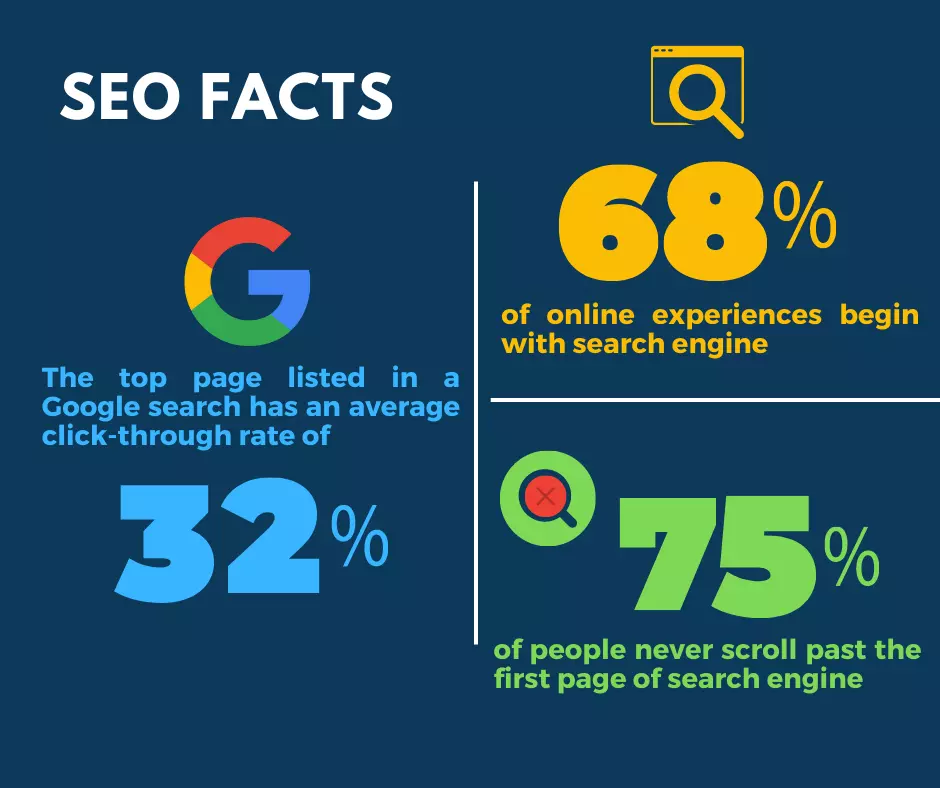
The average click-through rate (CTR) for top-ranking pages on Google is 32%, and 68% of online experiences begin with a search engine. Notably, 75% of users never scroll past the first page of search results (Source: Measuring the Success of Your SEO Campaign: Metrics and Tools to Use)
Improving the user experience should start with setting goals that benefit website users, which includes search engines as part of your audience.
Through on-page SEO, you can help search robots better understand your sites content.
The title is the first on-page SEO element users encounter, meaning it influences the first impression of your content.
The <title> element tells search robots what the page is about. Its essential to create accurate and unique title texts that reflect the pages theme and include the <title> element.
However, if a document has more than one <title> element, search robots need to analyze which title aligns with the page content.
This can lead to your page being classified as low quality. Additionally, excessively long titles can negatively affect your rankings. Be particularly careful when publishing series content to avoid having multiple pages with identical titles.
When multiple pages share the same <title>, search robots struggle to determine which page is most relevant, leading to poor content classification. Prioritize creating unique titles for each page.
? Checklist 2: Summary/Description
The meta description tag summarizes the pages content.
Its best to write the summary in several sentences and ensure each page has a unique description since search engines often use these summaries as snippets in search results.
If multiple pages have the same meta description, search robots may categorize them as duplicate content.
? Checklist 3: H1 and Alt Attributes
Similar to the title, the <H1> element is used as a subheading to represent the page’s content. If more than one <H1> is found in a document, it creates a structure that search robots may find difficult to understand.
The structure of your content can influence whether it is preferred by search engines.
Similarly, if your content images include descriptive (Alt) elements, the document becomes easier for search robots to understand. To build effective on-page SEO, include explanatory sentences that describe the topics of your page content and images.
SEO-Friendly URLs and Indexing Efficiency
While many factors need consideration during site construction, focusing on URLs can be a basic yet effective way to improve user metrics.
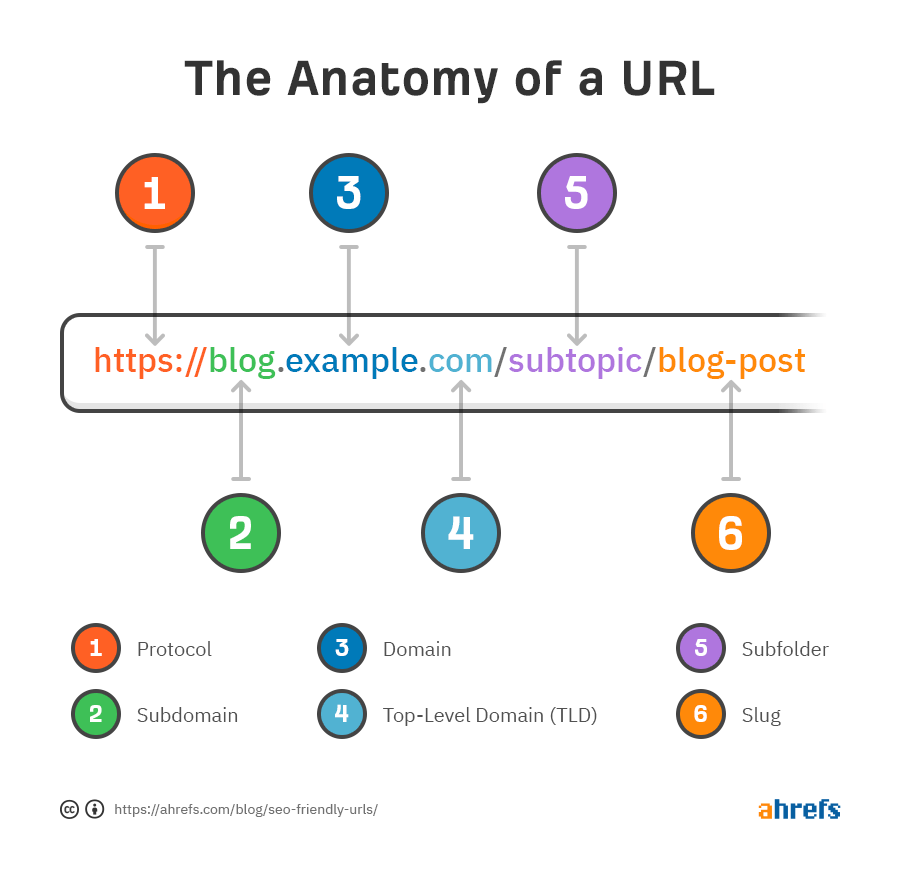
A URL is a protocol that indicates the location of a resource on the network, typically referring to a webpages address.
The most positive approach is to structure URLs in a way that reflects the classification of the content, making them easy to understand.
To create SEO-friendly URLs, use a top-level domain that is familiar to users, such as .com, .net, .co.kr, or .kr. Unfamiliar domains may be mistaken for spam or inappropriate sites, so it’s advisable to choose a popular domain. Additionally, it’s recommended to use a unique domain that matches the sites nature rather than relying on a generic domain provided by your web hosting service.
Understanding search engines is crucial when structuring your URL. Its important to develop a URL structure that is easy for both users and search engines to interpret. Minimizing URL parameters and avoiding fragment identifiers or hashbangs (#!) is essential since search engines cannot interpret these formats. Each page with different content should have its own unique URL.
Furthermore, search robots extract and process links within web pages as candidate URLs for indexing. Therefore, its important to mark up internal links in a way that search robots can easily interpret. For instance, providing standard link URL information helps search robots effectively navigate internal pages. Additionally, dynamic link changes can cause issues with search robot interpretation, so its recommended to use static markup for links.
Search robots repeatedly collect and deliver web content to search engines. However, not all collected documents are indexed; those deemed unnecessary are removed from the index. To improve indexing efficiency, its crucial to identify and prevent conditions that might lead to non-indexed documents.
? Checklist 4: Lack of HTML Content
In some cases, certain web pages use pure JavaScript for navigation without employing HTML markup. Search engines may consider these pages to have no content and exclude them from indexing.
Its advisable to use HTTP response codes instead of JavaScript.
? Checklist 5: Soft 404 (or Soft Dead)
When building and managing a site, its crucial to maintain HTTP response codes for error pages.
In case of exceptional errors on the site, appropriate guidance pages should be provided to users, and specific HTTP response codes should be assigned to each case.
Most websites use JavaScript to enhance user experience. Recently, many developers have adopted frameworks that convert web pages into single-page application (SPA) platforms.
In SPA sites, JavaScript plays a decisive role in determining the structure of web pages.
Search engines also evaluate and interpret the impact of JavaScript during the collection and content interpretation process.
Therefore, when building a site using the SPA method, its necessary to optimize JavaScript for search engines.
? Checklist 6: Checking for Disallowed Collection
Occasionally, some sites disallow the collection of resource URLs like JavaScript or CSS by search robots.
Check the content of robots.txt to ensure that search robots can collect JavaScript. Also, verify in advance whether Naver search robot IPs are blocked.
? Checklist 7: Fragment (#) URLs
Fragments are rules created to specify a particular position within a page.
Search robots remove the fragment part during URL interpretation. If your site URLs are built with SPA fragment URLs and each URL represents independent content, its necessary to convert them into permalinks.
JavaScript-based page construction does not necessarily exclude a page from search visibility. Search robots determine collection priorities for web pages based on algorithmic importance, given their limited collection resources.
However, even if a page is collected, it doesnt guarantee indexing or search visibility.
Therefore, its important to continuously update your SPA site to reduce the likelihood of being categorized as non-essential content while increasing the chances of being prioritized by search engines.
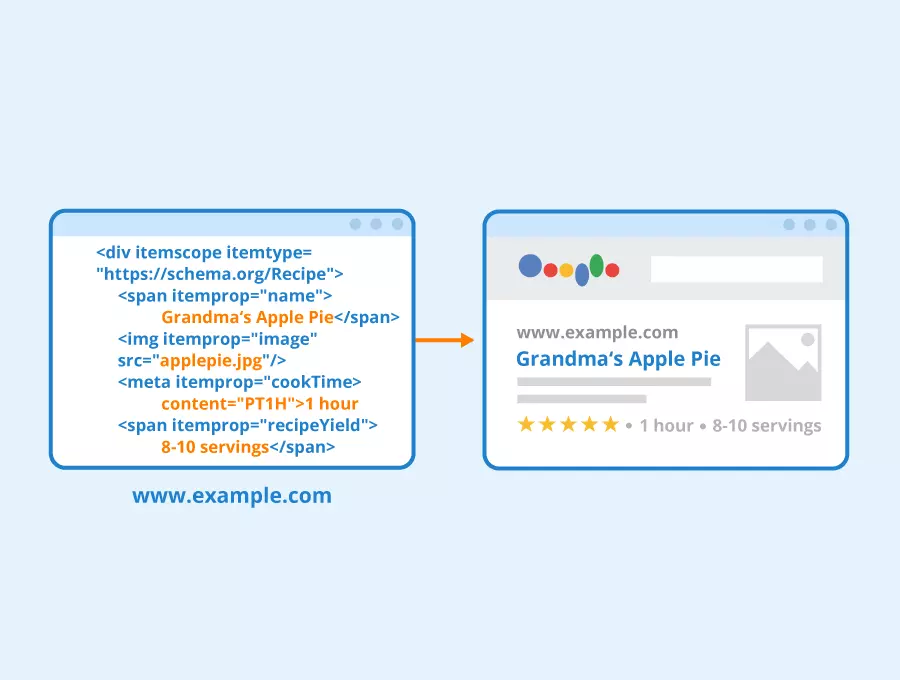
Structuring content logically and organizing it into ‘structured data’ can significantly enhance SEO.
Examples include relational databases. From a search engines perspective, content organized in a structured format is much easier to interpret.
The process of defining web content as structured data has been ongoing, thanks to the continuous efforts of the community and related organizations. More details can be found at schema.org.
Various search engines, including Naver, use structured data to deliver search results that match the characteristics of the content.
Typically, this involves structuring the information of specific content into detailed attributes that correspond to the type of content, then adding it to the web page. Navers search robots automatically collect this information, organize it according to the contents characteristics, and use it in search results.
Structured data, as defined by schema.org, was officially recognized as a web standard by the W3C in 2015, and standardization efforts have been active ever since. The structured data proposed by this organization consists of data types and attributes. Data types are combinations of attributes based on the characteristics of a web page or content. Based on this, multiple data types can be combined to add structured data to a single web page.
Attributes represent detailed information about a web page or content and are elements that make up a data type. For example, in the case of audio content, attributes might include playback time or the number of plays.
Schema.org supports three language formats for structured data: Microdata, RDFa, and JSON-LD. Naver recommends using the widely adopted Microdata or JSON-LD formats. After building structured data, its essential to validate it to ensure correct implementation. Schema.org provides structured data testing tools and detailed pages by data type for validation or to check examples written in different language formats.
Conclusion: SEO is a Fair Starting Point, but Success Depends on Effort
How many clicks does it take for users to find the right information in the sea of data? Some users may leave immediately after realizing they haven’t found what theyre looking for, while others may delve deeper into your content.
The content that search engines prefer depends not only on its quality and quantity but also on how well you understand on-page SEO.
While no one can fully understand everything about search engines, increasing the likelihood of being selected by them is a basic principle of marketing.
Why are app marketing success stories important for marketers? Currently, mobile devices account for over 50% of global website traffic. This high mobile usage supports the growing demand for mobile app marketing.
Mobile app marketing involves promoting mobile applications to reach more customers and increase downloads. This process occurs through various channels such as social media, online advertising, App Store optimization, influencer marketing, and email marketing.
Consequently, app marketing aims to enhance visibility and encourage users to download and engage with different applications.
The company Healthread developed an app to connect patients with similar or identical health conditions, regardless of their location. Users can create communities, receive support and encouragement, and discuss health issues through this app. They provided them with a safe space for comfort and empathy.
Healthreads Marketing Strategy
Healthread needed to build a consumer behavior journey from awareness, app download, installation, and ultimately to sign-up. This required a successful marketing strategy. They developed a comprehensive marketing strategy that included paid social media, advertising copy, blog posts, email marketing, and creative content. Through this approach, they established a robust lead generation strategy and built brand awareness.
Developed Social Media Strategy for Targeting: Managed all digital assets for paid ads, organic social, and email marketing.
Executed Media Planning and Content Creation: Created landing pages, promoted sign-ups via email, and built campaigns to drive key content downloads and app installations.
Implemented Digital Media Strategy: Led Healthreads content media strategy and branding efforts.
Distributed Healthreads Message through Own Content: Shared value with others by disseminating their message.
Posted Content to Build Brand Awareness: Published content that resonated with the target audience to build brand recognition.
Created Healthreads Brand Voice: Developed a strong audience while establishing their brand voice.
Produced Health and Medical-Themed Ads and Campaigns: Created advertising and campaigns focused on health and medical topics.
Optimized Landing Pages for Clear CTAs and Accessibility: Designed landing pages with clear calls to action and accessibility to facilitate easy inquiries from potential customers.
Built App Engagement and Provided Content: Helped users navigate the site by building app engagement and providing content.
Additionally, they used dynamic marketing techniques to create tailored messages for different customer segments. They also built company pages on LinkedIn, Twitter, Facebook, and Instagram, creating and publishing engaging messages, videos, and images. This led target customers to follow their social media accounts, creating an organic impression.
What Are the Key Elements of an App Marketing Success Story?
Healthread built a landing page for email sign-ups to generate customer interest even before the app launch. They sent emails containing useful information, such as relevant videos and blog links, to potential customers to maintain their interest until the app was ready. This meticulous app marketing strategy proved successful.
As a result, they achieved over 15,000 downloads, a 2.3% CTR, and attracted more than 12,000 subscribers through various media and A/B testing on platforms like Buffer, Mailjet, Google Ads, Meta, Reddit, and Apple Search Ads.
6thStreet is the largest omnichannel e-commerce site selling high-end fashion and beauty brands in the UAE, Saudi Arabia, Kuwait, Oman, Bahrain, and Qatar. To generate additional revenue, 6thStreet launched iOS and Android apps in 2018. Given the high app usage in the Middle East, 6thStreet anticipated significant app engagement.
6thStreets Crisis Detection
The launch of Apples App Tracking Transparency (ATT) framework on iOS significantly impacted advertising spending efficiency and overall acquisition strategy for 6thStreet. They discovered that their app installation campaigns through their own attribution network (SAN) resulted in lower app customer engagement than before.
Customers acquired through app installation ads tended to uninstall the app shortly after onboarding. Furthermore, retargeting iOS users became challenging due to reduced capabilities of ad networks.
6thStreets marketing team needed to address these issues swiftly before the Ramadan e-commerce season began.
Strategy Shift to Web Promotion
For the Ramadan season campaign, 6thStreets performance marketing team decided to switch from app installation ads to web-based advertising networks such as Meta, Google Ads, and TikTok. This allowed them to redirect ad traffic to their website instead of the App Store. They targeted web visitors from these ad networks and offered discounts on in-app orders.
They incorporated personalization into 6thStreets marketing strategy during the Ramadan festival promotion period, delivering the right message to the right customer.
By transitioning from app installation ads to web-based ads, 6thStreet could drive more web traffic. To further enhance customer personalization, they also implemented Branch deep links to improve app onboarding experiences.
Deep links routed users to precise in-app content, leading to increased lifetime value (LTV), loyalty, and revenue compared to users arriving directly from a general landing page. As a result, 6thStreet saw a 60% increase in app installations, a 13% rise in ROAS, and a 70% increase in DAU.
This success story demonstrates how 6thStreet was able to acquire highly engaged app users at a lower cost compared to other e-commerce brands and re-engage existing users.
World of Warships Blitz 3D War is a Korean maritime warfare simulation mobile game. Their goal was to increase exposure and brand awareness globally on the App Store and Google Play Store.
They had to optimize for French, Italian, Korean, Portuguese, Russian, Spanish, Turkish, Chinese (Traditional), Chinese (Simplified), German, Japanese, and English markets.
This presented significant difficulties in optimizing across so many diverse markets.
ASO Optimization Through Partner Collaboration
wowsblitz tackled the challenge of ASO (App Store Optimization) by combining AI-based ASO tools with in-house expertise. They used keywords that had not been ranked in the 12 localized versions of the App Store. This approach helped them find opportunities to drive more traffic to the game.
ASO optimization in a single market is challenging enough, let alone across multiple languages and countries. It required substantial resources and strategy. wowsblitz found several partners to assist in achieving their goals. They worked effectively with competent and reliable partners to conduct the ASO process.
As a result, wowsblitz successfully analyzed keywords with high mentions and conversion rates by country, refining them according to language-specific contexts.
This led to an average exposure ranking increase of 35% on the App Store, a 73% increase in Spain, and a remarkable 91% increase in Turkey.
Proven App Marketing Success Stories
In conclusion, the success stories of Healthread, 6th Street, and wowsblitz demonstrate the power of a well-rounded app marketing strategy.
By effectively utilizing social media, web promotions, and App Store optimization, these companies achieved remarkable results in visibility, engagement, and downloads.
Their innovative approaches and targeted efforts provide valuable lessons for anyone looking to enhance their app marketing efforts and drive significant growth.
Securing potential customers requires significant time and effort, but it is an indispensable process for business success. The more you find new customers, the more revenue you can generate and the more you can grow your business.
At Growth Marketing Agency, we provide guidance on how to identify and discover potential customers that are suitable for each business.
Securing Potential Customers: Different Types of Leads
Q. What is a Lead?
A lead refers to an individual who has shown interest in a company’s products or services. Leads are recorded in various ways, such as email addresses, phone numbers, or names, and are those who are seeking solutions to their problems. Leads can be obtained through specific events like contact forms, website sign-ups, or newsletter subscriptions. They represent a crucial data point for businesses as they indicate interest and potential solutions that your products can offer.
Types of Potential Customers Leads
Information Qualified Lead (IQL): Also known as a cold lead, an IQL is someone who has just started searching for products or services. They may provide contact information in exchange for useful information but generally do not know how a company can help them.
Marketing Qualified Lead (MQL): Also known as a warm lead, an MQL is someone who has taken some action to learn more about your products or services. This might be through targeted ads, affiliate marketing, or email campaigns. MQLs often provide their name, email address, and phone number in exchange for offers like eBooks, promotional proposals, newsletters, or free quotes.
Sales Qualified Lead (SQL): Also referred to as a hot lead, an SQL is a customer ready to make a purchase. They have shown interest, gathered information, compared options, and are prepared to buy. SQLs have the highest likelihood of converting from a potential customer to a buyer.
Importance of Securing Leads from Potential Customers
Finding leads through marketing is a valuable strategy for increasing business revenue. When marketers identify strong leads, they can develop more efficient and effective sales strategies tailored to the relevant information. This allows marketers to target individuals who already know about and are interested in your products or services.
Well-targeted customers are more likely to purchase than those unfamiliar with your products. Genuine interest from potential customers often leads to faster conversions.
When you started your business, you likely targeted a specific group of people. However, was sticking to that initial group the right choice?
Lead generation provides an opportunity to learn more about potential customers in detail. You might end up engaging individuals not included in your original marketing campaigns.
By gathering insights from a customer perspective and generating high-quality leads, marketers can identify market trends and explore new markets that were previously inaccessible.
Enhance Lead Quality with Persuasive Techniques
As you continue to secure leads, you’ll be able to adopt a highly targeted approach. Every piece of content created for your brand, from website and email copy to social media and blog posts, will be crafted with advanced targeting in mind.
This allows marketers to create more relevant and appealing topics and messages for each target audience.
Properly executed lead generation can maximize your brand’s capabilities to achieve marketing goals. You’ll find it easier to capture the interest of qualified leads and guide them toward conversion.
Focusing on the problems that potential customers care about will make them more open and interested in your brand. Improved lead quality can enhance conversion rates and boost revenue, potentially increasing your sales growth beyond expectations.
Building customer reviews is also an effective way to address potential customer problems. For example, potential customers need strong persuasion to convert, and few things are more persuasive than past customer reviews.
When potential customers see or hear from other consumers who have resolved similar issues with your product, it adds substantial persuasive power. However, obtaining customer reviews isn’t automatic and may involve costs to request recommendations.
As you generate more potential customers, collecting customer reviews can be utilized in marketing materials such as websites, emails, videos, social media posts, and infographics.
Potential Customers Lead Generation Marketing Strategy
Determine Target Customers
If potential customers do not convert into suitable clients, generating leads is pointless. Therefore, start by conducting research to accurately identify your target audience.
Understand your ideal customers’ backgrounds, goals, online habits, challenges, and their buying processes.
Once you have detailed information about your target potential customers, tailor your lead generation marketing campaigns to their preferences, including messaging and traffic channels.c
Set Campaign Goals
To achieve success in marketing campaigns, set specific goals. Generating as many leads as possible might not always be the goal. Benchmark past performance to set specific targets such as the number of visits and conversion rates.
If you havent started tracking yet, now is the time. Understanding the impact of potential customers on your brand will help you determine how many customers are needed to meet sales goals.
Then, calculate the average number of leads that convert into buyers and adjust conversion rates and goals accordingly.
Attract Ideal Customers
Today’s potential customers are more cautious and require more compelling offers. It is no longer easy to attract ideal potential customers as before.
? Marketers need to make unique and highly attractive offers in their campaigns to achieve results. This requires considerable effort.
Build Landing Pages
Once you know what to offer potential customers, you need to persuade them to make a purchase. Landing pages are an excellent way to directly guide customers to a call to action (CTA). Therefore, businesses should provide persuasive landing pages.
A landing page is the first page users see when they click on a site. It includes marketing to promote the company’s products and services. In digital marketing, landing pages primarily focus on conversion rates.
They should drive more traffic and convert it into sales, helping users develop an interest in your products or services and achieve business goals.
Test Your Campaign
Before driving traffic, conduct thorough campaign testing. Act as if you are a potential customer accessing the landing page through various links, such as email or social media posts. Ensure these links work correctly and verify that the landing page displays as intended across all browsers.
Interact with the page sufficiently to ensure all processes, from the frontend to the backend, function smoothly.
Analyze and Optimize Lead Generation Marketing
Even the best marketers can’t do everything perfectly. Using analysis software is a smart approach to quickly optimize campaigns based on data.
Securing Potential Customers by Cultivating Diverse Lead Sources
Achieving a successful lead generation campaign requires a multifaceted approach. Developing effective, customized strategies for each channel and nurturing lead sources is essential. Many small businesses face increased challenges due to digital saturation.
Maintaining a steady influx of new leads in a digitally oversaturated market can be challenging. Therefore, many companies need to overcome these obstacles and elevate their business to a higher level.
How a Hotel Enhanced Guest Experience with Kakao Channel
Real-World Example: Hotelier Jun Gil-bong, Daejeon
Jun Gil-bong, a hotel manager in Daejeon, faced a tough challenge: making his hotel stand out in a city often labeled as dull. His hotel, which had primarily served government officials for 25 years, needed to attract general customers. Kakao Channel came to the rescue:
Targeted Marketing: By analyzing customer data through KakaoTalk Channel, Jun found that women aged 35-39 were his main customers. This insight helped him tailor marketing campaigns, promoting family-friendly packages and seasonal deals.
Customer Engagement: Jun sent bi-weekly messages to his followers, sharing exclusive offers and updates like holiday packages and special events.
Collecting Reviews: Kakao Channel made it easy to gather customer reviews, boosting the hotels online reputation. Positive feedback from guests helped attract new customers from beyond the local area.
The result? The hotel saw a significant increase in occupancy rates and gained a reputation as a top choice for both locals and visitors.
How a Packaging Company Revolutionized Client Interaction with KakaoTalk Channel
Real-World Example: CEO Jang Ji-eun, Goyang
Jang Ji-eun, running a packaging company in Goyang, struggled with the traditional, inefficient face-to-face consultation process. She needed a more efficient method and found it with KakaoTalk Channel:
Online Consultations: The platform enabled Jang to offer detailed online consultations, expanding her reach nationwide and even internationally. The channel handled up to 50 inquiries daily.
Automated Responses and Custom Menus: Jang set up custom menus to address frequently asked questions, providing immediate answers and reducing the need for constant direct interaction.
Improved Customer Service: The efficiency of Kakao Channel improved customer satisfaction. Clients appreciated quick responses and the ability to discuss packaging options without physical meetings.
These innovations led to a 500% increase in sales, establishing Jang’s company as a leader in the packaging industry.
How a Pharmacy Built Trust and Increased Sales with Kakao Channel
Pharmacist Yoo Dae-hae, operating a late-night pharmacy in Songdo, needed to stand out in a crowded market. KakaoTalk Channel was the solution:
Personalized Communication: Yoo used Kakao Channel to keep detailed notes on customers regular purchases and consultation histories. He shared tailored health information and product recommendations.
Group Management: By categorizing customers into groups (e.g., parents, students), Yoo sent targeted messages about relevant products and promotions.
Efficient Alerts: When hard-to-find products arrived, Yoo quickly notified loyal customers via Kakao Channel. This prompt communication established his pharmacy as a reliable source for specialty items.
The result? Monthly revenue increased significantly, averaging over 30 million KRW, and the pharmacys customer base grew substantially.
Conclusion
Kakao Channel has demonstrated its potential to boost sales and enhance customer engagement across various industries. By integrating this platform, businesses can leverage data-driven insights, improve communication, and streamline operations.
In Korea, both Naver and Kakao require businesses to meet specific qualifications and obtain approval to become official agencies.
Growth Marketing Agency is proud to be an official agency, meaning we have met these stringent requirements and received authorization to manage and optimize your campaigns on these platforms. This status ensures that we have the expertise and tools necessary to help you effectively promote your business on KakaoTalk Channel.