If you want to run ads in Korea, Naver is the most important platform to start with. Naver is the country’s #1 search engine, used by millions every day. It offers search ads, display ads, and shopping ads that help you reach the right audience fast. But if your business is based outside Korea, opening a Naver Ad account is not so simple.
Why foreign companies can’t open Naver Ad accounts directly
Naver requires all advertisers to have:
A Korean business registration number
A Korean bank account
A Korean-language website with matching business information in the footer
If you don’t have these, you can’t register directly. This is where we can help.
How we can open a Naver ad account for you
Growth Marketing Agency is an official partner of Naver Ads in Korea. We handle the entire account opening process for you, so you don’t need to worry about Korean business registration or bank accounts. Please note that some types of businesses are not allowed to run ads in Korea (such as gambling or certain medical services), and some industries have stricter advertising rules. We will review your business type before starting. Here’s how it works:
We begin by signing a service agreement with you and receiving your prepaid ad budget, which will be used to run your campaigns.
You send an English copy of your Business Registration Certificate issued in your country, and we submit it to Naver.
We create your Naver Ads account.
While setting up, we handle Naver’s required Korean-language review for your landing page URL and ad creatives.
Once the review is approved, your ads are ready to launch on Naver.
We guide you through setting up conversion tracking (sales, inquiries, and other goals) so results are measurable from day one.
You receive monthly performance reports in English with clear metrics and practical next steps.
The two most widely used options are Keyword Search Ads and Display Ads (GFA).
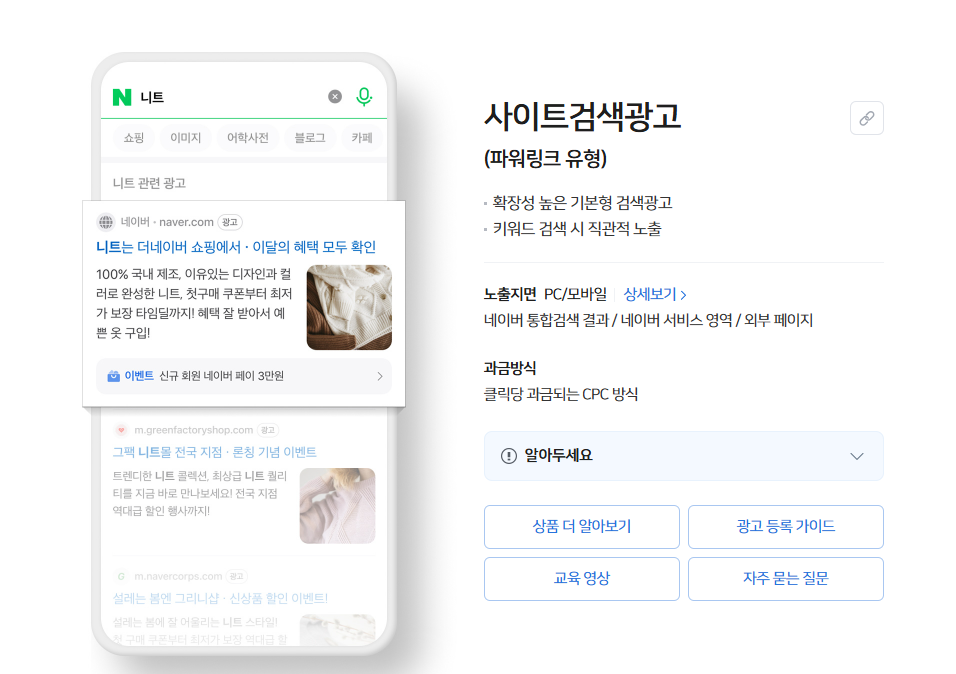
Keyword Search Ads work very similarly to Google’s Search Campaigns. When users search on Naver, your ads appear alongside the results based on the keywords you select.
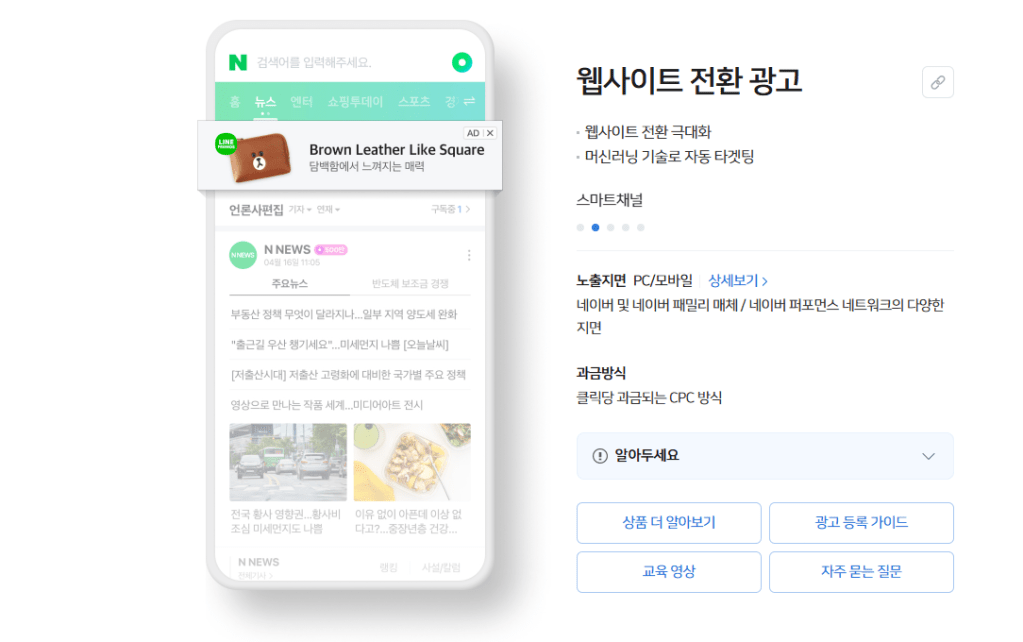
Display Ads (GFA) allow you to reach users through banner placements across Naver’s wide network of sites and apps.
One important difference from Google Ads is the way budgets are managed. For example, if you set a daily budget of USD 1,000 on Google Ads, the actual spend may fluctuate slightly above or below that amount. On Naver, however, your daily budget is a hard cap — it will never exceed the limit you set.
Naver Display Ads can be purchased in different ways. In some cases, you reserve exposure for specific dates, days of the week, or time slots. More commonly, they operate in a format similar to Meta campaigns, where you set a daily budget and target users by gender, age, location, interests, or even by their past search history for specific keywords.
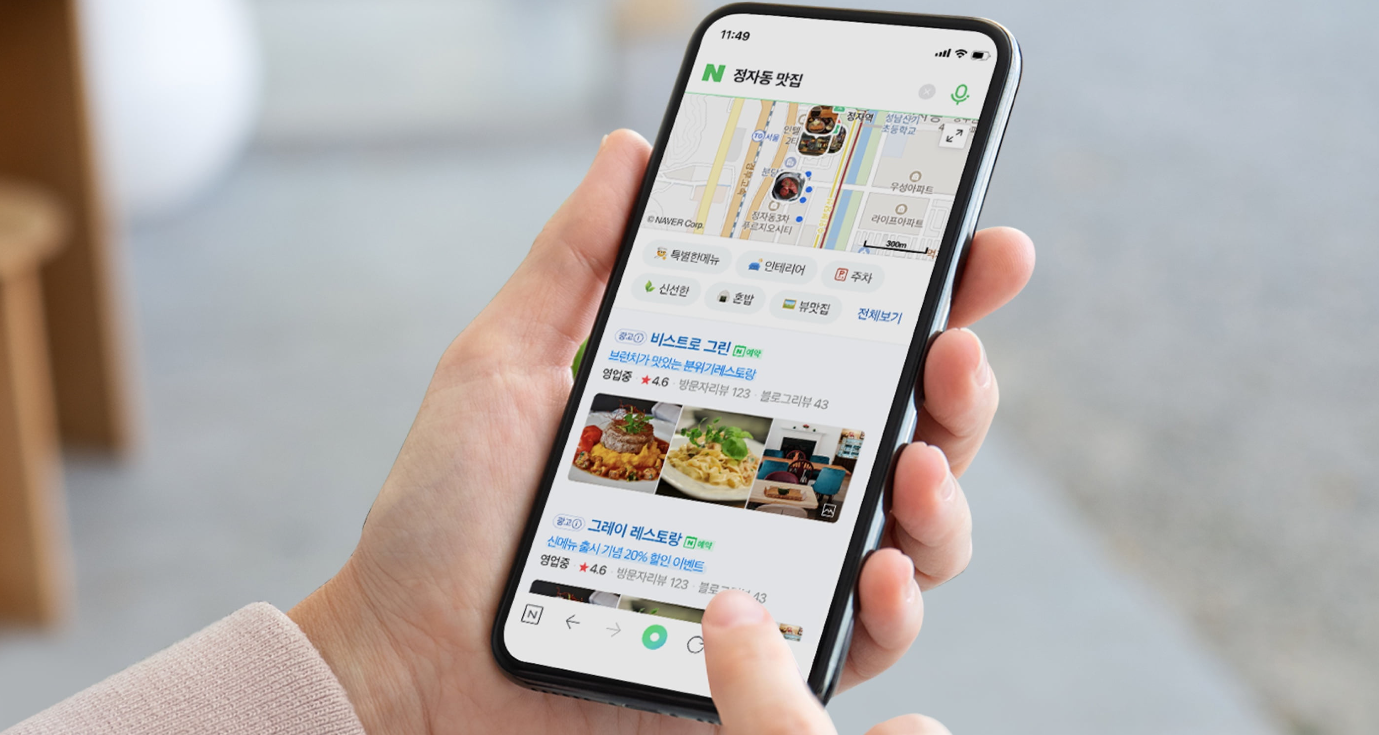
Beyond search and display, Naver also offers specialized ad placements. For example, Local Ads appear at the top of Naver Maps results (important to note: most Koreans don’t use Google Maps). There are also Shopping Ads, which allow products to appear at the top of Naver’s shopping section.
By sharing details about your business, Growth can recommend the most suitable ad products and strategies for your goals in the Korean market.
Ready to Start Advertising on Naver?
Contact us now to get started. We’ll explain our process and give you a quote for opening your Naver ad account.
If you’ve scrolled through your Instagram feed lately, you’ve likely noticed a shift in the aestheticfewer polished, obviously sponsored posts and more authentic-looking content featuring Korean creators with that unmistakable clean, minimalist style. Introducing the world of Korean influencers who are quietly transforming how global brands connect with audiences both in Korea and worldwide.
Ten years ago, international brands entering the Korean market relied heavily on traditional celebrity endorsements. Today, they’re investing millions in partnerships with Korean digital creators who wield genuine influence over purchasing decisions. The secret behind this major shift lies in understanding the unique ecosystem of Korean influencer marketingone that operates with its own distinct rules, categories, and measures of success.
Let’s unpeel the multiple layers of the Korean influencer landscape and how savvy global brands are navigating this space to create authentic connections with Korean audiences.
Korean Influencers: The Origin Story
The Korean influencer ecosystem wasn’t born out of corporate marketing departments or agency brainstorming sessions. Rather, it emerged organically alongside Korea’s rapid digital transformation and the global rise of Korean cultural exports (K-wave or Hallyu).
What makes Korean influencer marketing distinctive isn’t just its scale or reach, but its fundamentally different approach to influence itself. While Western influencer marketing often emphasizes direct promotion and clear calls-to-action, the Korean approach prioritizes subtlety, authenticity, and lifestyle integrationcreating content where products enhance the creator’s narrative rather than interrupting it.
This unique approach stems from Korean consumers’ sophisticated understanding of digital marketing and their expectations for more nuanced, trustworthy recommendations. The result? An influencer landscape that’s categorically different from what many global brands are accustomed to navigating.
Three Types of Korean Influencers
To decode the science behind successful Korean influencer marketing, let’s break down the three distinct types of Korean influencers that brands encounter in this market:
Type 1: The Power Metrics Players
Picture an Instagram account with 10,000 to 100,000 followers, impressive engagement rates, and a feed filled with perfectly staged content spanning multiple categoriesfrom travel and beauty to fashion and lifestyle products. These accounts maintain robust metrics, participate in virtually any marketing opportunity available, and frequently appear in hashtag search results.
Here’s the catch: many of these accounts maintain their impressive stats through purchased followers, likes, and commentsa common practice in the Korean digital ecosystem. While they excel at generating visibility (appearing in top search results when users look for relevant content), their actual influence over consumer behavior may be significantly limited.
Type 2: The Authentic Micro-Influencers
Now imagine a much smaller accountperhaps just 500 to a few thousand followerswhere every interaction feels genuine. These accounts are run by what Koreans might call “??” (insiders or socially connected individuals)people with authentic social connections who are actively engaged in their communities.
For these creators, growing their social media presence is a genuine interest, and brand collaborations represent just one aspect of their digital experience rather than their primary focus. Their feeds predominantly feature authentic lifestyle content, with promotional posts comprising just a small percentage of their overall sharing.
While these accounts rarely rank high in hashtag searches (making them less immediately visible), they wield genuine influence with their audiences. Their recommendations carry significant weight precisely because followers trust their authenticity and relate to their content on a personal level.
Type 3: The Semi-Celebrities
Between mainstream celebrities and everyday content creators exists this distinctive third category: individuals who’ve achieved public recognition beyond social media but aren’t managed by traditional entertainment agencies.
This group includes fashion brands fitting models (chosen for their style and appearance), regional TV personalities, weather forecasters, and other public-facing professionals who’ve cultivated strong personal brands on social media.
Popular Korean influencer posing at a LOEWE event in Seoul. Source: youseeany
Platform Strategy: Where Your Brand Belongs in Korea’s Digital Ecosystem
For international brands, choosing the right platform is just as important as selecting the right influencers. While Instagram dominates discussions of global influencer marketing, Korea’s digital landscape offers multiple platforms with distinct advantages.
Instagram: Visual Storytelling for Global Appeal
Instagram remains popular for brands targeting both Korean and international audiences simultaneously. It’s particularly effective for:
Fashion and beauty brands showcasing visual aesthetics
Travel and hospitality brands highlighting experiential content
Products with strong visual appeal and minimal need for technical explanation
The platform’s visual nature makes it ideal for brands that can tell their story primarily through imagery, but less effective for products requiring detailed information or technical specifications.
Naver Blog: Korea’s Content Powerhouse
Unlike Instagram, Naver Blog (a platform many international marketers overlook) offers an official influencer program with structured categories.
For brands targeting Korean consumersparticularly for information-intensive decisions like travel planning or luxury purchases that benefit from detailed contentNaver Blog often delivers more substantial results than Instagram.
What makes Naver Blog particularly powerful:
Long-form content capability with detailed product information
Higher trust factor among Korean consumers for purchase decisions
Better searchability within Korea’s dominant search engine
Structured categories that allow precise targeting by interest
Content longevity that continues generating traffic months after posting
Brands selling products that require education, explanation, or detailed comparison find Naver Blog particularly effective for driving considered purchases rather than impulse buys.
The Localization Imperative: Why Korean Campaigns Need Korean Expertise
Perhaps the biggest mistake international brands make when entering the Korean influencer market is assuming that strategies effective in other markets will translate directly. Korean consumers have distinct expectations for how brands engage with influencers, and campaigns that ignore these cultural nuances often fail despite substantial investment.
Cultural Context: The Hidden Rules of Korean Promotion
Korean influencer content follows unwritten rules that might seem subtle to outsiders but are immediately apparent to local audiences:
Indirect endorsement is preferred over direct promotion
Visual harmony between product and influencer aesthetic is non-negotiable
Relationship narrative matters more than product features
Subtle integration of products into lifestyle contexts outperforms obvious placement
Community acknowledgment through comments and interaction enhances credibility
Campaigns that violate these implicit expectations often face consumer skepticism or, worse, backlash for appearing inauthentic or “too foreign” in approach.
Language Beyond Translation: The Nuance of Korean Marketing Communication
Korean marketing language has its own conventions, humor styles, emotional triggers, and trending expressions that evolve rapidly. Content that simply translates Western messaging misses these cultural touchpoints, immediately signaling to consumers that the brand doesn’t truly understand the market.
Building Your Korean Influencer Strategy: A Roadmap for International Brands
For international brands looking to leverage Korean influencers effectively, here’s a strategic framework that addresses the unique challenges of this market:
Step 1: Define Your Korean Audience Segment
Before approaching any influencers, clearly define who you’re targeting within Korea:
Age demographic and digital behavior patterns
Geographic concentration (Seoul vs. regional cities)
Income level and purchase priorities
Cultural identification (globally-oriented vs. traditionally Korean)
Digital platform preferences and consumption habits
This foundation determines everything from influencer selection to content approach and platform strategy.
Step 2: Determine Your Authenticity Approach
Based on your brand positioning, decide where you fall on the authenticity spectrum:
Full Localization: Adapting completely to Korean aesthetic and communication norms
Global Brand, Local Voice: Maintaining global brand identity while adopting local communication styles
International Appeal: Leveraging your foreign origin as part of your brand story
This decision impacts which influencers will resonate with your strategy and how content should be developed.
Step 3: Partner with Local Experts
Rather than attempting to navigate the Korean influencer landscape alone, partner with local experts who can provide:
Cultural verification of campaign concepts
Influencer vetting beyond surface metrics
Negotiation support with appropriate compensation structures
Content review for cultural appropriateness
Performance analysis based on local benchmarks
These partnerships dramatically increase campaign effectiveness while preventing costly cultural missteps.
Step 4: Develop a Multi-Tier Influencer Strategy
The most successful international brands in Korea employ influencers across multiple categories:
Awareness Tier: Larger accounts (including some Power Metrics Players) to generate initial visibility
Credibility Tier: Semi-Celebrity influencers who bring public recognition and authority
Conversion Tier: Authentic Micro-Influencers whose recommendations drive actual purchase behavior
This balanced approach maximizes both reach and effectiveness while distributing the budget strategically.
Step 5: Create a Platform-Specific Content Strategy
Develop distinct content approaches for each platform rather than using identical content across all channels:
Instagram: Visually-driven, aesthetically cohesive content that integrates naturally
Naver Blog: Detailed, informative content with substantial product information
YouTube: Narrative-driven content that showcases product experience over time
Each platform requires specific formatting, tone, and content structure to perform optimally.
Airbnb faced significant cultural barriers entering Korea, where traditional hospitality norms and privacy concerns made their sharing economy model initially unfamiliar. Their influencer strategy focused on:
Cultural Translation: Working with travel influencers to explain the concept in culturally relevant terms
Safety Narrative: Partnering with trusted female influencers to address safety concerns
Unique Experience Focus: Highlighting experiences unavailable through traditional accommodation
Host Spotlights: Featuring Korean hosts to build local credibility
As Korean cultural influence continues to expand globally, we’re seeing two parallel trends emerge:
Korean influencers with global reach: As K-beauty, K-fashion, and K-entertainment continue gaining international popularity, Korean influencers are increasingly able to impact consumers beyond Korea’s borders.
Korean influencer methodologies applied globally: The subtle, authentic approach pioneered in Korea is gradually influencing global influencer practices as consumers worldwide become more sophisticated about detecting overt promotion.
For international brands, this creates both challenges and opportunities. While navigating the Korean influencer landscape requires significant cultural understanding and local expertise, brands that master this ecosystem gain not only access to Korean consumers but insights applicable to increasingly sophisticated influencer markets worldwide.
The brands that will succeed in this evolving landscape are those willing to adapt their approachtreating Korean influencer marketing not as simply another market to conquer with existing strategies, but as a fundamentally different model requiring genuine cultural engagement and strategic flexibility.
Looking to develop a Korean influencer strategy tailored to your brand? Contact our specialized team to explore a customized approach that aligns with your specific objectives, audience, and budget requirements.
First, let’s clarify that no SEO agency, including Growth Marketing Agency, should guarantee SEO services or claim to guarantee rankings on Naver, Google, or any other search engines. It’s impossible for anyone to guarantee natural search rankings on these platforms.
No SEO agency can control how Google or Naver ranks websites. Even if someone worked as a developer responsible for the search algorithms at these companies, they could never fully understand every aspect of it. This is because the algorithms have been adjusted and refined by many people over a long period, making it impossible for one person to have complete knowledge of them.
To respond to changes in search algorithms, SEO agencies like ours take a reverse engineering approach. We analyze the changed search results, estimate the new algorithm, and do our best to optimize your website’s ranking on both Google and Naver.
Agencies that guarantee high rankings without upfront fees are likely engaging in unethical practices (like Black Hat SEO) or promising visible results that have nothing to do with the performance you expect.
Read Google and Navers official stances on SEO agency contracts that claim to “guarantee rankings” and be cautious.
If you’re wondering how to choose a good SEO agency, you can refer to our guide on selecting the right SEO agency.
What to Expect from SEO Agencies Offering Guaranteed Services
SEO agencies that offer guaranteed services usually include the following:
Guarantees for rankings on very easy keywords
Bait-and-switch tactics using paid search (keyword advertising)
Outsourced SEO services
Poor-quality copywriting
Risky backlink-building techniques
Sales teams that are better at consulting than delivering results
Focusing solely on the quantity of low-quality links
Automated SEO packages
Offering the same service to all clients
Other deceptive sales strategies
The Difference Between SEO and Paid Search
Let’s look at this in more detail. When you search for something on Google or Naver, you’ll see both organic search results and paid search results.
Paid search results appear at the top of the page, labeled as “Sponsored” or “AD.”
Google Ads / Naver Ads
These are ads purchased through Google Ads or Naver Ads to promote or sell a companys products and services. When a user clicks on one of these ads, they are taken to the business’s website.
Businesses pay Google or Naver each time a user clicks on their ad, a model known as Cost Per Click (CPC). The cost can range from as low as 100 KRW per click to over 100,000 KRW, depending on the competitiveness of the keyword in the industry.
The search engine’s algorithm determines the order of ads in the paid section. This algorithm is based on the amount the business is willing to pay for the ad and the “Quality Score” of the website.
How Do Google and Naver Determine Website Rankings?
To achieve a high rank in organic search results, Google and Naver must consider your website an authority on the searched keywords. The more general and competitive the keyword, the harder it is to rank high.
For example, “Intellectual Property Lawyer” is easier to rank for than simply “Lawyer.” While search engines dont disclose exactly how their algorithms work, industry experts agree that the following factors are crucial:
The number and quality of inbound links
The use of keywords in the website’s titles, headings, and content
The quantity and freshness of content
Website speed and usability
Online reviews and business reputation
Mentions on social media
Other factors such as site structure and code organization
For more information on how to achieve high rankings, check out Growth Marketing Agency’s guide to improving search rankings.
Are Conditional Guarantee Contracts from SEO Agencies Reliable?
First, lets briefly explain what a conditional guarantee contract is. Its a contract between the service provider and the client, where the provider guarantees a specific result, and the client receives that result. If the promised outcome isnt achieved, the client is entitled to a refund.
Why do SEO agencies recommend conditional guarantee contracts? It’s to secure their revenue.
Many companies choose SEO agencies to achieve the goal of ranking high on search engines like Naver and Google. However, if they dont achieve this goal, they often end up paying without seeing results. In such cases, a conditional guarantee contract may seem like a safer option since the client wont have to pay unless the service is successful.
However, you need to be careful when choosing an agency offering such a contract. Some agencies exploit these contracts by providing results that only seem impressive on the surface but don’t actually meet the clients goals. These contracts are often designed to shift responsibility away from the agency rather than truly benefiting the client.
Therefore, its crucial to verify if the agency is trustworthy and if the contract is properly drafted.
In the fresh food industry, for example, the “100% refund policy” was a concern for potential abuse. However, industry insiders noted that the percentage of consumers who actually requested refunds was very low. Emphasizing a 100% refund policy helped to build an image of a trustworthy company. (Source: “? ??? 100% ??”?? ??? ????? ??? : ??? ??)
As online market competition intensifies, companies must choose an SEO agency to attract more customers on platforms like Naver and Google. However, its important to ensure that the agency is trustworthy and that the contract is well-drafted.
The services provided by an SEO agency can significantly contribute to your company’s growth and development, so make your choice carefully to achieve the best results.
Growth Marketing Agency Works Differently from Other SEO Agencies
In conclusion, reputable SEO agencies cannot and should not guarantee any specific rankings on Naver or Google. Unfortunately, theres no “magic wand” for achieving top rankings.
At Growth Marketing Agency, we dont make unreliable promises of success. Instead, we stay updated on search algorithms and continuously research ways to improve your website’s ranking, consistently delivering results.
In today’s digital landscape, partnering with the right SEO agency is crucial for successful online marketing in Korea.
This article will explore the importance of choosing a good SEO agency in Korea and provide criteria for selection, guiding you to find a reliable partner for successful marketing.
Why Choosing the Right SEO Agency Matters
For companies unfamiliar with SEO, distinguishing between good and bad agencies can be challenging. Even those well-versed in SEO might not always find the best fit. Let’s explore the key factors to consider when selecting an SEO agency in Korea.
SEO Agency Selection Checklist: 7 Essential Criteria
1. Request and Evaluate Case Studies
Case studies are crucial when considering an SEO agency in Korea. They provide valuable insights into the agency’s capabilities and past successes. When evaluating a case study:
Ask for examples of optimized websites and their keyword rankings
Review the most recent case studies to ensure the agency is up-to-date with current SEO trends
Verify the latest metrics and information provided
While SEO expertise is important, it’s essential to evaluate the agency’s overall marketing capabilities. Consider the following:
Seek agencies with experience in your specific business domain
Ensure alignment with your conversion goals (e.g., e-commerce, B2B)
Evaluate their ability to drive actual sales and conversions, not just rankings
3. Prepare Thoroughly for Agency Meetings
Preliminary meetings are crucial for establishing a collaborative relationship and understanding the agency’s approach. When preparing for meetings:
Insist on meeting the actual personnel who will work on your project
For global projects, verify the competence of dedicated teams
Be cautious of agencies refusing video meetings if face-to-face isn’t possible
An overseas SEO agency has launched a website to market their services to Korean companies. However, they’ve made a translation error where “SEO” has been translated as ?, which phonetically reads as “so” in Korean. This mistake indicates that the agency might have used automated translation tools without proper localization, raising concerns about their attention to detail and understanding of the Korean market. Its important for companies to ensure that such agencies have a strong grasp of both the language and the local SEO practices to avoid similar errors.
4. Ask Relevant Questions
During your meetings, ask targeted questions to gauge the agency’s expertise and fit:
What services do you provide?
How long have you been in business?
What successes have you achieved with other clients?
How do you conduct keyword research and select keywords for campaigns?
What is your approach to mobile SEO?
How do you measure and report campaign success?
5. Avoid Agencies Guaranteeing Results
Be wary of agencies that promise guaranteed results. Remember:
SEO success is difficult to guarantee due to various external factors
Focus on agencies offering superior service and skills rather than guarantees
Understand that guaranteed conditions often favor the agency, not the client
6. Consider Budget Carefully
While cost is an important factor, it shouldn’t be the sole determining factor. When considering budget:
Establish a budget before negotiating with agencies
Be cautious of agencies providing immediate pricing without proper assessment
Make your final decision based on a comprehensive evaluation:
Balance performance, expertise, and cost
Ensure the agency can contribute to your overall marketing growth
Consider how well the agency aligns with your company’s goals and culture
Conclusion: Finding Your Ideal SEO Partner in Korea
Selecting the right SEO agency in Korea requires careful consideration and a step-by-step approach. By following these criteria and conducting thorough research, you can find a trustworthy partner that will contribute significantly to your digital marketing success.
Remember, the goal is not just to improve rankings but to drive meaningful business results. Take your time, ask the right questions, and choose an agency that aligns with your specific needs and objectives.
South Korea’s marketing industry continues to set global benchmarks for innovation, creativity, and digital transformation. In 2024, the Korean digital marketing market was valued at approximately 7.66 billion USD and is projected to continue growing steadily through 2026, fueled by advances in AI-driven campaigns, social commerce, and immersive digital experiences.
As we enter 2026, choosing the right marketing agency in Korea is more critical than ever. Leading agencies not only deliver traditional brand campaigns but also leverage data-driven strategies, cultural fluency, and cutting-edge technologies to maximize impact both locally and internationally.
This guide highlights the top marketing agencies in South Korea for 2026, selected based on proven campaign success, client portfolios, innovation in strategy, and ability to adapt to emerging platforms like generative search and AI-driven advertising.
How We Chose These Agencies
Our selection criteria for these top agencies include:
Track record of successful campaigns
Innovation in marketing strategies
Client portfolio and testimonials
Industry recognition and awards
Adaptability to emerging trends and technologies
Top Marketing Agencies in South Korea
1. Growth Marketing Agency
Overview:Growth Marketing Agency stands at the forefront of Korea’s marketing landscape, offering a unique blend of data-driven methodologies and creative excellence to drive sustainable growth for businesses across various sectors and scales.
Notable Clients: Samsung, LG CNS, Hyosung Group, Kolon Benit
Case Studies and Achievements:
Achieved a remarkable 565% increase in organic traffic for a client in the AI industry within just three months through targeted SEO and content marketing strategies.
Delivered an impressive 4,244% ROAS for an e-commerce client’s digital advertising campaign, significantly outperforming industry averages.
Cumulative Growth Model: Focuses on methodologies that yield compounding results over time, fostering sustainable, long-term growth for clients.
Rapid Insight Generation: Employs an agile methodology of swift, small-scale experiments to rapidly expand insights, enabling quick pivots and maximum effectiveness.
Global-Local Synergy: A multilingual and multicultural team bridges the gap between Korean and international markets, offering nuanced strategies that resonate both locally and globally.
2. Cheil Worldwide
Overview: Affiliated with Samsung Group, Cheil Worldwide is a powerhouse in the Korean marketing landscape with a significant global presence.
Key Strengths:
Extensive global network
Cutting-edge digital marketing expertise
Impressive roster of high-profile clients
Notable Clients: Samsung, Adidas, Coca-Cola
Case Study: A TikTok AR effect campaign for the Galaxy S21 FE 5G resulted in 26 million video views, 13.7 thousand brand-relevant video creations, and a 9.5% lift in ad recall.
3. INNOCEAN Worldwide
Overview: As the marketing arm of Hyundai Motor Group, INNOCEAN Worldwide excels in integrated marketing communications.
Key Strengths:
Comprehensive integrated marketing solutions
Cross-cultural campaign expertise
Specialized automotive marketing knowledge
Notable Clients: Hyundai, Kia, Genesis
Case Study: For Wienerschnitzel, INNOCEAN USA created “The Delicious Crew” campaign, which resulted in a 6% lift in brand consideration, a 7% lift in purchase intent, 1.75x lift in in-store visitation.
4. The SMC Group
Overview: The SMC Group has made significant strides in digital marketing, particularly in mobile video production and overseas advertising.
Key Strengths:
Expertise in digital campaign creation
Impressive portfolio of mobile video productions
Substantial experience in international markets
Notable Clients: Samsung, Kakao, Coupang
Case Study: SMC’s Starfield Suwon opening campaign video “Don’t Be Curious” achieved 6.2 million views within one week of its release.
5. HS Ad
Overview:HS Ad is a Marketing Creative Company that specializes in creating remarkable stories for brands from a new perspective on consumers.
Key Strengths:
Extensive global presence
Focus on driving innovation through digital transformation
Creative excellence in developing impactful brand campaigns
Notable Clients: LG, SSG.com, Korean Air
Case Study: HS Ad successfully launched the SSG.COM brand, a unified online shopping platform for Shinsegae Group. Naver search queries for the brand increased by 185%.
Factors to Consider When Choosing a Marketing Agency in Korea
Cultural Understanding: Ensure the agency has a deep understanding of Korean culture and consumer behavior.
Technological Capabilities: Look for agencies that leverage cutting-edge marketing technologies and analytics tools.
Cross-Platform Expertise:Choose an agency with experience in creating cohesive campaigns across various digital and traditional platforms.
Scalability: Consider whether the agency can support your business as it grows or expands internationally.
Communication: Opt for agencies that offer clear, transparent communication and regular reporting on campaign performance.
Budget Alignment: It’s worth noting that conglomerate-affiliated agencies like Cheil Worldwide and HS Ad often require substantial budgets of around 100 million KRW monthly (approximately $75,000) for meaningful engagement. Smaller businesses or those with limited budgets may find better value from agencies like Growth Marketing Agency, which can accommodate more modest budgets while still providing quality service.
Personalized Attention: Consider how much individual attention your projects will receive. Larger conglomerate agencies may prioritize bigger clients, while smaller agencies like Growth Marketing Agency typically offer more dedicated service to each client, regardless of size.
Navigating the Future of Korean Marketing
As we move into 2026, South Korea’s marketing landscape is evolving at unprecedented speed. The country’s digital marketing market, valued at USD 7.66 billion in 2024, is expected to grow more than threefold to USD 27.42 billion by 2034, at a CAGR of 13.6%. Investments are increasingly directed toward AI-driven personalization, immersive media, and generative search optimization.
Generative Engine Optimization (GEO) is also becoming a crucial factor. Research shows that content incorporating statistics, credible citations, and direct quotations can boost visibility in generative search results by up to 40%—a major shift for brands relying on organic discovery.
Growth Marketing Agency stands out for its data-driven approach, impressive ROAS achievements, and ability to blend global perspectives with local insights. Their proven track record with major clients like Samsung and LG CNS demonstrates their capability to deliver results for businesses of all sizes.
When selecting an agency, consider your business objectives, target audience, and the agency’s track record in your industry. Don’t hesitate to request case studies and client references to ensure a good fit.
Remember, the most successful partnerships are built on clear communication, shared goals, and a willingness to innovate. By choosing the right marketing agency, you can navigate the dynamic Korean market effectively and achieve sustainable growth for your brand.
In the dynamic landscape of South Korean business, the decision to hire a marketing agency can be the defining factor between success and obscurity. As Peter Drucker, the father of modern management, astutely observed, “The aim of marketing is to know and understand the customer so well the product or service fits him and sells itself.” This principle holds especially true in the unique and fast-paced Korean market, where understanding the local consumer is paramount.
The Challenges of DIY Marketing in Korea
Cultural Complexities
Navigating the intricate web of Korean business culture requires more than just surface-level knowledge. From the nuanced use of honorifics to understanding the concept of ‘jeong’ (emotional connection), the cultural landscape is fraught with potential pitfalls for the uninitiated.
Linguistic Labyrinth
The Korean language, with its complex structure and cultural nuances, presents a significant barrier. A simple mistranslation can lead to unintended consequences, potentially damaging your brand’s reputation.
Platform Peculiarities
While global platforms like Google and Facebook have their place, the Korean digital ecosystem is dominated by local giants such as Naver, KakaoTalk, and Coupang. Each platform has its unique algorithms and user behaviors that require specialized knowledge to navigate effectively.
5 Reasons to Hire a Marketing Agency in Korea
Here’s why you should hire a marketing agency for your Korean market conquest:
1. Local Expertise and Language Proficiency
A proficient marketing agency in Korea doesn’t just translate your message; they recreate it to resonate with the local audience. This involves a deep understanding of cultural nuances, idiomatic expressions, and current societal trends.
Example of a Korean ad where the expression so delicious that its addictive was translated to narcotic.
2. Platform Mastery
The digital landscape in Korea is distinct from the rest of the world. A seasoned marketing agency will have established relationships with platforms like Naver, providing invaluable insights and tools for optimizing your online presence.
3. Cutting-Edge Tools and Techniques
In the era of big data and AI-driven marketing, staying ahead requires more than just creativity. It demands a sophisticated technological approach. A competent agency utilizes advanced data tracking tools, SEO optimization techniques, and predictive analytics to craft strategies that are not just current but future-proof.
4. Trend Analysis and Rapid Adaptation
The Korean market is known for its rapidly changing trends. Take the recent Tanghulu craze, for example. This candied fruit on a stick became so popular that shops were popping up everywhere. The number of stores operated by Dalkom Wang Ga Tanghulu, Koreas biggest Tanghulu chain, grew from around 50 in February to over 300 in August 2023. But almost as quickly as it rose, the trend began to fade, leaving many shops struggling. 72 Tanghulu shops closed in 2023, while 136 had already closed by May 2024. A marketing agency with its finger on the pulse of Korean consumer behavior can help your brand capitalize on trends without falling victim to their volatility.
5. Demonstrable Return on Investment
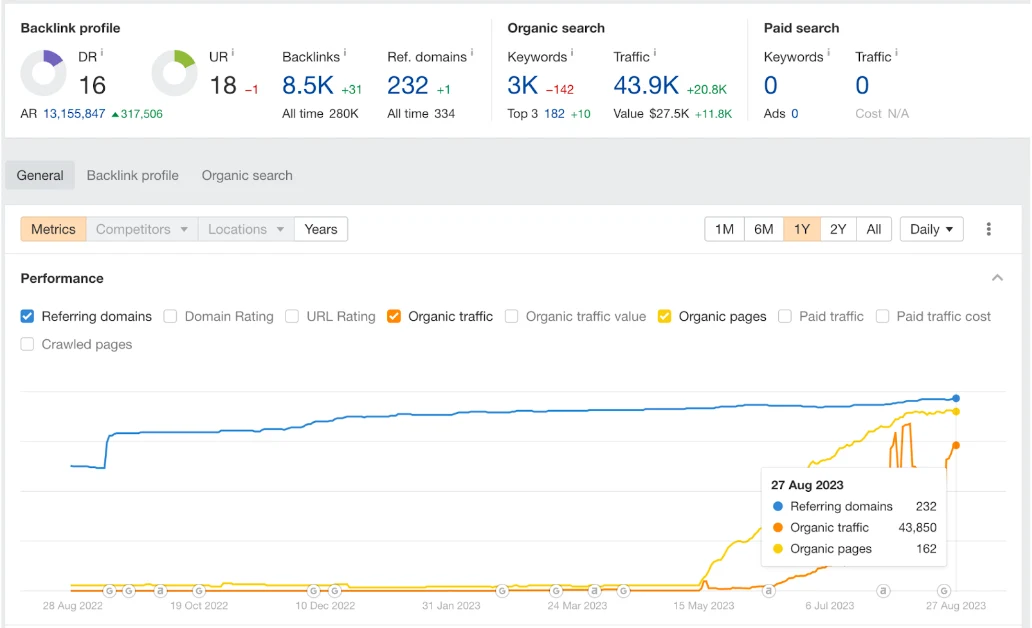
While the initial investment in a marketing agency may seem substantial, the returns can be exponential. For example, our agency recently helped an AI industry client increase their organic traffic from 6,600 to 43,900 visitors in just three months through targeted, SEO-focused content strategies.
The Strategic Advantage of Professional Marketing in Korea
Entering the Korean market without professional guidance is akin to navigating a complex maze blindfolded. The potential for missteps is high, and the cost of these errors can be substantial. By hiring a marketing agency, you’re not just outsourcing a task; you’re investing in a partnership that combines local insights with global marketing principles.
At Growth Marketing Agency, we pride ourselves on our ability to bridge the gap between international brands and the Korean consumer psyche. Our team of experts doesn’t just follow trends; we analyze data, conduct experiments, and craft strategies that drive tangible results.
In conclusion, the decision to hire a marketing agency in Korea is not just a smart choice; it’s a necessary step for any business looking to thrive in this unique and dynamic market. As we often say in the marketing world, “In the game of business, the best-informed player always wins.”
At Growth Marketing Agency, we work with both Korean and international companies, and we’ve observed a common trend: even renowned global corporations often struggle with marketing in Korea. If you’re considering entering the Korean market or looking to improve your current performance, understanding these challenges is crucial for your success.
Key Challenges in Marketing in Korea
1. Lack of Understanding of the Korean Market’s Unique Characteristics
One of the biggest issues for global companies is their failure to understand the unique aspects of the South Korean market. Many global companies view South Korea merely as part of the broader Asian market, overlooking its distinct digital ecosystem.
The Landscape of the South Korean Market in the 2020s
For instance, Naver (a local search engine) and KakaoTalk (a messaging app) are dominant platforms in Korea, yet many global marketing teams focus solely on global platforms like Google and Facebook. Without recognizing the importance of these local platforms, simply allocating a “translation budget” won’t suffice for success in South Korea.
2. Absence of Localized Marketing Strategies
Another major issue is the lack of localized strategies. Many global companies attempt to apply their headquarters’ marketing strategies directly to the Korean market, which is ineffective. For example, while many global firms emphasize LinkedIn, most Koreans don’t use it.
Remember App: Business Card Management
To achieve similar results, utilizing local platforms like Remember, a business card management service, would be more for B2B marketing in Korea. Remember is a crucial marketing channel in South Korea but unfamiliar to many global companies.
3. Lack of Competence and Authority Among Local Marketers
The third problem is the lack of competence and authority among local marketers. In many cases, marketers at Korean branches are merely seen as communication liaisons with good English skills rather than marketing professionals. They often lack substantial marketing expertise and struggle to bridge the gap between headquarters and the local market.
It’s common for new proposals to go without feedback for 3-4 days due to time differences or staff vacations, and even minor decisions can take 2-3 weeks. The resulting decisions often disregard input from the South Korean branch.
This disconnect leads to frustration and demotivation among local marketers, often resulting in high turnover and loss of talent.
5. Lack of Continuity Due to High Turnover
The fifth problem is a lack of continuity due to high turnover. In our experience with one client, the point of contact changed seven times over five years. While some changes were due to maternity leave or sabbaticals, the frequency of turnovers among marketing staff at global companies’ South Korean branches is concerning.
These frequent changes disrupt marketing strategy continuity and result in a loss of accumulated knowledge and experience. Each time a new representative comes on board, you have to start from scratch, making it hard to maintain effective marketing efforts.
6. Insufficient Budget Allocation
The sixth problem is insufficient budget allocation. Compared to larger markets like China, South Korea is often perceived as a smaller market and doesn’t receive adequate budget allocation.
For instance, the Chinese market receives substantial budget allocations due to its size and high revenue potential, whereas expectations for the Korean market are comparatively lower. This limited budget makes it difficult for local marketers to be proactive, even if they are motivated.
Overcoming Challenges in Marketing in Korea – Localization and Empowerment
So, how can these challenges be addressed?
First, invest time and resources in understanding the unique characteristics of the Korean digital landscape. Develop localized marketing strategies that leverage popular local platforms such as Naver, KakaoTalk, and Remember.
Second, empower your local marketing team with decision-making authority. Trust their insights and allow them to lead strategy development and execution, as they understand the nuances of the Korean market best.
Third, build a strong local team by hiring marketing professionals with genuine expertise in the Korean market, or partnering with experienced local agencies like Growth Marketing Agency. Look beyond English language skills and prioritize candidates with deep knowledge of Korean consumer behavior and marketing trends.
Fifth, establish efficient communication channels between your headquarters and the Korean branch. This step is crucial to reduce time delays and ensure that local insights are properly considered in your decision-making processes. Regular meetings and reports can help convey the local market’s situation to headquarters accurately.
Sixth, build a compelling case for the Korean market within your organization. To secure sufficient budget allocation, present concrete data on market size, growth potential, and consumer behavior.
At Growth Marketing Agency, we can help you gather this data and craft a persuasive narrative to convince your leadership of the immense potential the Korean market holds for your brand.
Conclusion: Balancing Global Standards with Localization for Successful Marketing in Korea
Success in marketing in Korea requires a delicate balance between maintaining your global brand standards and adapting to local market specifics. This means preserving your core brand identity and key messages while tailoring your approach to resonate with Korean consumers.
To achieve this balance, foster close cooperation between your headquarters and the Korean branch. Encourage mutual understanding and respect, ensuring both teams work cohesively towards common goals.
Additionally, collaborating with experts from Growth Marketing Agency can be highly beneficial. Our experts can effectively persuade global headquarters and advocate for the South Korean market’s unique conditions. In particular, our team members who are native English speakers and fluent in Korean can facilitate smooth communication, significantly aiding in convincing global headquarters.
Ultimately, success in South Korea starts with a profound respect for and understanding of the local market, coupled with appropriate resource allocation. By recognizing the unique characteristics of the Korean market, developing tailored strategies, and providing your local team with sufficient budget and authority, your company can achieve remarkable success in this dynamic and lucrative market.
At Growth Marketing Agency, we’re here to guide you through this process and help you unlock the full potential of the Korean market.
As a marketing content specialist at Growth Marketing Agency, I’ve witnessed firsthand the transformative power of remote work. Our journey began out of necessity – with increasing overseas clients and frequent employee travel, a partial WFH system became inevitable. But little did we know that this shift would revolutionize our entire business model.
Remember those days of squeezing into crowded subways during rush hour? (I certainly don’t miss them!) The need for remote work was crystal clear, especially for those of us who experienced the daily commute grind. Despite initial hurdles, we successfully transitioned to 100% remote work in 2020. Now, our physical office is reserved for essential meetings, while the bulk of our operations hum along smoothly in the virtual realm.
The Remote Work Assumption: Always Connected
One key principle of our remote work system? Assume everyone’s connected during working hours. It’s like having a virtual office where you can tap on a colleague’s shoulder anytime – minus the awkward interruptions!
Mastering the Art of Remote Communication
Let’s face it – communication can be a beast when you’re not sharing the same physical space. But here’s the thing: with the right tools and mindset, it can be even more effective than traditional face-to-face interactions.
We’ve found our groove with a combination of Zoom, Google Meet, Slack, JANDI, and Google Chat. It’s like having a Swiss Army knife of communication tools at our fingertips!
Pro tip: Always be video-call ready during work hours. Trust me, it prevents a lot of frustration and miscommunication.
Quality Over Quantity
Here’s a surprising discovery: when everyone buys into the “always connected” mentality, the quantity of communication actually decreases, while quality skyrockets. It’s like distilling our conversations into pure, productive gold!
Efficient Work
Want to know the secret to smooth remote work operations? Standardization is your best friend. By organizing all documents, data, and records in a consistent manner, we’ve minimized time wasted on understanding tasks and eliminated repetitive questions.
At Growth, we’re G-suite enthusiasts. We’ve implemented strict naming conventions for files (date-document name-client name-author), and we operate under the “cloud-first” principle. Shared calendars, team drives, and collaborative sheets have made our remote work more efficient than ever before.
Responsibility and Focus
Let’s be real: remote work isn’t for everyone. It requires a high level of concentration and responsibility. To keep everyone on track, we use shared calendars as both work planners and logs. It’s like having a virtual supervisor – but way less intimidating!
Preparing Your Space
Setting up for working remotely is crucial. You’ll need:
A dedicated PC or laptop for work hours
Video conferencing equipment (camera and microphone)
A private space for uninterrupted video calls
Pro tip: If you’re working from a caf, invest in good noise-canceling headphones. Your colleagues (and your sanity) will thank you!
Embracing the Freedom of Remote Work
Remember when remote-working companies were viewed with skepticism? Now, we’re seen as innovators! The shift has:
Reduced unnecessary meetings
Increased focus time for employees
Boosted our confidence in maintaining this model long-term
But don’t worry – we haven’t forgotten the importance of human connection. We organize regular cultural events to keep our remote team bonded and energized.
Growth Marketing Agency: Your Partner in the Remote Work Era
As we navigate the ever-evolving landscape of work in 2024, one thing is clear: remote work is here to stay. At Growth Marketing Agency, we’ve embraced this change and reaped the benefits of increased productivity, employee satisfaction, and global reach.
Learn more about Growth’s welfare system, the Refresh 369 system.
In the fast-paced world of digital marketing, finding and nurturing growth-minded talent is like striking gold. But what exactly makes a marketer truly growth-minded? Let’s dive into the essential qualities that set these marketing dynamos apart.
Ready to uncover the secret sauce of marketing success? Buckle up, because we’re about to embark on a journey through the mind of a growth-oriented marketing maestro!
What is Growth-Minded Talent in Marketing?
Picture this: You’re at a bustling caf, sipping your favorite latte, when suddenly you overhear someone talking about “growth-minded talent” in marketing. Intrigued? You should be!
Growth-minded talent in marketing isn’t just about having a fancy degree or a collection of certifications (though those can certainly help). It’s about possessing a unique blend of qualities that align perfectly with a company’s vision and goals. These are the marketing mavens who don’t just adapt to change they thrive on it.
But here’s the million-dollar question: How do you spot this elusive talent? Well, my friends, that’s exactly what we’re about to explore.
5 Essential Qualities of Growth-Minded Marketing Talent
1. Detail-Oriented: The Devil’s in the Data
Remember the days when marketing was more guesswork than science? Well, those days are long gone! In today’s digital landscape, being detail-oriented isn’t just a nice-to-have it’s a must-have for growth-minded talent.
Why? Because modern marketing is all about the data. We’re talking device types, browser preferences, age demographics, and even which cat videos our audience watched last night (okay, maybe not that last one… yet).
A truly growth-minded marketer doesn’t just collect this data they live and breathe it. They’re constantly experimenting, analyzing, and iterating. It’s like being a detective, but instead of solving crimes, you’re cracking the code of customer behavior.
2. The Recording Habit: Document, Document, Document!
If there’s one thing we love at Growth Marketing Agency (besides a good marketing pun), it’s our calendars. And no, I’m not talking about those cute cat-themed ones (though those are great too). I’m talking about the habit of meticulously recording everything.
Growth-minded talent knows that documentation is the secret weapon of marketing success. It’s not just about jotting down meeting notes it’s about creating a comprehensive record of tasks, rationales, communication details, and deliverables.
Trust me, your future self will thank you when you can easily pull up that brilliant campaign idea you had at 2 AM six months ago!
3. Consistency: The Spice of Marketing Life
Here’s a little nugget of wisdom I picked up during my years in the marketing trenches: If a mistake happens once, it’s a mistake. If it happens twice, it’s a coincidence. But if it happens thrice? That’s a pattern, my friends.
Growth-minded talent understands that consistency is key. It’s not just about delivering great results it’s about delivering them consistently. Whether it’s meeting deadlines, maintaining brand voice, or just double-checking those pesky spelling errors, consistency is what separates the marketing maestros from the one-hit wonders.
4. Broad-Mindedness: Think Outside the Marketing Box
Let me tell you a story. Back when I first moved to Korea, I thought I had it all figured out. I mean, I spoke four languages and had a master degree in Marketing. How hard could it be, right?
Well, let’s just say I learned the hard way that assuming everyone thinks like you do is a recipe for marketing disaster. Growth-minded talent knows that broad-mindedness isn’t just a nice quality it’s an essential survival skill in the marketing jungle.
It’s about listening to diverse opinions, understanding different perspectives, and being open to ideas that might initially seem crazy. Remember, what seems odd to you might be the next big trend waiting to happen!
5. Communication Skills: The Glue That Holds It All Together
Last but certainly not least, let’s talk about communication skills. In my years at Growth Marketing Agency, I’ve seen brilliant marketing ideas fall flat simply because they weren’t communicated effectively.
Growth-minded talent knows that marketing isn’t a solo sport. It’s a team effort that involves collaborating with designers, developers, customer service reps, etc.
From client meetings to interdepartmental collaborations, from managing social media channels to coordinating with influencers effective communication is the thread that weaves all these elements together into a cohesive marketing tapestry.
Nurturing Growth-Minded Marketing Talent
As we navigate the ever-changing marketing landscape of 2024, nurturing growth-minded talent is more crucial than ever. It’s not just about finding people with the right skills it’s about cultivating a mindset of continuous learning, adaptation, and growth.
At Growth Marketing Agency, we’re always on the lookout for these marketing diamonds in the rough. We know that with the right environment and opportunities, growth-minded talent can truly shine and drive remarkable results.
So, whether you’re a budding marketer looking to develop these qualities or a business owner seeking to build a team of marketing superstars, remember: growth-minded talent is the key to unlocking marketing success in 2024 and beyond.
Ready to take your marketing game to the next level? Let’s chat! At Growth Marketing Agency, we’re passionate about helping businesses harness the power of growth-minded marketing talent. Get in touch today, and let’s start growing together!
Embarking on a marketing career can feel like stepping into a whirlwind of expectations and challenges. During my 15 years of experience running a marketing agency in Korea, I’ve seen countless aspiring marketers navigate this path. But what does it really take to become a good marketer?
Understanding the Reality of Being a New Marketer
Before we dive into the specifics of how to become a good marketer, it’s crucial to grasp the reality of being a new entrant in this field. Many fresh graduates enter companies with grand visions of becoming instant marketing superstars. However, the truth is often quite different.
The Company’s Perspective
From a company’s viewpoint, new hires are investments rather than immediate assets. They are potential talents that need nurturing and development. This perspective is crucial for understanding your role as a new marketer.
Key Strategies to Become a Good Marketer
1. Embrace Your Learning Phase
As a new marketer, your primary goal isn’t to produce groundbreaking results immediately. Instead, focus on:
Absorbing knowledge
Developing skills
Understanding company processes
2. Build Trust: Your Most Valuable Asset
In my years working with various Korean and international brands, I’ve learned that trust is the currency of success in marketing. Here’s how to build it:
Follow instructions meticulously
Complete all assigned tasks
Make recoverable mistakes (we all make them!)
Communicate proactively
3. Master Task Management
Becoming a good marketer isn’t just about creative campaigns and data analysis. It’s about mastering the basics of task management:
Do everything assigned, no exceptions
Take detailed notes and review them
Seek regular feedback
Report progress consistently
4. The Art of Mid-Progress Reporting
Good marketers know the value of keeping their supervisors in the loop. Here’s a pro tip: Report your progress when at least half the deadline remains. For a six-day project, touch base by day three. This approach has saved me from countless potential mishaps in my career!
5. Respect Deadlines Like They’re Sacred
In the fast-paced world of marketing, deadlines are sacred. Here’s how good marketers handle deadlines:
Clarify the deadline upfront
Provide regular progress updates
Flag potential delays early
Overcoming Common Challenges
The Perfection Trap
Many new marketers fall into the trap of trying to be perfect from day one. Remember, you’re not expected to be a marketing genius overnight. Focus on progress, not perfection.
Balancing Learning and Doing
While it’s crucial to learn, don’t fall into the trap of passive observation. Actively seek opportunities to apply what you’re learning, even in small ways.
The Path to Growth
As you progress in your journey to become a good marketer, remember these key points:
Build trust through reliability and communication
Manage tasks effectively and meet deadlines
Seek feedback and learn continuously
Understand your role in the larger organizational context
Conclusion: Your Marketing Journey Starts Now
Becoming a good marketer is a journey that requires dedication, continuous learning, and a passion for understanding and serving customers. By focusing on building trust, managing tasks effectively, and staying committed to growth, you’ll be well-equipped to excel in this exciting and ever-evolving field.
Remember, as we say in Korea, “A journey of a thousand miles begins with a single step. Your path to becoming a good marketer starts with the decision to commit to excellence and never stop growing.
Are you ready to take your marketing skills to the next level? Whether you’re a startup founder looking to grow your business or an aspiring marketer seeking guidance, our team at Growth Marketing Agency is here to help. Let’s embark on this journey together and unlock your full marketing potential.