[태그:] Content Marketing

  • Corporate Blog Success Guide

    Corporate Blog Success Guide

    Regularly posting high-quality content on your corporate blog website increases visibility in search engines, which in turn leads to increased traffic for your site.

    Providing useful information related to your products or services through your corporate blog can greatly assist in attracting potential customers.

    Additionally, you can generate leads by encouraging blog readers to subscribe to newsletters or sign up for free trials.

    Through corporate blogs, you can also communicate the value and expertise of your brand or build relationships by engaging with readers.

    Such activities help boost brand awareness and customer loyalty.

    While there are many benefits to running a corporate blog, the majority of blogging efforts tend to fail.

    The main reason corporate blogs fail is that they start without understanding their audience. Blogs that focus only on what the company wants to say, without considering the interests of the target audience, struggle to gain traction.

    Content marketing through a corporate blog requires a long-term strategy, but if done effectively, it can greatly benefit business growth.

    This guide covers everything you need to know to grow your corporate blog, from foundational elements to promotional strategies.

    ? Check this guide to learn about successful content marketing strategies.

    How to Identify Corporate Blog Users

    Understanding Who is Reading Your Content
    Understanding Who is Reading Your Content
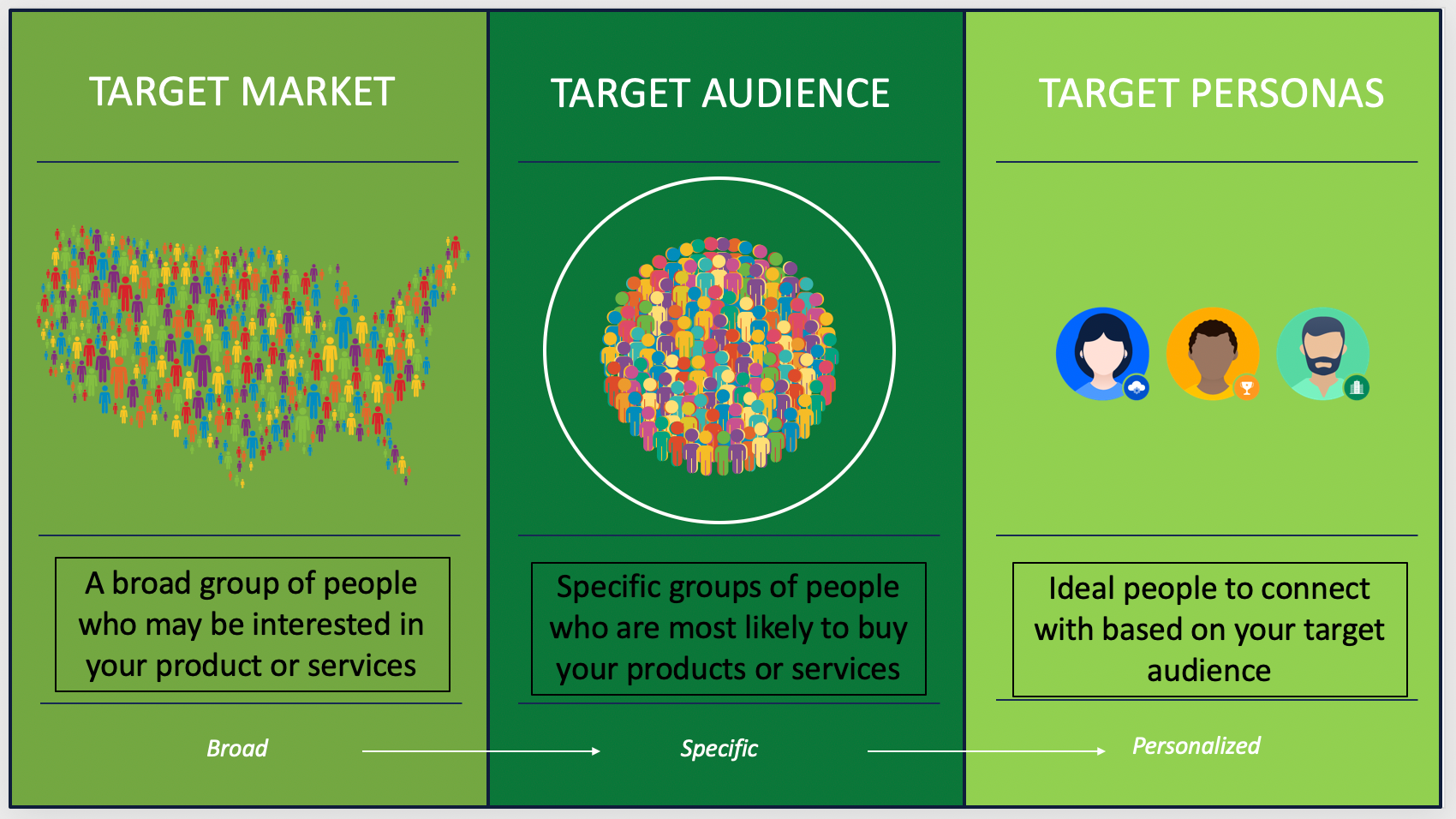
    What Is A Target Audience And How Do You Find It

    Identifying and categorizing your blog users is an essential step toward successful blog marketing.

    By identifying and categorizing users, you can provide more targeted content to your readers, better understanding their needs and interests.

    Knowing who is reading your blog is crucial for several reasons:

    Relationship Building: Understanding your audience helps you build relationships. By responding to comments and questions and engaging on social media, you can create a community around your blog, increasing loyalty and brand advocacy.

    Tailored Content: You can customize your content to meet specific needs and interests, increasing the relevance of your blog for the target audience and enhancing engagement, which may lead to conversions.

    Performance Measurement: Understanding your audience helps measure your blog’s success. Track metrics like page views, bounce rate, and time spent on the page to see what resonates with potential customers and what doesnt. This information can be used to improve blog performance.

    Understanding Negative Personas
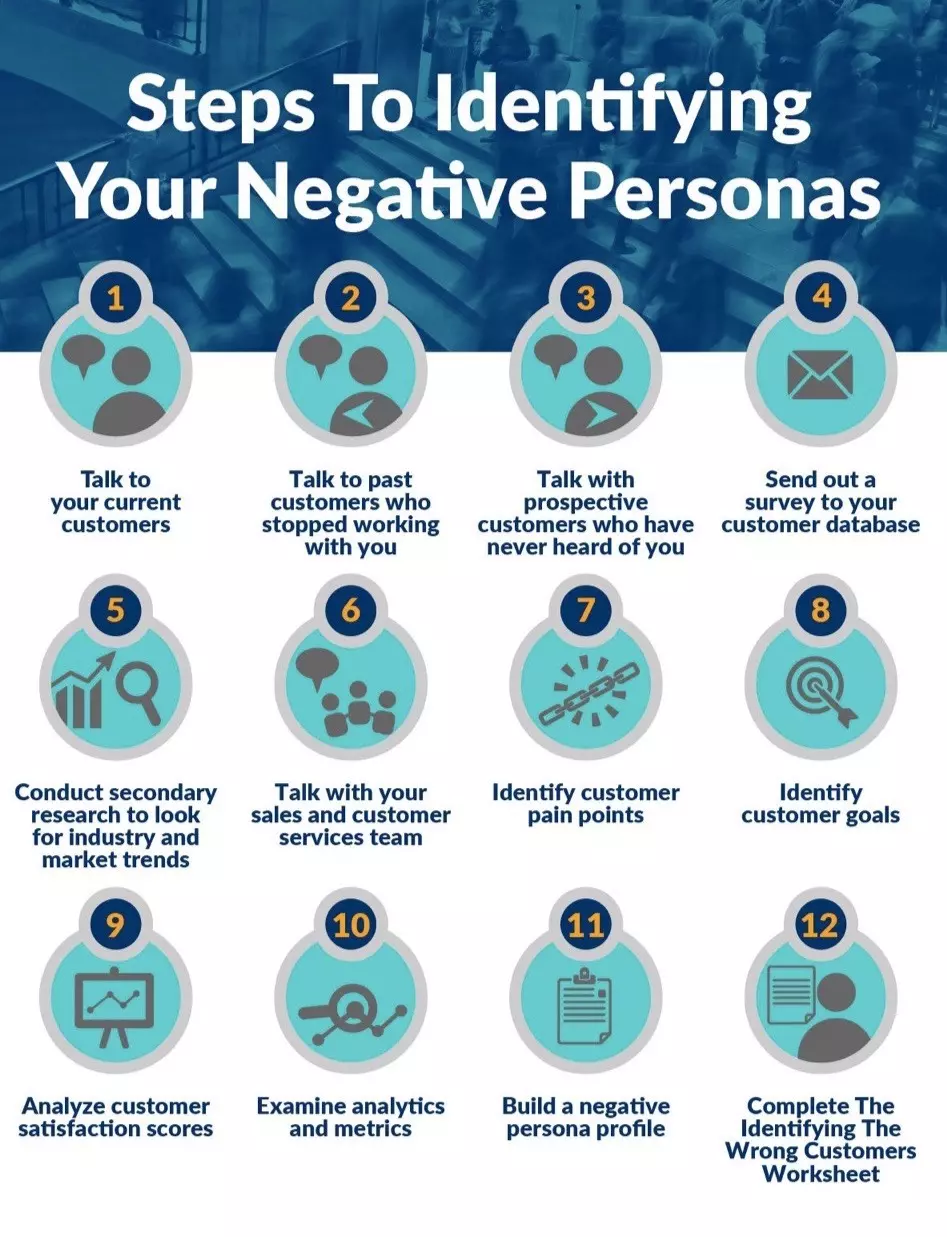
    Understanding Negative Personas
    The Dark Side: Why You Need Negative Buyer Personas For Better Customer Acquisition | 10 Forward | Content | Digital | Social | Marketing

    Negative Buyer Personas represent those who are not ideal customers. Analyzing and understanding negative personas helps you avoid creating content that may be irrelevant or off-putting to them.

    For example, in a software company, a negative persona could be someone uninterested in technology or lacking the budget for the product. Understanding these personas helps avoid producing overly technical or unaffordable content.

    Persona Development Strategy

    To identify your corporate blogs target audience, follow these steps:

    1. Analyze Existing Customers: Look at your best customers. What are their demographics, interests, and pain points? By understanding them well, you can craft content that captures their attention.
    2. Conduct Market Research: Understand industry trends and the challenges your target audience faces. This allows you to create relevant and timely content.
    3. Analyze Competitors: Study what content your competitors are creating and who they are targeting. This can help you better understand your target audience and how to reach them.

    Methodology

    • Interviews with Readers and Users
    • Analyzing Contact Databases
    • Using Forms to Capture User Information
    • Examining Who the Sales Team Engages with Most Frequently

    These methods allow you to analyze who is likely to read your corporate blog and develop personas based on insights gathered from real-world data.

    Creating Engaging Blog Content

    Your readers are influenced by every part of the blog, from style to topic. To attract organic traffic, it’s essential to write about topics users are actively searching for. Heres how you can achieve that:

    Finding Persona-Centered Keywords
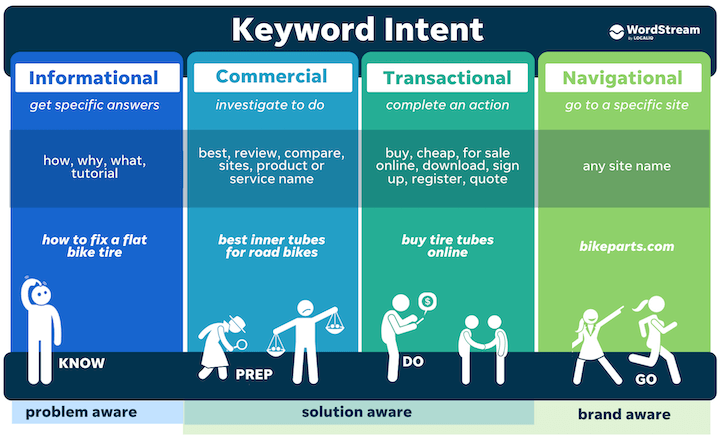
    Finding Persona-Centered Keywords
    Keywords can be broken down into different intentsinformational, navigational, transactional, and commercial. Persona-centered keywords relate to the needs, interests, and pain points of your target audience. (Source: How to Do Keyword Research: The Easy, Step-by-Step Guide)

    Finding the right keywords involves understanding what your target audience searches for when seeking solutions or information. Using these keywords helps create relevant content that drives engagement and increases the likelihood of turning visitors into leads.

    Here are some ways to find persona-centered keywords:

    1. Start with Buyer Personas: Understanding your buyer personas will help you identify the keywords they are most likely to search for.
    2. Use Keyword Research Tools: Tools like Google Keyword Planner or SEMrush can help you find relevant keywords and their search volumes.
    3. Analyze Competitors: Study your competitors websites and identify the keywords they focus on.

    Creating a List of Corporate Blog Content Ideas

    Creating a List of Corporate Blog Content Ideas
    A list of corporate blog content ideas should be created based on keywords and prioritized according to the preferences of potential customers.

    Once youve developed a persona-based keyword list, you can begin generating content ideas.

    Think about various types of content that might interest your target audience. Do they prefer blog posts, news articles, or technical white papers? Do they like watching videos or listening to podcasts? Create a list of various content types using persona-based keywords.

    Finally, prioritize your topics. Not all topics are created equal. Some will be more relevant and engaging for your target audience than others. Set priorities based on your audiences needs and interests.

    Brainstorm a list of topics that can be written based on each persona-based keyword. For example, if the keyword is “content marketing,” you could write about “how to develop a content marketing strategy,” “tips for writing effective blog posts,” or “how to promote content.”

    Persona-based keywords make your content more relevant to your target audience. By creating engaging content based on this data, you can increase corporate blog visitors and generate more leads.

    Finding an Engaging Corporate Blog Identity
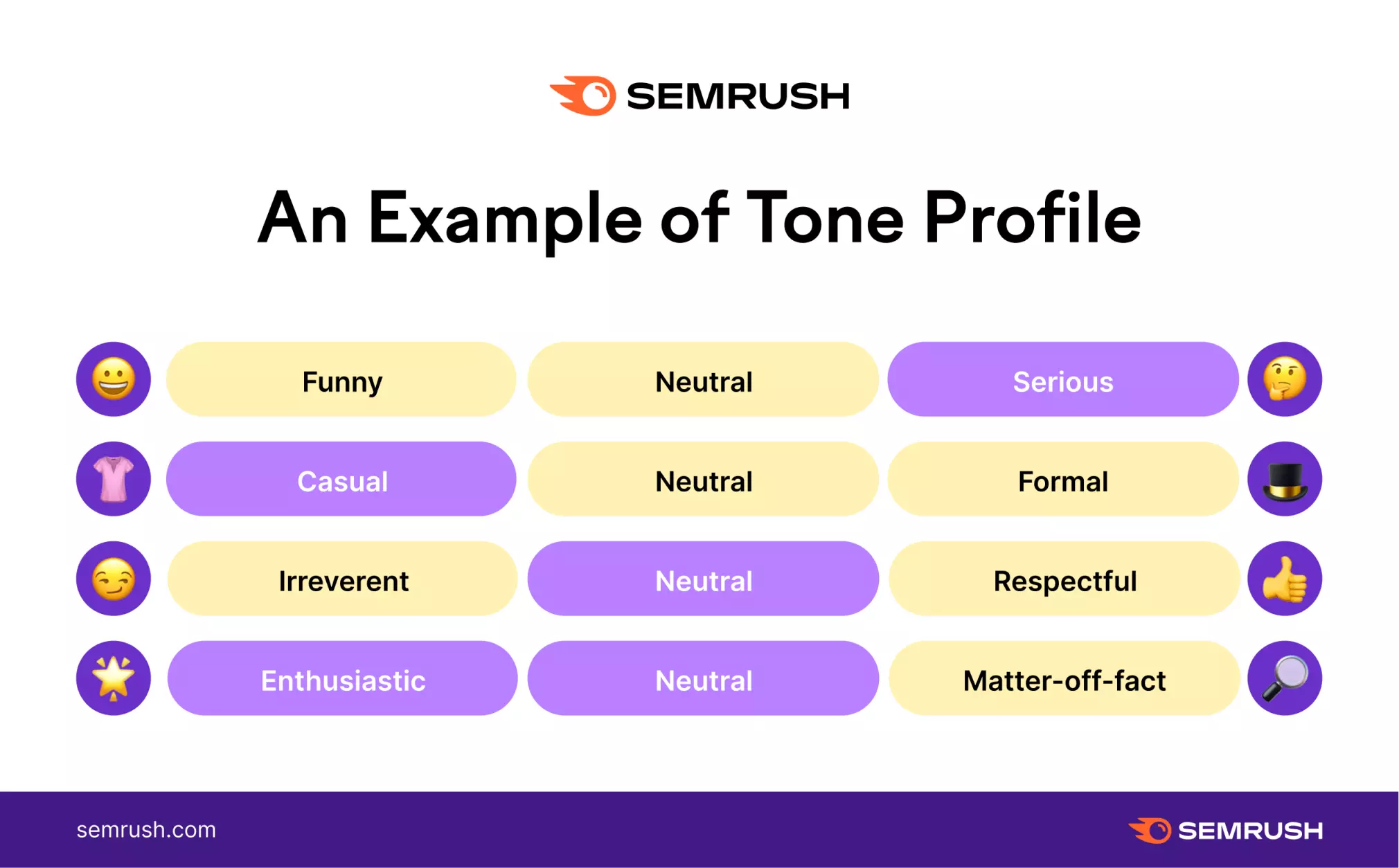
    Finding an Engaging Corporate Blog Identity
    How to Define Your Brands Tone of Voice (+ Template)

    Successful corporate blogs have a unique personality. While it may not be a measurable factor, personality is one of the core aspects of a brand because people are drawn to brands they can relate to.

    In life, we tend to form friendships with people who share our tastes and ideas. The same applies to business blogs. Blog readers tend to consume content from brands that resonate with their personality, lifestyle, and interests.

    Earlier, we explored the preliminary work of identifying the content types your audience desires. Now, its time to strategize how to create the content. This includes selecting the tone of voice or the image you want to portray.

    A good example of a successful corporate blog with a strong identity is Red Bull. Red Bull creates content aimed at an active and energetic audience, presenting it in a style that suits its brand.

    Consistent Uploads

    Consistent Uploads for Corporate Blogs Success

    The posting frequency of corporate blogs is slightly different from that of social media or email newsletters. You need to consider the frequency and timing of your content posts.

    First, review the type of content youre creating and the time it takes to produce. This will help you calculate how often you can post on your blog.

    Also, keep your readers habits in mind when scheduling uploads. Think about when they are likely to be online and ready to engage.

    For example, Growth Marketing Agency typically uploads at 10 a.m., considering the decision-makers in the business sector.

    Once your schedule is set, stick to it. Whether you post daily or weekly, consistency is key.

    After determining your blogs posting frequency and audience, use a blog calendar to manage this process in the long term. Pre-planning your posting schedule ensures consistency and efficiency for your corporate blog team.

    Optimizing Blog Posts to Increase Traffic
    Optimizing Blog Posts to Increase Traffic
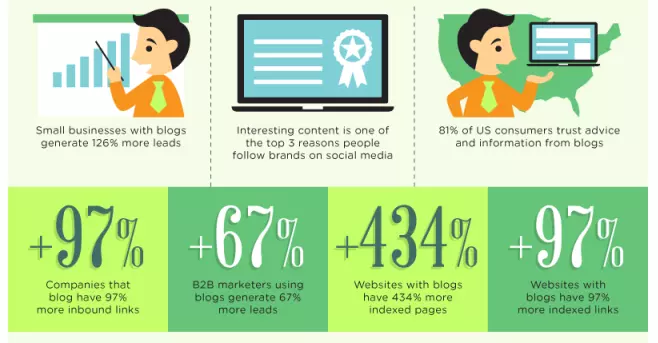
    Companies running corporate blogs generate 97% more inbound links. B2B marketers using blogs generate 67% more leads. Websites with blogs have 434% more indexed pages. Blogs include 97% more website links. (Source: Local SEO Video | Why Blogging is Important for Small Businesses | Organic Clicks, LLC)

    Even if youve created a corporate blog that matches your audience’s personality, the internet is vast and competitive. To drive new blog traffic, you need to optimize your posts so search engines can easily find them.

    For more details on search engine optimization (SEO), check out Growth Marketing Agencys SEO guide. Here, well briefly summarize the practical aspects for running your blog.

    Optimizing Post Structure

    • Custom URLs: A blog posts URL is one of the first things search engines crawl. Create unique URLs that include your blog posts main keyword. A URL thats both search engine and user-friendly can significantly impact how quickly your content ranks higher.
    • Compelling Titles: Create curiosity-provoking titles that naturally include the words and phrases your target audience searches for. Statistics show that blog titles with 6-13 words generate the most traffic (in English). Search engines will not favor content with high click-through rates but low engagement.
    • Section Headings: Nearly 50% of people skim blog posts. Make your corporate blog easy to scan by creating clear section headings.
    • Table of Contents: Users may only want to read one or two sections. Providing a hyperlinked table of contents allows them to navigate your content easily.
    • Responsive Design: All elements of your corporate blog website must be responsive, ensuring its readable on any device. Some business websites remain incompatible with mobile devices, which gives users the impression that the business isnt attentive to its web presence, resulting in negative feedback.

    Optimizing Post Content
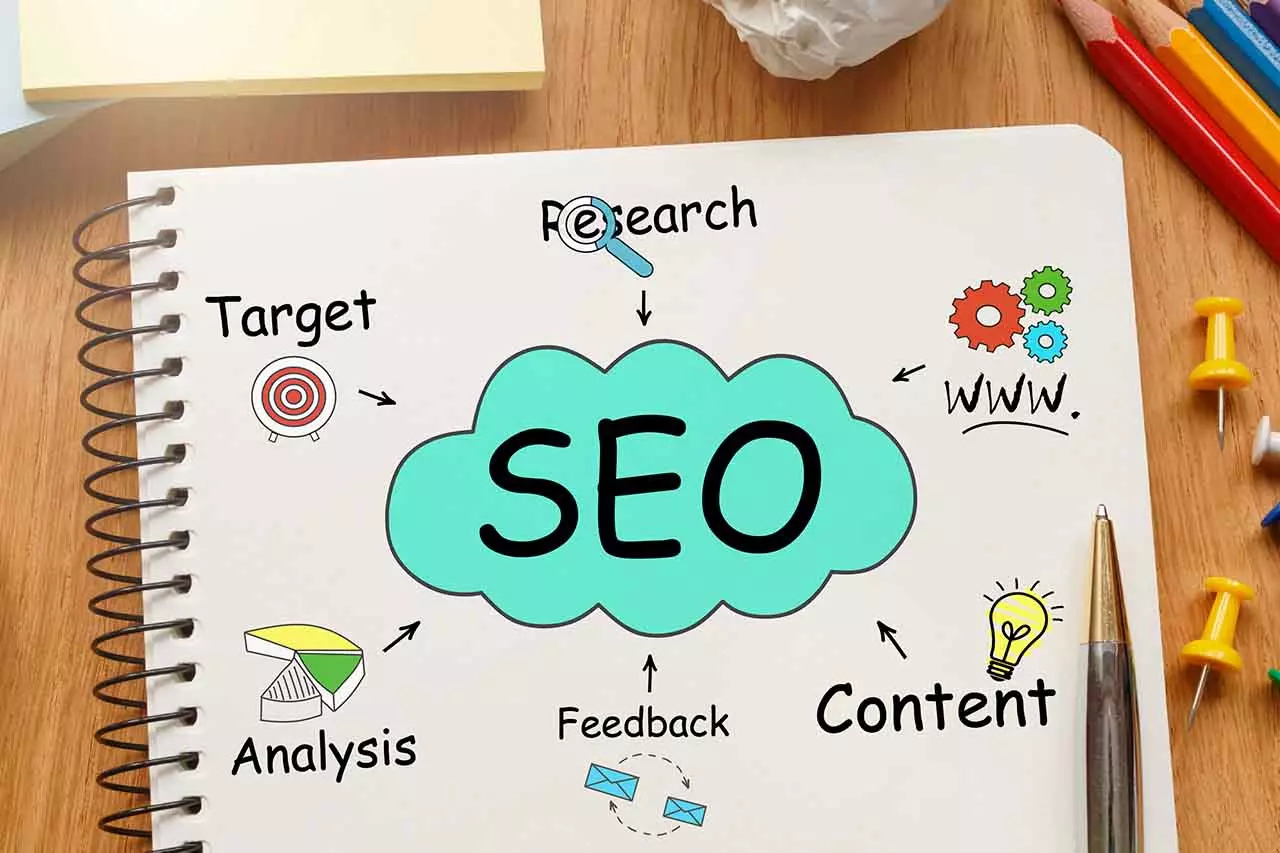
    Corporate Blog Success: Optimizing Post Content
    • Keyword-Relevant Content: Distribute target keywords throughout the corporate blog post. Include commonly used terms related to the keyword as well. However, forcing keywords unnaturally into the content can hurt the reader experience.
    • Avoid Jargon: No one wants to reach for a dictionary while reading your blog. Use simple, conversational language to explain concepts. Accessible content improves the reader experience.
    • Short Paragraphs: Readers find it easier to scan blog posts broken into short sections.
    • Internal Links: Encourage users to explore more content by including internal links to related posts.

    Optimizing Images

    Alt Text and SEO
    Alt Text: What Is It & Why It Matters for Accessibility & SEO
    • Use images that support the content and enhance comprehension.
    • Include alt-text for all images, which serves as a description if the image fails to load and helps search engines understand the images content, potentially leading to more visibility in image-based search results.

    Optimizing Engagement

    • Share Buttons: Make it easy for readers to share your content with social sharing buttons.
    • Enable Comments: Reader feedback can provide valuable insights for future content.
    • Smart CTAs: Offer personalized content based on the different lifecycle stages of your database. Showing the right message at the right time can boost engagement and conversions.

    Promoting a Corporate Blog

    Expanding your subscriber base is essential for any business blog. Subscribers are your most engaged readers and are more likely to convert into customers or leads. However, no corporate blog can thrive without promotion.

    Here, well introduce ways to promote your blog and drive new traffic, as well as how to convert mere “visitors” into “subscribers.”

    Corporate Blog Promotion Strategy

    Following this strategy will help you grow your subscriber base and effectively promote your business blog.

    Paid advertising platforms like Google Ads and Facebook Ads can be excellent tools for reaching more potential customers and promoting your blog.

    Industry events provide great opportunities to network with potential customers and subscribers. Bring your business cards and prepare a plan for promoting your blog.

    Industry influencers can help secure new leads and promote your blog. Reach out to influencers and offer free products or services in exchange for reviews or blog mentions.

    Subscriber Growth Strategy

    First, make it easy to subscribe. The subscribe button should be clearly visible on your blog and website. You can also offer a pop-up subscription form when visitors first arrive on your site.

    Once youve built a subscriber list, use email marketing to promote your latest blog posts and other content. Segment your list so you can send targeted emails to different subscriber groups.

    In the past, it was common to ask for email addresses to send newsletters or magazines. Today, more users are hesitant to share their email addresses just to receive post updates.

    Therefore, offering subscription incentives is a good strategy. You can provide discounts, free e-books or white papers, or exclusive content only available to subscribers.

    Additionally, share links to your latest blog posts on social media. You can also run contests or giveaways on social media that require blog subscription for entry.

    For more on the channel mix strategy to expand your corporate blogs reach, refer to this article.

    Guest posting is another great way to acquire new leads and promote your business blog. When guest posting on other blogs, include a link back to your blog in your author bio.

    Start Corporate Blogging with a Strategy

    Many companies are focusing on content marketing, realizing the importance of having a corporate blog.

    However, its essential to have a solid strategy and set goals before jumping in. A blog is not just a platform for sharing information but a vital tool for communicating your brands values and philosophy to customers.

    Therefore, corporate blog content must maintain brand consistency while offering unique and fresh information.

    As experts in corporate blogging, Growth has successfully managed numerous corporate blogs.

    Our expertise shines through in every phase, from content creation to content management and audience engagement.

    We understand your brands value and excel in delivering content that effectively communicates this value.

    For brands preparing their next year marketing strategies, we confidently say that running a corporate blog is not just an option but a necessityand it requires a strategic approach.

    We are the most reliable partner in setting and executing that strategy. With us, your corporate blog will be a powerful tool for growth.

  • SEO Marketing: 5-Step Comprehensive Guide

    SEO Marketing: 5-Step Comprehensive Guide

    What is SEO Marketing?

    SEO Marketing, or Search Engine Optimization Marketing, refers to marketing strategies based on search engines. The goal is to understand the intent of potential customers who conduct searches and use that understanding to deliver messages to targeted customers.

    In other words, it is a marketing strategy that enhances connectivity by providing products or information to targeted customers through owned media like websites or blogs, especially when they enter specific search terms.

    All marketing activities aim to create communication between the brand and the customer. Search engine optimization marketing is essentially about communicating with customers through search engines and content.

    Importance of SEO Marketing

    Today, search plays the most significant role in the consumer decision-making process. While the introduction of generative AI, like ChatGPT, has changed how searches are conducted, the act of searching for decision-making has remained constant.

    Potential customers encounter search result pages as a result of their searches. These pages represent the best content that the search engine has listed in response to user intent.

    Although its possible to answer consumer questions through advertisements, consumers generally trust organic search results more than ads. If search ads have a click-through rate (CTR) of 1-4%, organic search results can achieve a CTR of 5-60%.

    Growth Marketing Agency's content in Google's recommended snippets
    Growth Marketing Agency’s content in Google’s recommended snippets

    Nowadays, search engines have become more sophisticated, allowing them to respond to various user search queries. A prime example is the “snippet” feature, which provides precise answers to user questions directly on the search results page.

    Therefore, companies must create and expose content that provides the information customers seek to survive in the digital marketing market. This is why preparing for SEO marketing is essential, even if its late.

    Through SEO marketing, companies can identify consumer questions and interests related to their brand and products and provide that information via search engines. This approach helps secure high engagement from potential customers.

    5-Step Basic Guide to SEO Marketing

    Having understood the value and importance of search engine optimization marketing, you might be ready to start SEO marketing. Heres a basic guide broken down into five steps.

    Website Checkup – Crawling and Indexing

    Google crawls websites to select good content and then exposes it in search results. Its crucial to ensure that all content on your website is correctly uploaded during this process.

    If there are crawling or indexing errors on your website, its essential to address them quickly. These issues can be checked using tools like Google Search Console and other search engine tools.

    Indexing in Google Search Console
    Indexing in Google Search Console

    An increase in the number of valid web pages indexed by Google also affects website traffic. Google wants to feature reliable websites with good information at the top of search results. A large number of valid web pages suggests that the site has received a positive evaluation from Google, indicating it is a trustworthy website.

    However, its crucial to avoid producing or duplicating low-quality, similar content to increase the number of indexed pages. If low-quality content is repeatedly found, the entire sites content may not be exposed in search results.

    Technical SEO: Structuring an SEO-Friendly Website

    Since search engines cannot read every website and document, they crawl key content and rank it in search results. To ensure your content is chosen by consumers through SEO marketing, it must first pass the search engine’s tests.

    Thus, its necessary to organize your site so that search engines can easily understand its content. This is known as an SEO-friendly website.

    Technical SEO refers to the techniques used to create a search engine-friendly site, based on Googles webmaster guidelines. There are two main approaches: strategies for indexing web pages and elements that help search engines better understand the content.

    You can find more detailed information on the definition and construction of Technical SEO in the document below:

    ? On-Page SEO: Optimize for Google, Naver, and More

    Content SEO: Creating Quality Content for SEO

    While there are various ways to start SEO marketing, the most important is providing good content to customers. Even if your websites structure and quality are excellent, poor content will not yield good results.

    Search engine algorithms do not reward content that only chases ranking. Instead, they prefer content that fulfills visitors’ objectives, even if its slightly less readable.

    Therefore, creating content that delivers value to visitors is the best strategy for achieving higher rankings.

    SEO Marketing: Creating Quality Content for SEO

    Growth Marketing Agency conducts keyword research and customer journey analysis to create content that satisfies customers. Tracking the search keywords consumers use can significantly help understand the purpose and intent of customers visiting your web pages.

    The easiest way to perform this search data research is to analyze the SERP (Search Engine Results Page) of relevant keywords. By examining the search results for a keyword, you can understand why users are searching for it.

    Growth Marketing Agency uses this information to create content that successfully reaches potential customers. If youre curious about Growths efforts to create great content, you can check out the detailed content in this article.

    Improving Search Ranking

    Websites that search engines deem the best answers to user queries usually rank within the top 10 positions.

    Several factors, including the three mentioned earlier, determine the ranking. Analyzing and improving what is lacking on your website and what needs reinforcement is crucial.

    Lets start with some simple ways to improve your ranking:

    • Improve website loading speed
    • Shorten URL length
    • Use security protocols
    • Build backlinks
    SEO marketing and a website loading speed.

    Have you ever visited a website for information but closed the page because it was too slow to load?

    Its said that for every second of delay in loading speed, 7% of visitors leave. If your websites loading speed is unsatisfactory, the elements on the site might be the cause. You can easily check your sites speed using Googles PageSpeed Insights.

    Additionally, if your URL is too long, search engines are less likely to trust the content. Consider using Canonical URLs to shorten your website address.

    Surprisingly, many overlook security protocols during website construction. Security is also a criterion for search engines to judge a website as good. Ensure that your website’s URL uses the https:// format.

    backlink building and SEO marketing

    Lastly, building backlinks is essential. Search engines consider pages frequently mentioned by others as highly credible websites.

    Some hesitate to cite sources or link to other websites, but mentioning URLs from highly trusted pages within your content can increase your websites credibility. Content based on high-trust pages suggests that the content contains quality information.

    According to a survey, 48% of over 14,000 online shoppers said they start their buying journey through a search engine. However, search engines can also help customers find your competitors. Therefore, those who rank first in search results with an excellent content SEO strategy can secure more potential customers.

    Conclusion

    So far, weve introduced a basic five-step guide useful for those starting search engine optimization marketing.

    SEO marketing is a method that can succeed with some time, cost, and patience. Its especially useful for continuously connecting with potential customers who havent been reached before. We hope that SEO marketing strategies help you establish your presence in the existing market and find new customers.

  • Content Marketing KPIs: How to Measure Success

    Content Marketing KPIs: How to Measure Success

    The strategy behind content marketing KPIs is a critical aspect of any business. The more strategically and efficiently you use content marketing, the more your business can experience measurable success. However, there isnt a one-size-fits-all solution, so individualized analysis is necessary.

    How to measure content marketing

    Content marketing offers the advantage of being both cost-effective and efficient, but even the smallest budget can be a burden depending on the size of the company. Therefore, its essential to consider ROI when engaging in content marketing.

    Marketers must measure and optimize the performance of their content marketing to improve engagement, which in turn allows for more effective ROI measurement.

    So, what are the strategies, tactics, and recent trends in content marketing performance measurement?

    The Challenge of Content Marketing KPIs

    Accurately measuring marketing effectiveness is extremely challenging. Surveys reveal that two-thirds (66%) of marketers find it difficult to measure content marketing performance, while only one-third (34%) consider it somewhat easy or straightforward.

    To properly measure content marketing performance, a significant amount of data must be collected. Beyond this, marketers often have differing opinions when discussing marketing effectiveness. For clarity, lets examine the three types of marketing effects:

    Channel-Specific Effects

    Content Marketing KPIs: Channel-Specific Effects

    Consider a scenario where youve spent a substantial amount on paid search advertising. Youd naturally wonder how many of those conversions from paid search might have occurred organically. This is known as the channel-specific effect.

    To understand channel-specific effects, you can either track the direct increase in conversions from the ads or analyze and measure the impact of ads across different channels. Another approach is conducting a randomized controlled experiment, not at a geographical level but at the user level.

    For example, by dividing target users into two groupsone exposed to ads and the other notmarketers can compare the behavior of those exposed to advertising with those who werent. Some argue that such tests don’t fully capture the true channel-specific effect, but its still a strategic option for measuring content marketing performance.

    Cross-Media Effects

    Advertising platforms often provide various options for placing ads, which prompts marketers to consider the effectiveness of resources across different marketing channels. This is referred to as the cross-media effect.

    Not all ad spend results in conversions, which is why measuring cross-media effects is complex and challenging. Most advertising platforms cannot measure cross-media effects. However, market comparison tests can analyze specific user behaviors to assess cross-media effects. If you have a generous budget, advanced modeling techniques like conversion modeling can also be employed.

    Leveraging cross-media effects can help optimize the budget allocated for content marketing performance measurement.

    Marketing Portfolio Effects

    Marketing Portfolio Effects

    Marketers are concerned with measuring the effectiveness of all marketing activities that have been budgeted. This is known as the marketing portfolio effect.

    In other words, how effective is the marketing spend across platforms A, B, and C? The return on investment relative to the expenditure is a crucial metric for measuring performance. Accurately measuring marketing effectiveness can have a significant impact on marketing decisions.

    However, precise measurement is difficult, and conflicting results are common. Like cross-media effects, marketing portfolio effects can be measured through market comparison tests.

    Content Marketing KPIs and the Necessity of Martech Tools

    As mentioned earlier, content marketing typically utilizes multiple channels.

    Surveys show that one in five marketers uses more than six tools to track content marketing KPIs. Moreover, over half of respondents use at least three to five tools.

    Content Marketing KPIs and the Necessity of Martech Tools

    As technology advances and market trends evolve, the field of marketing technology is becoming increasingly sophisticated.

    With the growth of AI and automation, the Martech stack has expanded rapidly, enhancing related capabilities. Additionally, the acceleration of digital and e-commerce has led to the rise of flexible, cloud-based technologies.

    The Need for Robust Marketing Measurement Tools

    Martech is on the rise to more effectively prove marketing impact. Due to the COVID-19 pandemic, companies have chosen to review costs and reduce budgets across all areas. This has necessitated that content marketers demonstrate the value and effectiveness of their roles more clearly and accurately.

    Although the pandemic has subsided, content marketers will continue to feel pressure to report on marketing success and automation. As a result, experts suggest that finding tools that effectively measure marketing impact will become the norm. Going forward, marketers will focus on targeting potential customers, tracking and optimizing capabilities, and improving sales cycles through automation and machine learning.

    These will become meaningful metrics for business improvement. While perfect measurement is challenging, marketers will increasingly be able to extract more meaningful data. Content marketers will adapt to environments where they can more effectively measure and continuously improve ROMI.

    Content Marketing KPIs: Conversion Rates and Traffic

    Content Marketing KPIs: Conversion Rates and Traffic

    Regardless of budget size, marketers need to have a solid understanding of the concept of marketing effectiveness. To measure performance effectively, its crucial not only to use the right tools but also to clearly define metrics.

    Half of the marketers agree that conversion rates (50%) and website traffic (46%) are among the most important metrics to consider when assessing the overall performance of content marketing strategies. Additionally, 39% of respondents ranked engagement on social media channels high on their list of key metrics.

    Traffic and conversion rates are vital metrics, providing marketers with clear and straightforward evidence. However, not all visitors generate revenue or become customers. If the percentage of visitors converting to leads decreases, the number of visitors becomes less relevant.

    Instead, marketers will focus on targeting more suitable potential customers rather than simply attracting more visitors. In this way, conversion rates and traffic can complement each other.

    Marketers want visitors who have the potential to become leads. Therefore, they will target specific niche markets, excluding numerous visitors who are unlikely to convert. This allows marketers to use their time more efficiently.

    Marketers should strive to build an ideal customer persona and form optimized, customer-tailored metrics. Once marketers establish metrics for a specific customer group, setting up and measuring these metrics becomes much simpler. Instead of wasting energy on filtering out irrelevant traffic, marketers can spend time nurturing traffic with a higher likelihood of conversion.

    Conclusion and Next Steps

    Creating great content is crucial, but its just one element of the bigger picture in marketing. Content marketers must consider the most significant challenges and then develop a strategic plan to overcome them. At Growth Marketing Agency, we believe that establishing content marketing KPIs that everyone agrees on and reviewing the marketing technology stack are essential parts of the marketing strategy. We are committed to realizing data-driven content marketing.

    Still find content marketing challenging? Start by checking out Growth Marketing Agencys content marketing case study and SEO marketing case study to see the analyzed results.

  • Importance of Content Marketing and Its Strategies

    Importance of Content Marketing and Its Strategies

    The significance of content marketing is increasingly being highlighted across all types of businesses. Whether it’s a small startup or a large corporation, investing in high-quality content is crucial for fostering sustainable business growth.

    In this article, we will explore the various benefits of content marketing and why it is essential for businesses aiming to succeed in today?s online environment.

    From improving search engine rankings and driving organic traffic to nurturing leads and guiding them through the sales funnel, we will discuss why content marketing is more important than ever.

    Understanding the Importance of Content Marketing: Business Advantage

    Building Trust and Providing Value to Your Audience

    Creating and sharing valuable, informative content that aligns with your audience?s interests can provide real value by addressing their needs and problems. This helps in establishing trust and credibility by demonstrating your expertise and willingness to assist your customers.

    Consistently delivering high-quality content positions you as a reliable source of information and an industry leader. This can attract and retain customers who are likely to seek your guidance and support.

    Understanding the Importance of Content Marketing: Business Advantage
    At Growth Marketing Agency, we share the content we publish on social media to drive its distribution. Example from our Korean social medial account.

    Additionally, sharing content across social media and other platforms helps in reaching a larger audience, enhancing content visibility, and boosting brand reputation. When others recognize that you provide valuable content and resources, they are more likely to view you as a trustworthy and credible source of information.

    Positioning Your Business as an Industry Leader and Demonstrating Expertise

    By creating and sharing high-quality content that addresses your target audience?s needs, you can prove your expertise. This helps position your business as a leader in the industry. This can help attract new customers who are more likely to seek your guidance and support.

    Effective content marketing also helps in retaining customers by continuously providing value. By regularly offering valuable content, you can keep customers engaged and interested in your business over time.

    Understanding the Importance of Content Marketing 02. Differentiating in the Online Market Competition

    Cultivating Loyal Customers

    Understanding the Importance of Content Marketing 02. Differentiating in the Online Market Competition
    One of the key benefits of content marketing is its ability to make your business stand out and differentiate it from competitors. I

    On today?s complex and highly competitive online environment, it may take time to capture the attention of potential customers. Content marketing not only enhances visibility but also improves brand reputation and sets your business apart from competitors.

    Engaging content marketing helps in building a loyal and highly engaged customer base that generates ongoing revenue over time. By continuously providing high-quality content that addresses your target audience?s needs and problems, you establish yourself as a trustworthy source. This enhances your reputation as a reliable information provider. This fosters strong customer relationships.

    Moreover, a solid customer base can drive organic word-of-mouth referrals. Long-term, content marketing can build a loyal, engaged customer base and promote sustainable growth for your business.

    Search Engine Optimization (SEO)

    One of the primary advantages of content marketing is its ability to improve search engine rankings. It also drives more organic traffic to your website. Creating and publishing high-quality, relevant content on your website can improve your search engine rankings. This helps achieve higher positions on search engine results pages (SERPs) for keywords related to your business.

    To enhance search engine rankings, it is essential to optimize content for search engines (SEO). This includes using relevant keywords, optimizing title tags and meta descriptions, and ensuring your website is mobile-friendly and loads quickly.

    Investing in content marketing and SEO increases the likelihood of achieving higher search engine rankings and greater visibility. This can lead to more organic traffic to your website and ultimately result in more leads and sales.

    Understanding the Importance of Content Marketing 03. Generating High-Quality Leads

    Engaging with Consumer Purchase Journeys

    Content marketing effectively nurtures leads and guides them through the sales funnel by providing valuable and informative content that addresses their needs and issues. This builds trust with potential customers and showcases your expertise in assisting them.

    By creating content tailored to different stages of the consumer purchase journey, you provide potential customers with the information and resources they need to make purchasing decisions.

    For example, you could create educational blog content or eBooks for leads in the awareness stage and case studies or product demos for leads in the consideration stage.

    Engaging content marketing helps in nurturing leads and guiding them through the sales funnel by providing the necessary information and resources to make informed decisions. This ultimately leads to more conversions and sales for your business.

    Leveraging Social Media for Content Marketing

    Social media platforms like Facebook, Instagram, and X have made it easier for businesses to share content, engage with their audience, and facilitate content sharing across networks.

    Creating interesting, informative, and engaging content increases the likelihood of it being shared on social media and other platforms, helping you reach a broader audience and enhancing visibility and reputation.

    In today?s competitive online environment, producing content that stands out and resonates with your audience is essential. Investing in high-quality, engaging content helps differentiate your business and make a lasting impression on your target customers.

    Conclusion: Enhancing Success in Digital Marketing Through Understanding Content Marketing

    In conclusion, content marketing is more crucial than ever for businesses looking to succeed in today?s digital age. By creating and sharing high-quality, relevant content, you can build trust with potential customers, attract and retain clients, and foster sustainable business growth.

    Investing in content marketing helps build a loyal and engaged customer base and differentiates your business from competitors, leading to long-term success. Therefore, if you plan to integrate content marketing into your strategy, now is the perfect time to start.

  • Content Marketing Case Study: Unlocking Global Success

    Content Marketing Case Study: Unlocking Global Success

    When we say content marketing, it’s not just about creating content; it’s about crafting valuable, relevant, and consistent material that attracts and retains a clearly defined audience. 

    At its core, content marketing is the art of communicating with your customers and prospects without overtly selling. Instead, you’re delivering information that makes your audience more intelligent, all while subtly positioning your brand as an industry leader.

    This content marketing case study delves into how we at Growth Marketing Agency leveraged these principles to propel an EdTech company onto the global stage. As a content marketing specialist, I’ve seen firsthand how a well-executed content strategy can transform a brand’s reach and impact. Let’s explore how we turned content into a powerful tool for global expansion.

    Importance of a Content Marketing Case Study

    The Power of Content Marketing Case Studies

    Content marketing case studies are more than just success stories; they’re roadmaps for future strategies. They provide tangible evidence of what works in the real world, offering insights that can be applied across industries.

    In the B2B realm, where trust and expertise are paramount, content marketing case studies serve as proof of a company’s ability to deliver results.

    Our content marketing case study with the EdTech company illustrates how targeted content can bridge cultural gaps, address universal pain points, and ultimately drive global engagement. It’s a testament to the power of well-crafted content in today’s interconnected world.

    The EdTech Challenge: Crafting Content for a Global Audience

    Our client, an ambitious Korean EdTech company, approached us with a clear goal: to expand their reach beyond borders and connect with educators worldwide. The challenge? Creating content that resonates across diverse cultural and educational landscapes.

    This content marketing case study examines how we tackled this challenge head-on, transforming their content strategy from locally focused to globally impactful.

    Content Marketing Case Study: EdTech Example

    The Growth Marketing Agency Approach to Global Content

    In this content marketing case study, our strategy centered on four key pillars:

    1. Comprehensive Audience Research: We delved deep into the needs, challenges, and preferences of educators across different regions.
    2. Problem-Solving Content Creation: Our focus was on developing content that addressed real-world educational challenges.
    3. SEO Optimization for Global Reach: We implemented strategies to enhance visibility in international search results.
    4. Incorporation of Diverse Perspectives: We ensured our content reflected a wide range of global educational experiences.

    Amplifying Global Voices in Our Content Marketing Case Study

    A crucial aspect of this content marketing case study was our approach to incorporating diverse global perspectives. We conducted interviews with educators from various countries, each bringing unique insights to our content strategy.

    Content Marketing Case Study: EdTech Example

    One particularly illuminating conversation was with Megan, an Australian teacher based in Thailand. Her experience with EdTech in a cross-cultural context provided invaluable insights that shaped our content creation process. This approach not only enriched our content but also ensured its relevance across different cultural contexts.

    Crafting Audience-Centric Content: A Core Element of Our Case Study

    In this content marketing case study, we adhered to a fundamental principle: the best content focuses on the audience, not the product. For our EdTech client, this meant:

    1. Identifying and addressing common pain points in global education
    2. Providing practical, actionable solutions to educational challenges
    3. Showcasing diverse educational experiences and methodologies
    4. Simplifying complex technological concepts for broader accessibility

    The success of this content marketing case study was evident in both quantitative and qualitative outcomes. We observed significant increases in organic traffic, engagement rates, and lead generation from international markets.

    Crafting Audience-Centric Content

    Key Takeaways

    This content marketing case study offers several valuable insights for businesses looking to expand their global reach:

    1. Prioritize comprehensive audience research
    2. Focus on providing solutions to real-world challenges
    3. Incorporate diverse perspectives to ensure global relevance
    4. Implement thorough SEO optimization for international visibility
    5. Utilize storytelling to create meaningful connections with the audience

    Leveraging Content Marketing for Global Impact

    This content marketing case study demonstrates that creating content that resonates on a global scale requires a nuanced understanding of diverse educational landscapes. It’s about addressing unique challenges faced by educators worldwide while maintaining cultural sensitivity and relevance.

    At Growth Marketing Agency, we specialize in developing content strategies that not only meet SEO requirements but also forge meaningful connections with global audiences. Whether you’re in the EdTech sector or any other industry aiming for international impact, we offer expertise in crafting a content strategy that enhances your global presence and engagement.

    Are you ready to elevate your content marketing to a global standard? Let’s collaborate to develop a content strategy that drives your international growth and positions your brand as a global thought leader in your industry.

  • Content Marketing Strategy That Actually Works

    Content Marketing Strategy That Actually Works

    Ready to take your content game from meh to AMAZING? Let’s dive into the world of content marketing strategy that actually succeeds. Spoiler alert: it’s all about putting your customers front and center!

    The Importance of Content Marketing in Today's Business World
    The Importance of Content Marketing in Today’s Business World

    Why Your Content Marketing Strategy Needs a Customer-Centric Makeover

    You know that feeling when you’re stuck at a party with someone who only talks about themselves? YAWN. Well, that’s exactly how your audience feels when your content is all “me, me, me.” It’s time to break free from the trap of creating content just to please the boss. Let’s face it, if your strategy isn’t resonating with your target audience, it’s about as effective as a screen door on a submarine.

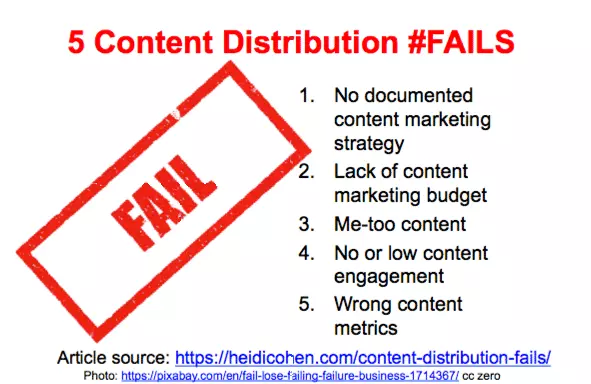
    Why content marketing might fail
    5 Content Distribution #Fails That Will Make You A Loser – Heidi Cohen

    The Secret Sauce: Understanding Your Audience

    Before you start churning out content, take a step back and ask yourself: Who am I really talking to?

    1. Develop buyer personas
    2. Map out the customer journey
    3. Identify pain points and desires

    Crafting Content That Speaks to Your Audience’s Soul

    Once you’ve got a handle on who your audience is, it’s time to create content that makes them feel like you’re reading their minds. Here’s how:

    • Address their specific pain points
    • Provide valuable solutions
    • Tell stories that resonate emotionally
    • Use real-life examples and case studies

    Remember, your content should be like a comfy sweater on a chilly day – warm, inviting, and exactly what they need.

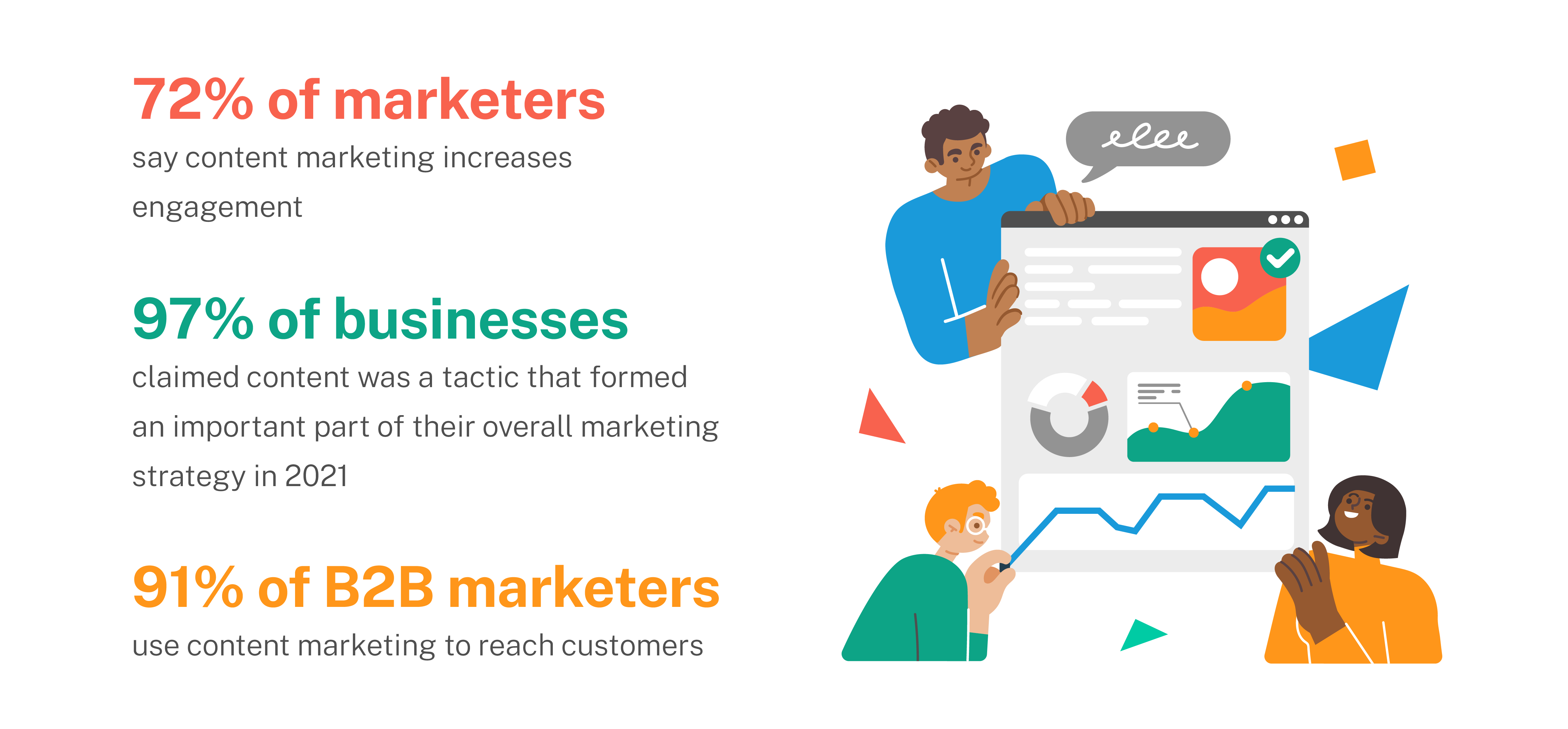
    B2B Content Marketing Statistics: Why It's Worth It
    B2B Content Marketing Statistics: Why It’s Worth It

    Diversify Your Content Portfolio

    Just like a well-balanced investment portfolio, your content strategy should include a variety of formats. Don’t rely on just one type of content. Mix it up!

    1. Blog posts (like this one!)
    2. Videos
    3. Podcasts
    4. Infographics
    5. Whitepapers and ebooks

    The Content Marketing Strategy Buffet

    Think of your content strategy like an all-you-can-eat buffet. Some people will go straight for the videos, while others will load up on blog posts. By offering a variety, you’re catering to different preferences and learning styles.

    SEO: The Not-So-Secret Weapon

    Want your content to be found easier than your keys when you’re already late for work? Then you need to cozy up to SEO. Here’s a quick rundown:

    1. Do your keyword research
    2. Optimize your content for search engines
    3. Build high-quality backlinks
    4. Create a user-friendly website structure

    The E-E-A-T Diet for Content

    No, I’m not talking about a new fad diet (although “Eat Everything Always Triumphantly” sounds pretty good). E-E-A-T stands for Experience, Expertise, Authoritativeness, and Trustworthiness. Google LOVES content that showcases these qualities, so make sure you’re serving up a healthy portion of E-E-A-T with every piece of content.

    Measure, Optimize, Repeat

    Listen up, because this is important: Your content marketing strategy should be dynamic and adaptable. It needs to evolve based on performance data and changing market conditions.

    Use tools like Google Analytics to track your content’s performance. Which pieces are getting the most engagement? Which ones are underperforming? Use this data to refine your strategy and create more of what your audience loves.

    The Bottom Line: It’s All About Your Customers

    At the end of the day, a successful content marketing strategy boils down to one thing: putting your customers first. It’s about creating content that educates, entertains, and solves problems. It’s about building relationships and trust.

    Let me share a personal example. When I first started in content marketing, I was all about showcasing our agency’s awards and accolades. But you know what? Our engagement rates were lower than my chances of winning a marathon (spoiler alert: I’m not a runner). It wasn’t until I shifted focus to addressing our clients’ pain points and providing actionable solutions that we saw a real uptick in engagement and conversions.

    So, are you ready to create a content marketing strategy that doesn’t just succeed, but CRUSHES it? Remember, in the world of content, the customer is not just king – they’re the whole royal family!

    At Growth Marketing Agency, we’re passionate about helping businesses like yours create content marketing strategies that truly resonate with your audience. We understand the nuances of different industries and can help you craft a strategy that speaks directly to your target customers.

    Ready to take your content marketing to the next level? Let’s chat! Our team at Growth Marketing Agency is here to help you create a customer-centric strategy that drives real results.

  • Medical Device Marketing: 5 Key Lessons for Global Success

    Medical Device Marketing: 5 Key Lessons for Global Success

    Medical Device Marketing: Navigating the Global Healthcare Maze

    Medical device marketing is the strategic promotion of innovative healthcare technologies in a complex global landscape. It is where innovation meets regulation, and cultural sensitivity is key to success. Let’s explore five essential lessons I’ve learned while navigating this complex landscape.

    Lesson 1: Understand Your Market

    Before you can conquer the world with your groundbreaking device, you need to know your battlefield. Are you a Korean company looking to expand overseas? Or an international player eyeing the Korean market? Either way, here’s what you need to know:

    1. Cultural Nuances Matter: What works in Seoul might not fly in San Francisco.
    2. Regulatory Landscape: Navigate the maze of regulations like a pro.
    3. Competitive Dynamics: Each market has its own unique ecosystem of competitors, influencers, and decision-makers.

    And let’s not forget the sheer size of the opportunity we’re talking about here. The Global Medical Devices Market was estimated at USD 550 billion in 2022 and is anticipated to reach around USD 850 billion by 2032, growing at a CAGR of roughly 5% between 2023 and 2032.

    Global Medical Devices Market Statistics
    Global Medical Devices Market Statistics

    The Japan-Korea Contrast in Medical Device Marketing

    Japan and South Korea might be geographical neighbors, but in medical device marketing, they’re worlds apart. Let me share a personal experience that really drove this home for me.

    While working with a Japanese customer, I discovered that laser hair removal devices are beauty treatment royalty in Japan, especially among men. It was mind-blowing to see how popular these devices were in the male grooming market.

    Now, hop over to Korea, and you’ll find skin-brightening devices ruling the roost. This contrast taught me a valuable lesson: your marketing strategy needs to be as nuanced as a diplomat’s speech and as precise as a surgeon’s scalpel.

    Lesson 2: Content is King and Localization is Queen

    Create content that educates and engages. Think:

    • Detailed product brochures
    • Case studies
    • Webinars and virtual training sessions
    • Bonus tip: Localize your content. Trust me, your Korean audience will appreciate it!

    Lesson 3: Leverage Digital Channels

    Because it’s not the 90s anymore, right? Here’s how to make the most of digital marketing:

    • Optimize your website for local search
    • Use social media wisely 
    • Explore local apps (Gangnam Unni, for example, is a well-known app in Korea and Japan for beauty and medical treatment)
    • Bonus tip: Different countries prefer different platforms. While LinkedIn might be your go-to in the US, you might need to pivot to WeChat in China or Line in Japan.
    Unni: Korean Plastic Surgery & Beauty Platform
    Gangnam Unni: Korean Plastic Surgery & Beauty Platform

    Lesson 4: Master Regulatory Compliance and Advertising Guidelines

    Let’s be real marketing medical devices isn’t all smooth sailing. One of the biggest challenges is dealing with regulations and advertising restrictions.

    Navigating FDA, KFDA, or CE marking is like solving a Rubik’s cube blindfolded. Stay up-to-date with local regulations and work closely with regulatory teams.

    When it comes to advertising, the restrictions can be equally challenging. Here’s a real-world example: While working with a Korean company, we had an ad denied on Naver (Korea’s leading search engine) for including the word “painless” without providing scientifically proven evidence. It was a wake-up call about the stringency of Korean advertising regulations in the medical field.

    Lesson 5: Develop Cultural Intelligence

    Having worked with Korean medical device companies and international brands, I can’t stress this enough: cultural intelligence is crucial in medical device marketing.

    For Korean companies going global:

    • Emphasize innovation and quality
    • Adapt your communication style
    • Highlight your unique selling points

    For international companies entering Korea:

    • Respect hierarchy
    • Understand the importance of business dinners (I’ve closed more deals over bibimbap than in meeting rooms!)
    • Localize your marketing materials meticulously

    Remember, what works in one culture might fall flat in another. Always take the time to understand and adapt to local customs and preferences.

    Medical Device Marketing: Understand the importance of business dinners

    Ready to Take Your Medical Device Marketing to the Next Level?

    Navigating the global medical device market can be challenging, but you don’t have to do it alone. At Growth Marketing Agency, we specialize in crafting tailored marketing strategies for medical device companies looking to expand their global footprint.

    Whether you’re a Korean company aiming to go global or an international brand eyeing the Korean market, we have the expertise to guide you through cultural nuances, regulatory mazes, and market-specific challenges.