[태그:] B2B Marketing

  • B2B Lead Generation: Essential Insights for Marketers

    B2B Lead Generation: Essential Insights for Marketers

    One of the most significant challenges B2B marketers face is lead generation. Every marketer must set clear marketing goals and establish key performance indicators (KPIs) to measure the success of these goals.

    In addition to KPIs that evaluate overall performance, marketers must decide how to track and assess the specific tasks needed to achieve their objectives.

    Key Considerations for B2B Lead Generation

    Key Considerations for B2B Lead Generation

    Tracking B2B lead generation is crucial, but clarity is equally important. Ensuring accuracy in lead generation is like holding the key to successful marketing.

    When data is ambiguous, it becomes challenging for marketers to make informed decisions. Without clear data, marketers hesitate to move forward to the next steps, leading to delays in execution. Naturally, this delay affects revenue generation. Therefore, clarity in marketing metrics is vital.

    Managing the Quality of B2B Lead Generation

    It’s not just about having a large volume of data. B2B marketers must eliminate any confusing or unnecessary information.

    Over half of marketers report difficulties in lead generation. The B2B and tech sectors, in particular, have some of the lowest conversion rates.

    To improve lead quality and conversion statistics, marketers need a high-quality lead generation funnel.

    Lead Qualification Verification

    Lead Qualification Verification
    • Lead qualification is a critical element in generating leads. Many marketers struggle with tracking lead qualification.
      • While lead qualification verification is not a new trend, it is an essential task within a lead generation strategy.
      • To fill the sales funnel with qualified leads, marketers must first learn effective lead generation techniques.
    • Even when leads are qualified, most sales teams only follow up via email or phone, typically during business hours, which can be limiting.
      • The speed of response to leads directly impacts conversion rates, making it a critical issue.
    • Many B2B marketers are either refining or abandoning their strategies.
      • Tracking metrics over time to develop more effective strategies is why data-driven decision-making is so crucial.
    • Marketers should consider including at least one or two validation metrics in their B2B lead generation strategy.
      • They aim to optimize how quickly leads become qualified, which allows tracking the time from lead generation to lead assignment.
      • Alternatively, marketers can test different methods of lead verification to evaluate the costs, resources, and potential revenue associated with various strategies.

    Lead Nurturing Metrics

    Lead nurturing metrics play a vital role in lead conversion. Like lead verification, it presents an opportunity to move forward. However, most marketers fail to fully understand lead nurturing.

    To grasp it correctly, setting performance metrics related to content performance, one of the most challenging yet essential elements, is effective.

    Tracking Media Channels

    To track lead generation effectively, marketers must identify which media channels are most effective. Utilizing all social media platforms requires significant time and resources.

    Therefore, focusing on a few channels that best fit your marketing strategy is more effective and economical. Marketers with limited resources or budget especially prefer concentrating on a few channels.

    ? How to Develop a Channel Mix Strategy for the Korean Market

    B2B Lead Generation Funnel Management

    As mentioned earlier, marketers looking to improve lead quality and conversion statistics need a high-quality lead generation funnel. Heres a checklist for building such a funnel:

    Awareness

    At the top of the funnel, leads in the awareness stage seek information to solve business challenges. They search on Google, browse social media, and gather various data.

    In this process, they might even discuss with colleagues.

    Businesses that want to collect effective leads must make their presence known across multiple channels. The more visible they are, the more likely top-funnel leads will reach them.

    Content Marketing

    Content marketing generally takes time. However, it can generate three times more leads and reduce costs by 62% compared to traditional marketing.

    If you brainstorm content ideas by researching keywords for content creation, you can gain ample inspiration. Its also crucial to tailor content to the channels youre using.

    If most visitors come through Search Engine Results Pages (SERPs), you can utilize SEO-optimized blogs or free e-books.

    Choosing effective methods allows marketers and salespeople to reach potential customers more easily.

    Social Media

    B2B Lead Generation Funnel Management: Social Media

    Social media marketing isnt just about keeping up with Generation Z. Understanding their preferred channels and engaging with the public through value-added content is crucial.

    They can expand their reach through hashtags, events, and other strategies.

    Moreover, messaging consistency is essential. Activities during the awareness stage, regardless of the social media platform, are part of branding. Therefore, creating consistent messaging to achieve harmony is crucial.

    Cold Email

    B2B Lead Generation Funnel Management: Cold Email

    Creating and segmenting personas that fit your business is essential. Messaging strategies for each persona should resonate with them, addressing problems, icebreakers, and the language they use.

    Even if you use pre-made email templates, personalizing emails can take time. Therefore, automating cold email campaigns is essential.

    • Personalize emails to the highest degree possible.
    • Build intuitive drip sequences.
    • Schedule send times.
    • Track opens and clicks.

    Detailed Aspects of the B2B Lead Generation Funnel

    Interest

    In the interest stage, you should use the right strategies to transition smoothly from awareness to interest while minimizing drop-offs.

    While brand awareness content serves purely educational purposes, content at the interest stage should strike a balance between education and promotion.

    Leads are not yet ready to pay. The value you offer must be more attractive than other options and directly align with why they should choose you. Therefore, providing valuable resources to leads is essential.

    If leads dont understand the features and value of your product, they wont buy it, no matter how many features it has. Use benefit-centric language and emphasize how your product can transform and benefit the leads life.

    Estimate which stage of the buying journey the lead is in based on the content they access. Then, personalize the content to fit the linear funnel.

    If a lead visits your website or checks your cold email but doesnt respond, retarget them. Reminding them of your offer can significantly improve overall conversion rates. A good approach is to redirect the lead to a high-performing magnet page or display personalized comparisons between your product and competitors.

    Decision and Conversion

    When potential customers enter the stage where they decide to purchase your product or service, you should accelerate the process with the following steps:

    CTA

    Messaging should include a clear CTA appropriate for the content and funnel stage.

    In the decision stage, a strong and urgent CTA like Download Free Trial is effective. Unusual CTAs can also help drive conversions.

    Removing Conversion Barriers

    A practical way to remove conversion barriers is by directly asking existing customers.

    Ask them how they discovered your product, how much time they spent before focusing or researching, what information would have been helpful to know earlier, and which features were beneficial and which were not.

    Such direct communication significantly impacts developing new strategies.

    Simplifying the Conversion Process

    The process of signing up for a free demo, subscribing to a newsletter, or purchasing a product should be straightforward and easy. The fewer and simpler the steps, the higher the conversion rate.

    Its best to eliminate complex and time-consuming tasks like filling out numerous fields in a sign-up form.

    Utilizing Data

    Analyzing accurate and reliable data is crucial. Verified conversion data can help streamline your lead generation funnel. Additionally, you should refine your buyer personas based on feedback and surveys.

    Businesses must collect reliable conversion data through continuous monitoring.

    Maintaining Long-Term Conversions

    The lead funnel doesnt end after conversion.

    Even after leads become paying customers, efforts should be made to maintain long-term conversions. Paying customers could turn into enthusiastic promoters. Therefore, businesses must provide them with the best experiences and resources.

    Why You Need to Improve Lead Generation

    Marketing technologies evolve every year, accelerating change. Buyer behavior constantly shifts, and what was effective last year may no longer work this year.

    B2B lead generation must also become more sophisticated to adapt to these changes.

    Why You Need to Improve Lead Generation

    If youre still using lead generation metrics from last year or the year before, its time to track and update new metrics.

    Companies must always be ready to adapt and respond flexibly to changing marketing technologies and trends. Accurately understanding and consistently tracking and setting metrics is a challenging task.

    To maximize lead generation, its also essential to use the correct SEO metrics to attract relevant traffic and convert it into leads.

  • How to Develop a Successful B2B Website

    How to Develop a Successful B2B Website

    In today’s B2B marketing landscape, website development and management are crucial elements. A well-crafted B2B website can serve as a billboard or brochure, showcasing a company’s expertise in the online market.

    Potential clients often search online for service providers, and about 80% of people check websites during this process. Therefore, to ensure a company has a chance to succeed in the market, its website must be easily discoverable by customers.

    To attract new visitors to your website, it’s essential to build solid content and carefully targeted strategies. Additionally, web and graphic design can influence visitors’ perceptions and help differentiate your business quickly and intuitively. Finally, usability across various devices, including mobile, should be considered.

    This article will introduce methods for developing a successful B2B marketing website that fosters growth.

    The Importance of B2B Website Development

    The Role of B2B Websites

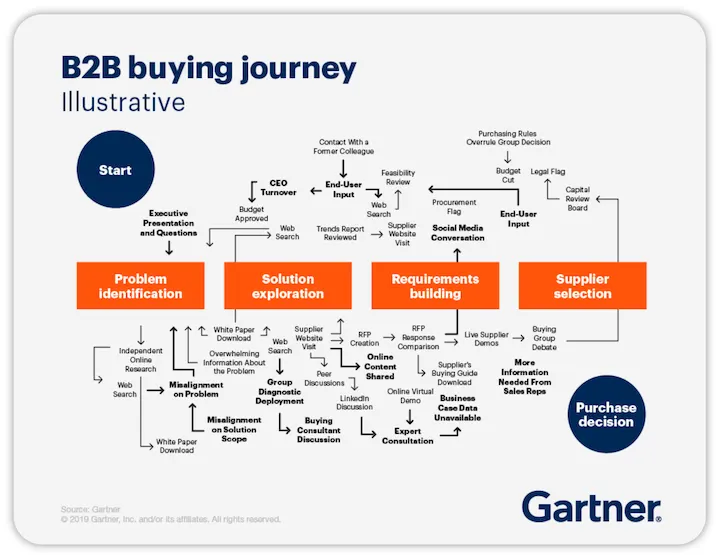
    B2B buyer journey
    10 Excellent B2B Website Design Examples (+Takeaway Tips)

    Successful B2B websites focus on providing value to potential customers through informative blog articles, case studies, or product demos. By building trust and demonstrating expertise, a B2B website can establish customer relationships that lead to long-term business partnerships.

    Let’s delve into the specific roles of a B2B website:

    1. Building Relationships with Customers
      A website can be used to build relationships with customers through blog posts, social media integration, and other interactive content. This can leave a lasting impression on potential customers and increase the likelihood of doing business together.
    2. Educating Potential Customers
      A website can educate potential customers about your products, services, and industry expertise. This positions your company as a thought leader and helps build trust with potential clients.
    3. Increasing Brand Awareness
      A consistent and integrated online presence can help increase brand awareness, which is crucial for acquiring new customers and growing your business.
    4. Generating Leads and Conversions
      A website can capture leads through contact forms, subscription boxes, and other calls to action. This helps build a list of potential customers interested in your offerings.
    5. Driving Sales
      In some cases, a website can be used to close sales. For example, if you sell SaaS products or e-commerce goods, you can allow customers to make purchases directly on your website.
    6. Improving Search Engine Rankings
      A well-optimized website can improve search engine rankings, making it easier for potential customers to find your website when searching for relevant keywords.
    7. Driving Traffic from Other Marketing Channels
      A website can be used to drive traffic from other marketing channels, such as social media, email marketing, and paid advertising, helping you reach more potential customers and amplify your marketing messages.

    The Impact of Poor Website Structure on Sales

    The Impact of Poor Website Structure on Sales
    Bad Website Design: Is that even a thing? | by Juan Noguera | Medium

    An inefficiently structured B2B website can significantly impact sales. Customers who cannot find the information they need on your website are likely to give up on learning about your company, leading to reduced engagement and business loss.

    Additionally, poorly structured websites can negatively affect search engine optimization (SEO) and online visibility, making it harder for potential customers to find your website in the first place.

    Ultimately, a poorly designed website can damage a company’s reputation and credibility. Potential customers may view a poorly designed website as unprofessional and may not take the company seriously, leading to a lack of trust.

    B2B decision-makers generally trust and favor well-structured, user-friendly websites. Therefore, building such a website is crucial for enhancing user experience, increasing conversion rates, and establishing yourself as a trustworthy industry leader.

    Effective Methods for B2B Website Development

    Effective Methods for B2B Website Development
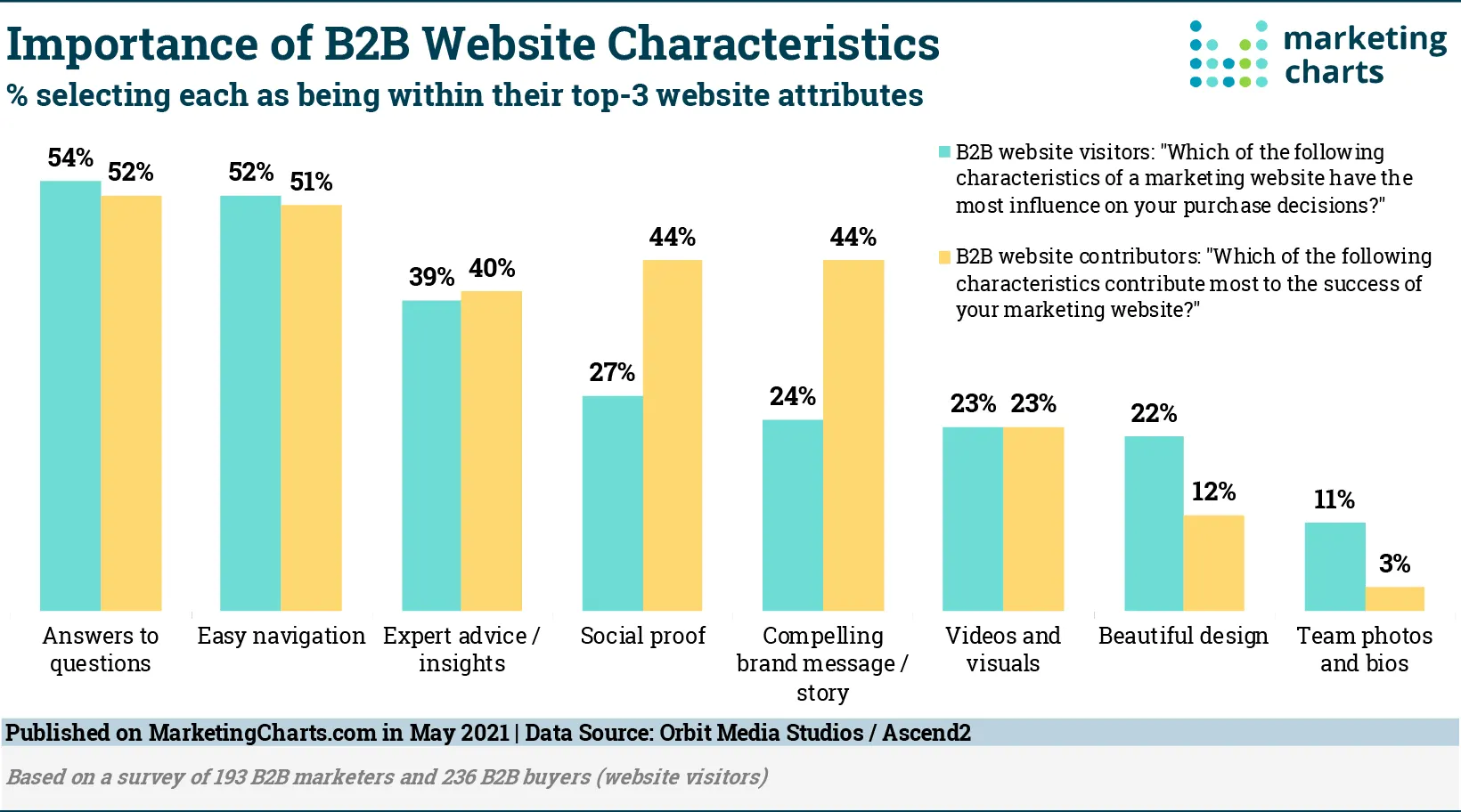
    What Do Visitors Want From Your B2B Website? – Marketing Charts

    Now that we understand the importance of a B2B website, creating a functional and aesthetically pleasing website is challenging, especially when trying to capture the attention of business decision-makers. B2B targets traditionally have more information than general consumers and tend to be short on time.

    If your website is difficult to navigate, they will quickly move on to the next one. To capture their attention, your B2B website must be highly relevant and engaging enough to generate leads.

    To achieve this, we at Growth Marketing Agency follow the steps outlined below when analyzing and developing a B2B website.

    Market Research

    Whether you’re just starting a website or planning a redesign, making informed decisions at every stage is crucial. Comprehensive market research is a prerequisite for this.

    The purpose of running your business is likely to provide excellent products or services that meet the needs of a specific target audience. You probably aim to build a customer base, increase revenue, and expand your business.

    To align your web design strategy with these goals, it’s essential to carefully review common objectives like the following:

    • Do you want your website to be a simple lead-generation tool, directing inquiries to your sales team? Or do you want it to guide B2B visitors through the entire sales cycle and convert them into potential customers? Answers to these questions will determine the amount and type of functionality required.

    If your website is simply collecting consumer information for follow-up, you are less likely to encounter backend or infrastructure issues compared to an e-commerce site.

    On the other hand, a sales-oriented website needs to be integrated with existing IT strategies and requires management of inventory, shipping, and other logistics.

    Once you’ve identified all the website’s requirements, such as functions and pages, you can move on to the sitemap development stage, where each page and function is meticulously analyzed within the marketing funnel.

    Goal-Oriented Processes

    If you already have a website and are planning updates, it makes sense to hold off on creating an update list until you have an analysis report. By leveraging analysis, you can avoid wasting time on updates to pages and sections that performed well or weren’t directly related to your business goals.

    Similarly, if the data reveals high bounce rates or low engagement on specific pages, you can reprioritize those pages. Using real-time data, consider installing a “Heat map,” which visualizes the parts of a page that generate the most interaction and attract the most attention.

    successful website development using heat map
    Eyetracking_heat_map_Wikipedia

    Designing with the Target Audience in Mind

    When building a website, it’s essential to define your marketing audience clearly. B2B customers are more cautious than general consumers and often make decisions that reflect the opinions of other key stakeholders.

    In some cases, a customer may need approval from up to 10 colleagues before making a purchase decision. Therefore, a B2B website must be designed to meet the needs of various stakeholders.

    Consider how those who need to get approval before taking action will evaluate your website. If the information is unconvincing or fails to distinguish your business from competitors, it’s unlikely that the first impression will be shared with your company’s decision-makers.

    Your goal here is to create a concise environment that provides a clear and logical overview of your company’s services, how they differ from competitors, and what actions users can take to obtain more information. By creating a buyer persona targeting your ideal customer, you can ensure that your development goals remain focused on those seeking to maximize benefits through partnerships with your brand.

    UI/UX, Content, SEO

    Now it’s time to structure the layout of your website. Generally, less is more when it comes to web design. A website that allows customers to find the desired content or resources within three clicks is considered the most structured.

    Are you planning to place “Contact Us” buttons and other CTAs throughout your website? However, in certain business models, building relationships with potential customers may be more important.

    For example, resources such as expertise, experience, and testimonials fall into this category. Here are a few steps for developing a structured build strategy.

    Prioritizing UX and UI

    B2B customers are put off by websites that are difficult to navigate. They are more likely to browse your website from a desktop computer and may return multiple times via mobile or tablet.

    If your website has slow image loading times or refreshes without reason, you may lose potential customers.

    Therefore, it is crucial to prioritize key principles of user experience (UX) and user interface (UI).

    In B2B marketing, however, UX is not just about creating a simple and clear site. Customers must be able to conveniently gather information, with a focus on creating a repeatable contract strategy that ensures continuity.

    Crafting Core Content and SEO

    High-quality content provides value to visitors and emphasizes your company’s expertise and reliability. As a result, visitors may become more interested in building a long-term relationship with your company rather than simply obtaining information.

    Built upon this foundation, Search Engine Optimization (SEO) helps your website rank higher in search engines. This leads to more visibility in search results, which in turn results in more clicks and visits from potential customers.

    Here is a simple SEO strategy to consider when developing a website:

    • On-Page Strategy: Keyword optimization, internal linking, metadata management
    • Off-Page Strategy: Acquiring high-value backlinks and building brand authority

    White Papers and Case Studies

    Documents such as white papers, case studies, and testimonials are highly effective indicators in B2B marketing. They demonstrate that the company holds an authoritative position in the industry and that other consumers trust the company. This approach is suitable for products or services with a lengthy sales cycle or those that require significant investment.

    A/B Test

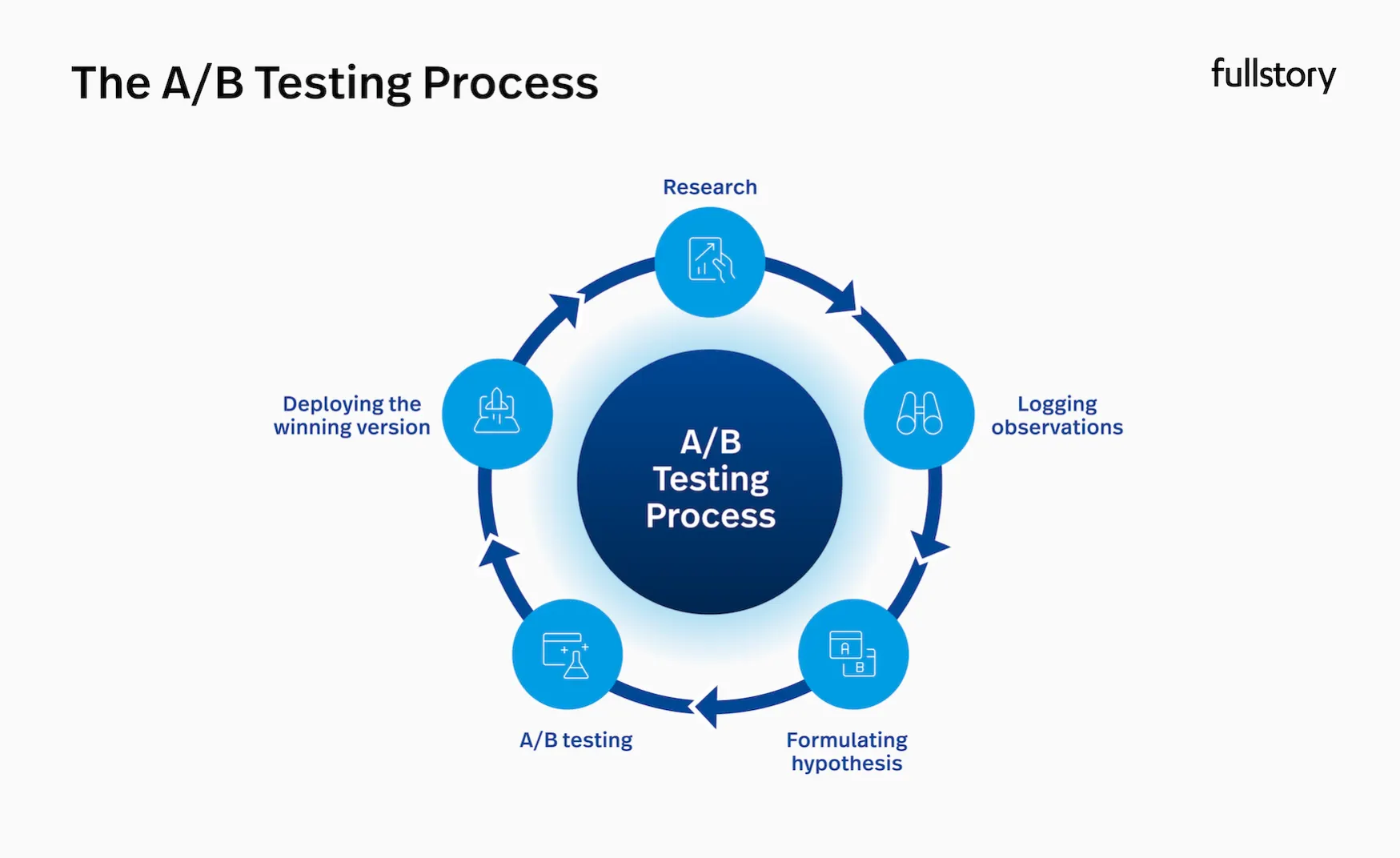
    A/B Test process
    What is A/B testing? And Why Is It So Important? | FullStory

    B2B websites and homepages play a crucial role in a company’s digital strategy, and their performance and efficiency significantly impact the company’s success. One of the most effective methods for optimizing such websites is A/B testing.

    A/B testing is an experimental approach where users are presented with two different versions (A and B) to compare which version produces better results. This method can be applied to various elements, such as web page design, content, and functionality.

    Because A/B testing is based on real user data, it is more objective and reliable than subjective judgment. Additionally, it helps identify which elements improve or hinder the user experience.

    Optimized web pages increase customer engagement and conversion rates. Ultimately, experimenting in small steps before making significant changes reduces potential risks.

    The A/B test implementation plan in the website development process includes:

    • Analyzing test results and drawing conclusions
    • Clearly defining the goal of the experiment
    • Establishing and prioritizing test hypotheses
    • Selecting and setting up test tools
    • Conducting A/B tests in stages

    Conclusion

    Your website serves as the primary source of information about your company and is a powerful marketing tool. Therefore, it is vital to develop your website with a well-planned strategy, ensuring that your online presence is optimized for growth and success.

    These steps represent an overview of a B2B website development approach. However, each business has different goals, and careful planning, consideration of market research, target audience, UX/UI design, and content marketing strategies should be tailored to your specific needs.

    By following these steps and continually optimizing and refining your website, you can build a strong online presence that drives growth, enhances credibility, and generates more business opportunities.

  • B2B Startup Failure Case: The Cost of Neglecting Marketing

    B2B Startup Failure Case: The Cost of Neglecting Marketing

    Why should we examine B2B startup failure cases, especially those that failed? The reason is that B2B startups operate in a highly competitive environment, where many companies experience failure. Often, these companies attribute their failure to their products not achieving market fit. In other words, they created products that no one wanted, leading to an inability to gain customers and generate revenue. However, they often miss the underlying issues at play.

    Let’s take a closer look at the B2B startup failure case of Argyle Social to understand the barriers in the B2B startup market and uncover the key lessons from this marketing case.

    B2B Startup Failure Case: Why Did Argyle Social Fail?

    Who is Argyle Social?

    Argyle Social Logo

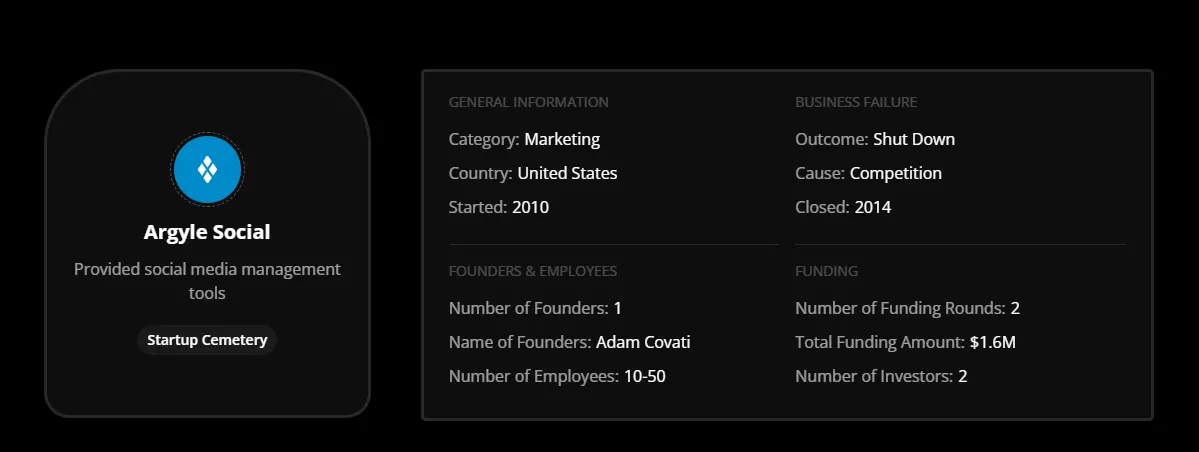
    Argyle Social was a company that provided a social marketing platform. It offered an interactive platform designed to help marketers improve customer engagement and lead generation on social media platforms.

    Initially, the platform was well-received, recognized for its reasonable pricing in the market. At one point, it even became a preferred program among marketers due to its intuitive dashboard and effective scheduling features.

    Why Argyle Social Failed?

    B2B Startup Failure Case: Why Did Argyle Social Fail?
    B2B Startup Failure Case: Why Did Argyle Social Fail?

    However, despite its early success, Argyle Social eventually closed its doors.

    The company’s founder, Adam Covati, made efforts to integrate their software with various social media marketing automation tools to stand out from the competition.

    Although these efforts were practically useful for marketing, the company lost momentum in the market due to the aggressive marketing strategies of its competitors.

    This B2B startup failure case highlights the risks associated with underestimating the power of marketing in a highly competitive landscape.

    As Argyle Social became less competitive, its financial situation deteriorated to the point where it struggled to pay its employees, let alone fund the development and launch of new software.

    Social media giants like Facebook and Twitter frequently updated their APIs, and Argyle Social needed to keep up with these changes to function effectively on these platforms.

    While the company had the talent and technology, it lacked the manpower and funding to manage these updates. The shortage of funds led to a lack of personnel, making it impossible to maintain sufficient service levels.

    Covati sought business partners, but no one was willing to invest in Argyle Social’s potential, making it a cautionary B2B startup failure case.

    B2B Startups: The Importance of Marketing

    Many B2B startups face crises when they fail to secure additional funding before stabilizing their operations.

    Most startups find themselves in an intensely competitive environment and eventually realize they are not growing fast enough to generate the necessary revenue due to limited funds.

    Argyle Social is a prime B2B startup failure case, having experienced explosive growth in its early stages but ultimately failing to sustain it.

    The Downfall of Argyle Social: Neglecting Marketing

    Over its four years of operation, approximately 500 companies used Argyle Social’s platform. Despite achieving a reasonable profit at a mid-market price point, Covati admitted that competing with large companies was an uphill battle.

    As automation in social marketing platforms became a hot topic, Argyle Social garnered significant attention, but the competition became fiercer as more companies entered the field.

    In the end, Covati conceded that they lost the fight against larger competitors. This B2B startup failure case serves as a reminder of the consequences of neglecting marketing efforts.

    Covati’s Reflection on Failure

    Adam Covati - Argyle Social CEO
    Adam Covati – Argyle Social CEO

    According to Adam Covati, the CEO of Argyle Social, “Interest from suppliers and knowledgeable customers was high, and with our intriguing integrations and technology, Argyle Social seemed promising. However, business partners believed that while our technology was interesting, it was still premature.”

    He added that there was one thing he deeply regretteda critical point that could have influenced the company’s future and possibly helped them avoid failure. “Since our customers became direct marketing channels, we didn’t invest in our own marketing. The common issue for tech-based companies like ours is that we fail to recognize the importance of marketing. We didn’t realize that good technology and resources alone were not enough. Argyle Social initially invested in marketing, but in hindsight, we should have continued to invest boldly in our own marketing. However, such decisions are difficult to make when managing finances.”

    Covati hoped that other B2B startups would not follow in their footsteps. He stressed that while it may be difficult for CEOs to decide where to invest their capital, skimping on self-marketing is a foolish move. Despite attracting a substantial number of customers in its early stages, Argyle Social eventually lost them to competitors who could outpace them with large-scale marketing strategies. Their financial resources were simply insufficient to compete with the extensive marketing efforts of their rivals.

    Lessons from B2B Startup Marketing Cases

    Invest in Your Own Marketing

    B2B Startup Marketing Cases

    Covati pointed out that it is challenging for small startups to keep up with platforms like Facebook and Twitter.

    Over time, it becomes increasingly difficult to maintain competitiveness with certain services from other companies.

    Every time social networks update their APIs, substantial development work is required on third-party social media platforms as well. Argyle Social attempted to automate and cut back on self-marketing to invest more in these technological developments.

    However, their efforts to integrate marketing automation systems ultimately failed to yield results.

    Meanwhile, their competitors secured significant capital and expanded their sales and marketing strategies, leading to yet another B2B startup failure case.

    What Strategy Should Small Startups Adopt?

    Self-marketing strategies, such as content marketing, are among the most critical promotional tactics for B2B startups.

    This is because they can be executed without large capital investments, and when done well, they can yield substantial returns relative to the time and effort invested.

    However, it is also true that if appropriate content marketing strategies are not tailored to each field, it could result in wasted time.

    For early-stage B2B startup founders who lack experience, diving into content marketing for the first time can be a significant risk, leading to mistakes.

    They also face limitations in terms of time and resources. In such cases, seeking direct help from self-marketing experts can be a wise approach. If you want to learn more about startup marketing strategies, consulting with experts might be a good option.

  • Marketing Analytics Tools: Their Importance in B2B Marketing

    Marketing Analytics Tools: Their Importance in B2B Marketing

    Why are Marketing Analytics Tools Important for B2B Marketing?

    Utilizing marketing analytics tools is crucial for understanding website performance and identifying opportunities for marketing improvement. Specifically, using GA4, a leading example of marketing analytics tools, allows you to track and analyze various aspects of your website, such as traffic sources, audience demographics, user behavior, and conversion rates. This tracking and analysis provide a clear understanding of how your website is acquiring potential customers.

    For instance, if your goal is lead conversion, marketing analytics tools can offer insights into how to improve your website to secure more leads. If your goal is sales conversion, these tools can help you find methods for increasing conversion value.

    In fact, for B2C businesses, the importance of marketing analytics tools is often well understood among practitioners, who are typically familiar with tracking tools and data utilization. However, for B2B businesses, the target customer base is relatively smaller, and website traffic is also less substantial compared to B2C businesses. As a result, the importance of marketing analytics tools is sometimes overlooked or tracking may not be implemented at all.

    Why Should You Implement Marketing Analytics Tools?

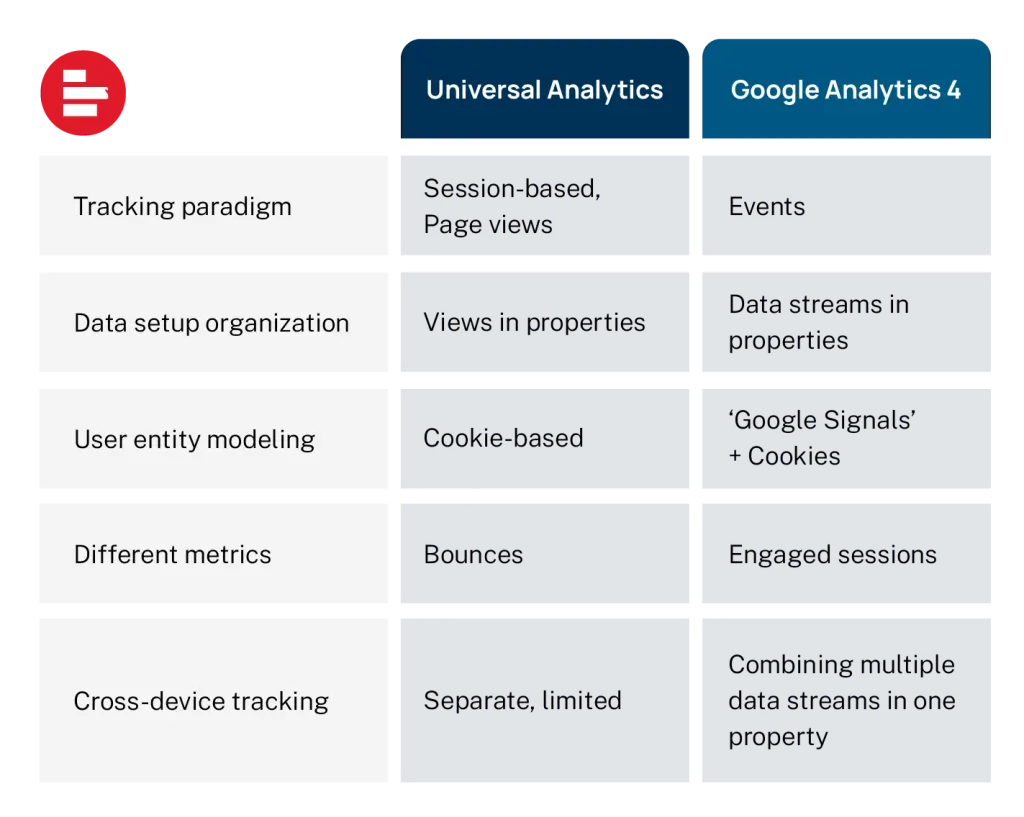
    Google Analytics 4 vs. Universal Analytics: Whats the Difference?

    Google Analytics 4 vs. Universal Analytics: Whats the Difference?
    Google Analytics 4 vs. Universal Analytics: whats the difference – Supermetrics

    As many of you may know, as of July 1, 2023, the service for Universal Analytics (UA) has ended, and GA4 has taken its place. Therefore, discussing the UA version of Google Analytics is now of limited relevance.

    ? Consequently, we will focus on GA4, which is a leading marketing analytics tool.

    Cross-Platform Tracking

    GA4 is capable of tracking users across websites and apps, providing a complete view of the user journey.

    This is particularly important for B2B marketers, who often deal with customers interacting with the brand across multiple devices and channels.

    With GA4s cross-platform tracking capabilities, marketers can fully understand the customer journey regardless of where it starts or ends.

    This is essential for comprehending how customers interact with the brand and their motivations for conversion.

    Predictive Analytics

    GA4 employs machine learning to predict future customer behaviors, such as the likelihood of churn or the probability of purchase.

    This enables B2B marketers to identify and target the most valuable customers, allowing for more effective marketing campaigns and personalized customer experiences.

    Privacy-Focused Design

    GA4 is designed with a stronger emphasis on privacy compared to its predecessor, UA.

    This feature is crucial for B2B marketers who must comply with increasingly stringent data privacy regulations.

    How B2B Companies Should Set Up Marketing Analytics Tools

    How B2B Companies Should Set Up Marketing Analytics Tools

    Various marketing analytics tools have been developed to improve how B2B marketers measure and track performance.

    Why is setting up these tools crucial for B2B companies?

    Identifying High-Lifetime-Value Customers

    Advanced machine learning and predictive capabilities provided by marketing analytics tools offer real-time statistics on user behavior and conversions. They also provide methods to easily create similar audiences based on high-value customers, allowing marketers to expand reach to similar potential customers.

    These features streamline data analysis and decision-making processes, saving time and resources without the need for complex analysis models.

    Marketing analytics tools allow for tracking important business events or conversions, even if they are not standard events by default. This is significant for B2B marketers with complex sales cycles and multiple conversion paths.

    Understanding the Complete Customer Journey

    Understanding the Complete Customer Journey

    B2B companies can now gain insights into the entire customer journey through marketing analytics tools like GA4s event-based measurement model.

    For instance, GA4 provides an overview of the customer lifecycle that is not limited by individual sessions or platforms.

    GA4 easily tracks data collected from various applications and devices, aiding in the accurate understanding of how customers interact with the brand.

    It also enables demographic segmentation of potential customers based on factors such as company size, industry, and location, allowing for more targeted marketing campaigns and personalized content.

    Data-Driven Contribution to ROI Improvement

    Data-driven contribution models, provided by marketing analytics tools, allocate conversion credit based on the data of each conversion event. This method calculates the actual contribution for each click interaction.

    This function analyzes the customer journey from the first touchpoint to the final conversion, helping to improve the return on investment (ROI) for brand marketing campaigns. It also provides detailed insights into how various marketing activities contribute to conversions.

    Marketing analytics tools offer new features and reports to help marketers better understand website traffic and performance. For example, GA4s attribution reports can identify which marketing channels drive the most conversions, aiding in budget allocation.

    Integration with Other Marketing Tools

    Integration with Other Marketing Tools
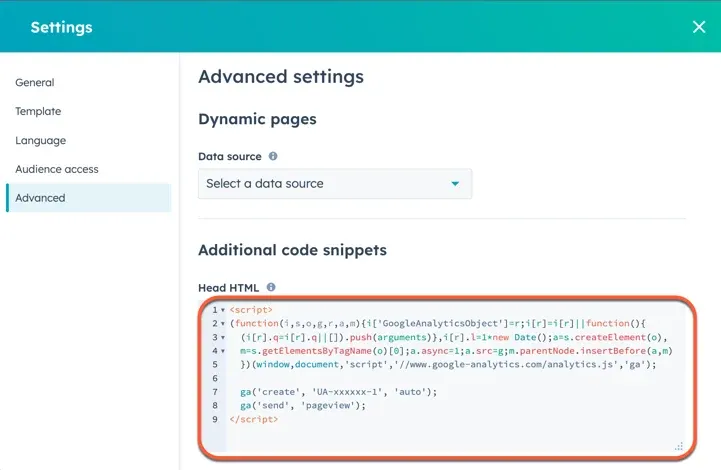
    Integrate Google Analytics with HubSpot content

    GA4 integrates with various Google products, including Google Ads, Search Console, Display & Video 360, BigQuery, and Search Ads 360. This combination allows for merging web and app data to extract valuable statistics, improving data-driven marketing campaign enhancements.

    GA4 provides valuable insights into customer behaviors, interests, preferences, and needs by combining web and app data. This insight helps understand how customers interact with your site and their interest in products and services. Identifying trends and patterns in customer behavior can also aid in improving marketing campaigns and optimizing online visibility.

    Additionally, GA4 can integrate seamlessly with other marketing tools like Salesforce and HubSpot, allowing easy data sharing between different systems and providing a comprehensive understanding of marketing performance.

    Marketing Analytics Tools: A Necessity in B2B Marketing

    Todays digital environment demands various insights, including understanding the types of spread, new perspectives on user privacy, and the diverse touchpoints customers use. Tools that provide insights while protecting customer privacy and measuring performance have become crucial.

    In other words, advanced marketing analytics tools are needed to identify new potential customers and approach them at the right moment. These tools are powerful instruments that assist B2B marketers in tracking website traffic and performance, identifying the most valuable customers, and developing more effective marketing campaigns.

    By setting up marketing analytics tools, B2B marketers can gain valuable insights into their business and enhance their marketing activities.

  • Securing Potential Customers for Business Success

    Securing Potential Customers for Business Success

    Securing potential customers requires significant time and effort, but it is an indispensable process for business success. The more you find new customers, the more revenue you can generate and the more you can grow your business.

    At Growth Marketing Agency, we provide guidance on how to identify and discover potential customers that are suitable for each business.

    Securing Potential Customers: Different Types of Leads

    Securing Potential Customers: Different Types of Leads
    Q. What is a Lead?

    A lead refers to an individual who has shown interest in a company’s products or services. Leads are recorded in various ways, such as email addresses, phone numbers, or names, and are those who are seeking solutions to their problems. Leads can be obtained through specific events like contact forms, website sign-ups, or newsletter subscriptions. They represent a crucial data point for businesses as they indicate interest and potential solutions that your products can offer.

    Types of Potential Customers Leads

    Types of Potential Customers Leads

    Information Qualified Lead (IQL): Also known as a cold lead, an IQL is someone who has just started searching for products or services. They may provide contact information in exchange for useful information but generally do not know how a company can help them.

    Marketing Qualified Lead (MQL): Also known as a warm lead, an MQL is someone who has taken some action to learn more about your products or services. This might be through targeted ads, affiliate marketing, or email campaigns. MQLs often provide their name, email address, and phone number in exchange for offers like eBooks, promotional proposals, newsletters, or free quotes.

    Sales Qualified Lead (SQL): Also referred to as a hot lead, an SQL is a customer ready to make a purchase. They have shown interest, gathered information, compared options, and are prepared to buy. SQLs have the highest likelihood of converting from a potential customer to a buyer.

    Importance of Securing Leads from Potential Customers

    Finding leads through marketing is a valuable strategy for increasing business revenue. When marketers identify strong leads, they can develop more efficient and effective sales strategies tailored to the relevant information. This allows marketers to target individuals who already know about and are interested in your products or services.

    Importance of Securing Lead

    Well-targeted customers are more likely to purchase than those unfamiliar with your products. Genuine interest from potential customers often leads to faster conversions.

    ? If you want to attract people to your brand, check out Growth Marketing Agency’s marketing strategies.

    Reevaluate Your Targeting

    Reevaluate Your Targeting

    When you started your business, you likely targeted a specific group of people. However, was sticking to that initial group the right choice?

    Lead generation provides an opportunity to learn more about potential customers in detail. You might end up engaging individuals not included in your original marketing campaigns.

    By gathering insights from a customer perspective and generating high-quality leads, marketers can identify market trends and explore new markets that were previously inaccessible.

    Enhance Lead Quality with Persuasive Techniques

    As you continue to secure leads, you’ll be able to adopt a highly targeted approach. Every piece of content created for your brand, from website and email copy to social media and blog posts, will be crafted with advanced targeting in mind.

    This allows marketers to create more relevant and appealing topics and messages for each target audience.

    Properly executed lead generation can maximize your brand’s capabilities to achieve marketing goals. You’ll find it easier to capture the interest of qualified leads and guide them toward conversion.

    Enhance Lead Quality with Persuasive Techniques

    Focusing on the problems that potential customers care about will make them more open and interested in your brand. Improved lead quality can enhance conversion rates and boost revenue, potentially increasing your sales growth beyond expectations.

    Building customer reviews is also an effective way to address potential customer problems. For example, potential customers need strong persuasion to convert, and few things are more persuasive than past customer reviews.

    When potential customers see or hear from other consumers who have resolved similar issues with your product, it adds substantial persuasive power. However, obtaining customer reviews isn’t automatic and may involve costs to request recommendations.

    As you generate more potential customers, collecting customer reviews can be utilized in marketing materials such as websites, emails, videos, social media posts, and infographics.

    ? Learn about the impact of product reviews on conversion rates.

    Potential Customers Lead Generation Marketing Strategy

    Determine Target Customers

    Potential Customers Lead Generation Marketing Strategy

    If potential customers do not convert into suitable clients, generating leads is pointless. Therefore, start by conducting research to accurately identify your target audience.

    Understand your ideal customers’ backgrounds, goals, online habits, challenges, and their buying processes.

    Once you have detailed information about your target potential customers, tailor your lead generation marketing campaigns to their preferences, including messaging and traffic channels.c

    Set Campaign Goals

    To achieve success in marketing campaigns, set specific goals. Generating as many leads as possible might not always be the goal. Benchmark past performance to set specific targets such as the number of visits and conversion rates.

    If you havent started tracking yet, now is the time. Understanding the impact of potential customers on your brand will help you determine how many customers are needed to meet sales goals.

    Then, calculate the average number of leads that convert into buyers and adjust conversion rates and goals accordingly.

    Attract Ideal Customers

    Attract Ideal Customers

    Today’s potential customers are more cautious and require more compelling offers. It is no longer easy to attract ideal potential customers as before.

    ? Marketers need to make unique and highly attractive offers in their campaigns to achieve results. This requires considerable effort.

    Build Landing Pages

    Build Landing Pages

    Once you know what to offer potential customers, you need to persuade them to make a purchase. Landing pages are an excellent way to directly guide customers to a call to action (CTA). Therefore, businesses should provide persuasive landing pages.

    A landing page is the first page users see when they click on a site. It includes marketing to promote the company’s products and services. In digital marketing, landing pages primarily focus on conversion rates.

    They should drive more traffic and convert it into sales, helping users develop an interest in your products or services and achieve business goals.

    Test Your Campaign

    Before driving traffic, conduct thorough campaign testing. Act as if you are a potential customer accessing the landing page through various links, such as email or social media posts. Ensure these links work correctly and verify that the landing page displays as intended across all browsers.

    Interact with the page sufficiently to ensure all processes, from the frontend to the backend, function smoothly.

    Analyze and Optimize Lead Generation Marketing

    Even the best marketers can’t do everything perfectly. Using analysis software is a smart approach to quickly optimize campaigns based on data.

    ? How does Growth Marketing Agency utilize analysis tools?

    Securing Potential Customers by Cultivating Diverse Lead Sources

    Securing Potential Customers by Cultivating Diverse Lead Sources

    Achieving a successful lead generation campaign requires a multifaceted approach. Developing effective, customized strategies for each channel and nurturing lead sources is essential. Many small businesses face increased challenges due to digital saturation.

    Maintaining a steady influx of new leads in a digitally oversaturated market can be challenging. Therefore, many companies need to overcome these obstacles and elevate their business to a higher level.

  • B2B Marketing KPIs: What Metrics to Focus On?

    B2B Marketing KPIs: What Metrics to Focus On?

    In all marketing efforts, KPIs (Key Performance Indicators) are crucial for building and maintaining business competitiveness. Especially in B2B marketing, it’s common to lack a concrete plan for setting and achieving KPIs. As a marketer, establishing and tracking the right B2B marketing KPIs is essential since they guide the company toward growth.

    Strategy Development Through Performance Measurement

    B2B ??? KPI ?? ??

    B2B marketing KPIs like revenue, customer acquisition rates, and brand awareness help understand how efforts and strategies contribute to a company’s growth. Through these metrics, marketers can set clearer goals and develop effective strategies. For instance, if the goal is to increase sales of a particular product, focusing on KPIs such as lead generation rates and sales growth can be pivotal.

    B2B marketing KPIs play a critical role in securing a competitive edge in the market. By comparing your performance with competitors, you can understand your standing and strive for better outcomes, thereby strengthening your market position.

    Key Strategies for Continuous Growth

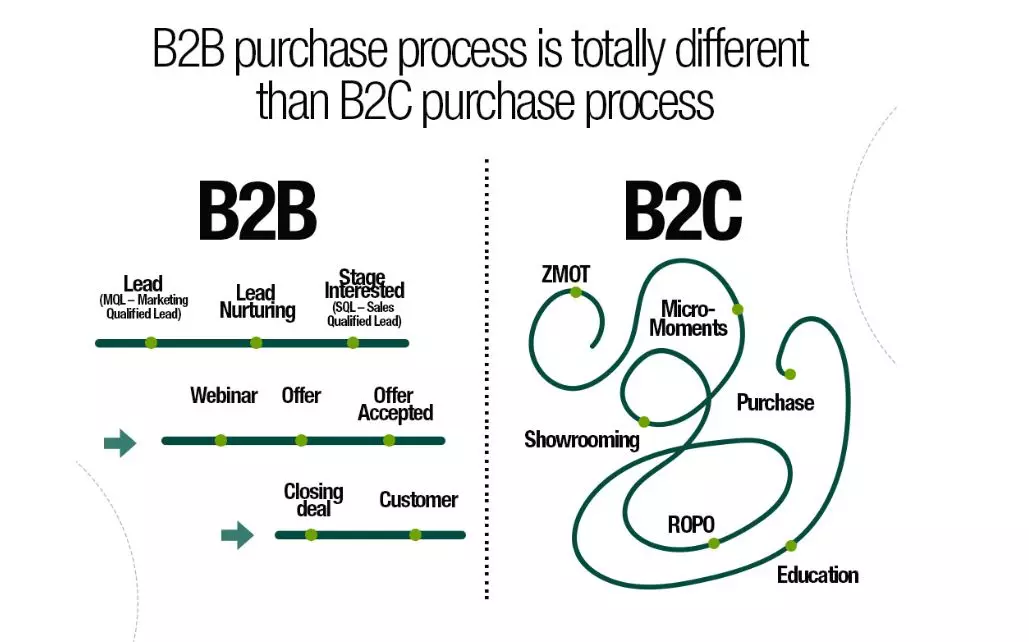
    B2B vs. B2C ?? ???? ??
    SALESMANAGO

    The B2B market is constantly evolving, with purchase cycles becoming increasingly longer.

    Research shows that about 74.6% of B2B sales to new customers take over four months to close. This indicates a lengthy time from initial lead intake to revenue conversion.

    As the time required for lead nurturing extends, the importance of setting and tracking marketing KPIs in the B2B market becomes more pronounced. With new technologies and market trends continuously changing, analyzing these shifts through KPIs allows for agile responses.

    Consistent KPI analysis, rather than short-term, helps companies appropriately grasp and adjust to the flow of change.

    Which B2B Marketing KPIs Should You Track?

    Setting the right KPIs in B2B marketing can be challenging even for skilled marketers. However, it’s a fundamental step that cannot be avoided if you want to measure performance and optimize strategies.

    To set the right KPIs, you should first consider the following goals and strategies:

    Revenue and Customer Acquisition

    • Monthly Revenue Growth Rate: Beyond the size of revenue, measuring the rate of change in monthly revenue helps grasp the growth trend of the company. Since B2B is based on long-term relationships, continuously analyzing these trends is crucial.
    • Customer Acquisition Cost (CAC): CAC is the cost required to acquire a new customer. By understanding the cost spent on acquiring new customers, you can evaluate if the marketing budget is being used effectively. Reducing CAC is a vital element in improving cost-effectiveness.

    Click-Through Rate (CTR)

    CTR? ?? ??
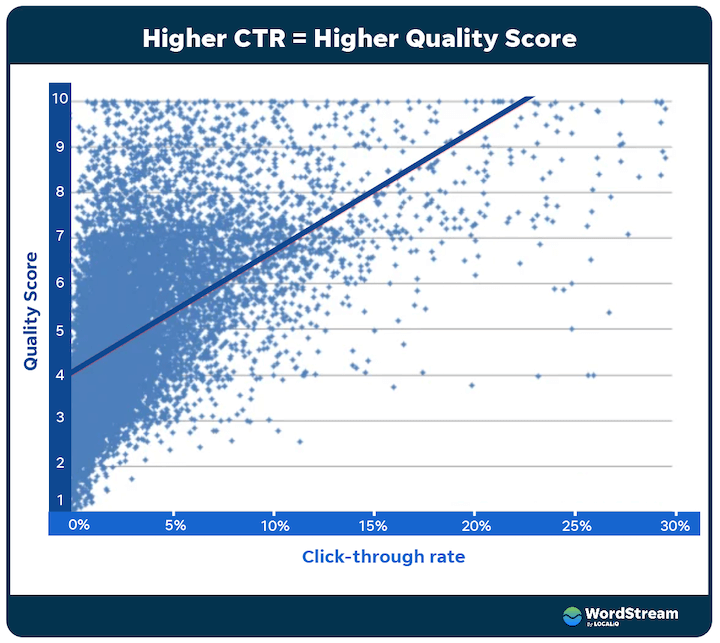
    Click-Through Rate (CTR): Understanding Click-Through Rate for PPC

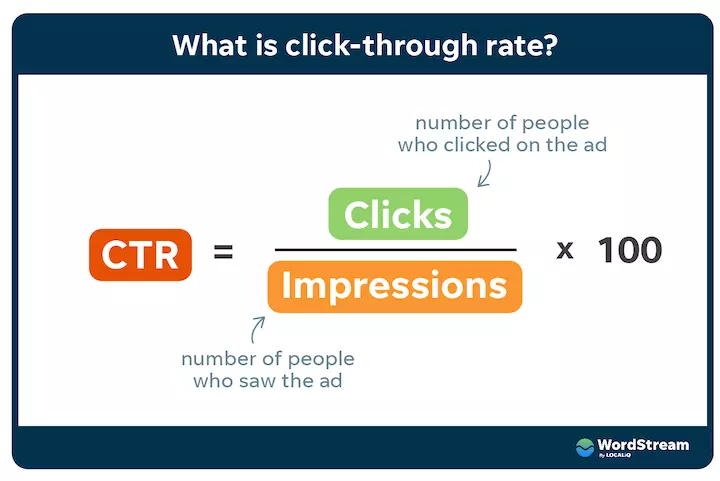
    CTR, or Click-Through Rate, is a significant metric that indicates the effectiveness of marketing campaigns or content. It represents the ratio of clicks to impressions and provides insight into how users respond to and take action on ads.

    CTR ?? ??

    To improve CTR, consider the following methods:

    • Select keywords highly relevant to the target audience.
    • Write clear and concise ad copy.
    • Use images or videos to enhance visual appeal.
    • Reset targeting for ad exposure.

    Lead Generation and Conversion Rate Optimization

    • Marketing Qualified Lead (MQL)
      • MQLs are customers interested in your product or service and can be considered potential customers for sales conversion. Actively managing MQLs helps effectively attract customers leading to sales conversion.
      • MQLs can be identified through actions such as searching for products on the website, subscribing to newsletters, or leaving emails. It’s essential to note that while MQLs have passed through the marketing funnel, they may not always convert to customers, requiring additional effort.
    • Conversion Rate Optimization (CRO)
    ??? KPI ???? - CRO? ?????
    Conversion Rate Optimization (CRO): Ultimate Guide

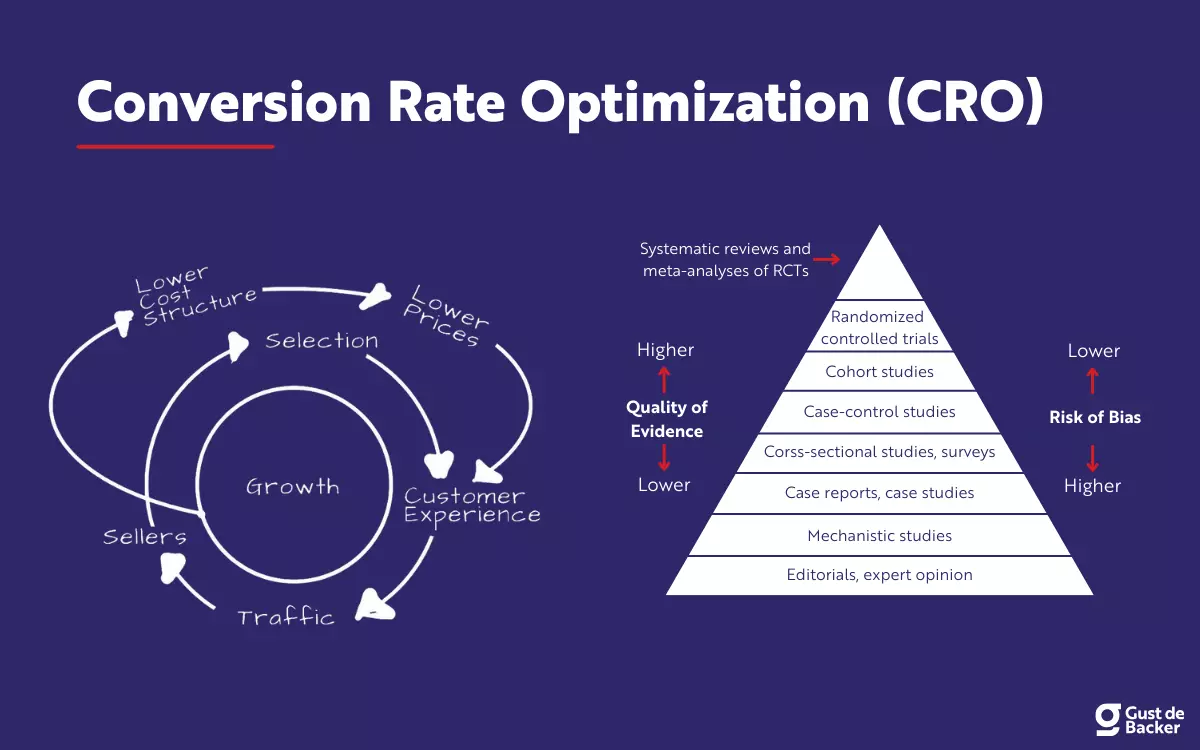
    CRO refers to the process of increasing conversion rates to achieve desired results from marketing activities. Higher conversion rates improve efficiency. The steps for optimizing conversion rates for B2B marketing KPIs include:

    • Setting goals
    • Collecting data
    • Analyzing and improving
    • Testing and applying
    • Implementing and monitoring
    • Segmenting target customers
    • Content activities
    • Nurturing by channel
    • Improving the conversion process

    Measuring Various B2B Marketing KPI Performances

    Competent B2B marketers utilize various KPIs to measure and improve strategy performance. These KPIs are essential for reviewing different aspects of marketing and establishing effective strategies and optimizations.

    Traffic and Entry Paths

    • Organic Traffic: Organic traffic from search engines reflects the performance of the website’s SEO. By measuring keyword rankings and the amount of traffic, you can assess the effectiveness of your SEO strategy.
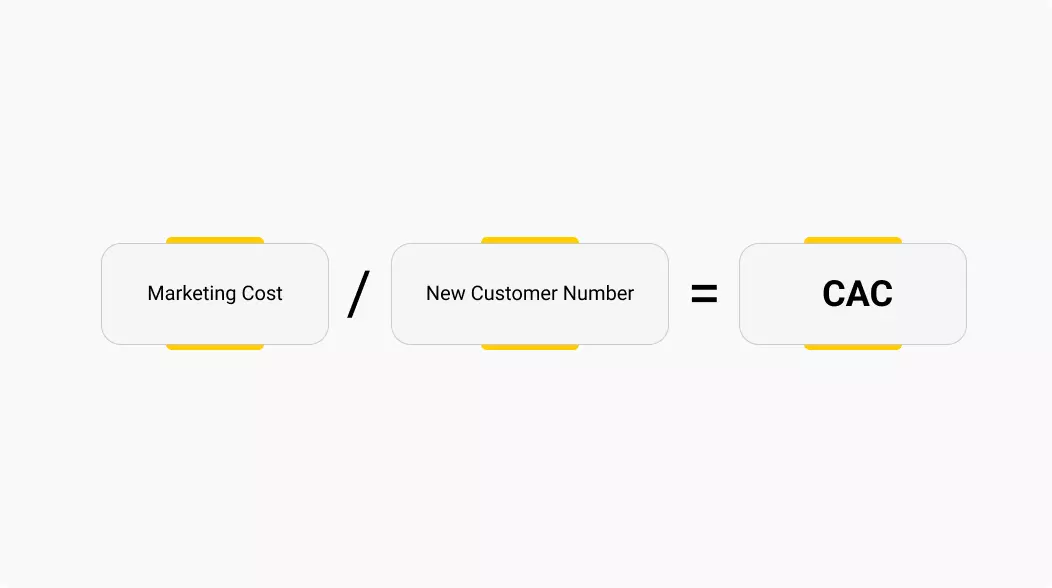
    • Cost Per Click (CPC): To determine CAC, divide the total marketing cost by the number of new clients generated over a set period. CPC measures the cost per click for ads, playing a crucial role in assessing the profitability of ad campaigns by evaluating budget efficiency.
    B2B ??? KPI - CAC??
    To determine your CAC, you need to divide your total marketing cost by the number of new customers generated over a predetermined period of time.

    Measuring Content Effectiveness

    • Downloads and Shares: Track the number of times in-depth content is downloaded or shared to gauge interest and empathy with the brand’s content.
    • Website Visit Duration: The time visitors spend on the website serves as a benchmark for content quality and user experience. Long visit durations indicate successful content, providing positive data for lead generation.

    Email Marketing and Automation

    • Email Open Rates and Click Rates: Checking open rates and click rates is essential for measuring the effectiveness of email campaigns. Improve open rates with compelling subject lines, and drive clicks with personalized and relevant content.
    • Automation Flow Effectiveness: Analyze how email automation flows guide the customer journey. Automation is a highly effective strategy for building efficient marketing strategies.

    Engagement and Conversion

    • Attendee Registration and Participation Rates: The success of online events or webinars is reflected in attendee registration and participation rates. Planning and measuring engaging and informative events can enhance brand value.
    • Post-Event Conversion Rates: Check the conversion rate of participants after events to connect the event’s effectiveness to actual business results.

    Improving Profitability

    • ROI and ROAS

    ROI (Return on Investment) and ROAS (Return on Advertising Spend) are crucial metrics for measuring performance.

    ROI represents return on investment, and ROAS represents the sales ratio to advertising costs.

    High ROAS indicates high sales relative to advertising costs, leading many companies to strive to improve ROAS.

    However, a high ROAS doesn?t automatically mean good performance. Before increasing the advertising budget, it?s necessary to identify the advertising budget limit, the point beyond which increasing the budget does not improve results.

    To avoid the trap of high ROAS, distinguish between ROI and ROAS in your analysis and evaluation. This is not easy, as many companies fail to grasp ROI due to the illusion created by high ROAS.

    Appropriately utilizing various KPIs allows for effective monitoring and optimization of different strategy aspects.

    Choosing the right KPIs that align with specific business goals and strategies can infinitely contribute to organizational growth. Continuous effort in proper analysis and data-driven decision-making increases the likelihood of maintaining a competitive edge and achieving successful outcomes in a changing market.

    Efficient Strategies for Setting B2B Marketing KPIs

    Even with proper B2B marketing KPI settings, lacking systematic analysis and know-how can lead to significant resource wastage. Especially when continuous effort and attempts are required, making missteps can result in greater losses.

    In enhancing B2B marketing KPIs, collaborating with a capable marketing agency is more important than expected. Professional agencies offer expertise and various resources to drive successful strategies. They are often more adept at understanding industry trends, developing effective content strategies, and utilizing the latest digital marketing technologies.

    Moreover, their external perspective can pinpoint and address sensitive areas that are difficult to identify internally. By considering key indicators based on our business characteristics and market environment, setting major KPIs, and monitoring these KPIs long-term with objective analysis, continuous growth and performance improvement will not be difficult to achieve.

    By working with an experienced marketing agency like Growth Marketing Agency, you can leverage our professional knowledge and skills, ensuring successful strategies and achieving your business goals.

  • YouTube Marketing for B2B Companies in Korea: Reality Check

    YouTube Marketing for B2B Companies in Korea: Reality Check

    In South Korea, YouTube has undeniably become the most widely used app based on monthly usage time. Naturally, interest and attention towards YouTube Marketing are skyrocketing.

    Video marketing, in particular, boasts overwhelming effectiveness in terms of delivery compared to other static marketing strategies. It’s no wonder that companies frequently turn to this approach when promoting their products and services.

    However, it’s crucial to approach YouTube marketing with caution, especially for B2B companies. Despite the booming trend, we must consider some realistic concerns.

    Why aren’t there more success stories for B2B companies in this YouTube marketing frenzy? Let’s delve into the definition of YouTube marketing and explore its application to B2B companies.

    What is YouTube Marketing?

    Video marketing involves creating videos to promote products or services as part of content marketing. YouTube marketing specifically refers to uploading these videos to YouTube for promotional purposes.

    These videos offer detailed product descriptions and user reviews, addressing the shortcomings of traditional blog or photo/text-based content.

    Importance of Youtube Marketing in Korea

    YouTube is a platform exposed to global audiences, with minimal language barriers and easy integration with other social media channels. This allows for global marketing with brief content.

    Additionally, YouTube marketing has the advantage of generating revenue through video content. For instance, paying influential YouTubers to experience and review products.

    YouTube Guide for B2B Companies

    So, is YouTube marketing effective for B2B companies? To answer directly, it’s unlikely.

    Building a successful YouTube channel and using it for marketing is harder and slower than becoming a successful YouTuber.

    The costs and time involved in producing YouTube content are substantial, and creating engaging content increases these costs further.

    Despite the significant resources invested, successful cases are rare.

    Average spending on marketing videos
    Average spending on marketing videos: 29% are under $100. (Source: Benefits of YouTube for B2B Marketing)

    Although there is a possibility of success on YouTube, the likelihood is extremely low compared to the resources invested.

    Some clients contact us out of curiosity after seeing references from so-called professional YouTube marketing agencies. They might start after observing famous online success cases.

    However, these are merely rare success stories, and we can confidently say that 99.99% of B2B companies fail on YouTube.

    Are There Successful B2B YouTube Marketing Cases?

    For those skeptical about whether B2B YouTube marketing can succeed, let’s analyze B2B and G2C YouTube marketing cases.

    Stone Gold’s Pet Rock

    Source: SBS News

    Stone Gold, a Korean company selling decorative stones, was significantly impacted by the construction industry’s downturn.

    While contemplating ways to boost sales, employee Kim Myung-sung began uploading videos, which surprisingly garnered significant views.

    A simple video of washing stones recorded over 9 million views, sparking interest in Stone Gold’s ‘pet rock,’ which was sold for 10,000 KRW and sold out the prepared 150 sets, reflecting its popularity. Pet rocks are ordinary rocks that are treated like pets: decorated with outfits, painted with faces, and given names and beds.

    Korean Instagram of Stone Gold

    Subscribers who favored Stone Gold’s content suggested the company introduce ‘pet rocks,’ a trend at the time.

    Although the ‘pet rock’ gained considerable attention, it was primarily a B2C product and a brand awareness event rather than a significant sales driver.

    Youtube Channel in Korea

    Analyzing the YouTube channel, despite uploading 60 pieces of content, the average views are only about 7,900.

    Even with frequent, well-crafted updates, the results are disappointing. Although some interviews mentioned slight B2B sales improvement after YouTube success, it’s inappropriate to view Stone Gold’s video marketing as significantly beneficial.

    In conclusion, while increasing B2C customers can improve Stone Gold’s awareness, it is not an effective method for boosting B2B product sales relative to the resources invested.

    Chungju City’s YouTube Channel

    Source: Chungju City’s YouTube Channel

    Compared to other local government YouTube channels, Chungju City’s channel is highly successful.

    The most viewed video uses the ‘Coffin Dance’ meme to promote social distancing, surpassing 500,000 views within three days.

    G2C Youtube Channel in Korea
    Chungju Citys YouTube channel. Even a video uploaded three days ago has easily surpassed 500,000 views.

    Despite lower quality than other government videos, it succeeded by capturing user preferences and humor points, known as B-grade marketing.

    However, would company executives support such an approach for their YouTube channel?

    The channel’s success was due to the bold decisions of a manager who uploaded content without higher approval during weekends.

    It’s challenging to choose and maintain a B-grade concept without internal support, making B2B YouTube marketing with such concepts virtually impossible.

    Why B2B YouTube Marketing is Difficult

    Many are considering other marketing channels besides YouTube.

    Blogs can quickly secure traffic if the posted content demonstrates expertise or covers rarely discussed topics.

    Instagram, on the other hand, is a platform for showcasing lifestyle and browsing affluent individuals, making it unsuitable for B2B purposes. Global brands use Instagram to display brand identity rather than drive sales.

    Why B2B YouTube Marketing is Difficult

    YouTube’s success is determined by the algorithm.

    Unless you handle popular, creative, and engaging content, your chances of failure are high.

    Investing time and resources in other marketing strategies may yield better results than relying on YouTube’s uncertain success.

    YouTube Marketing Guide for B2B Businesses

    I once bought an electronic device and read the user manual. Despite the clear illustrations, the installation was still challenging.

    Suddenly, I searched for the product name on YouTube and found a video demonstrating the installation process. Although it wasnt official content from the brand, it was incredibly useful.

    Content types that attract the most subscribers to B2B business YouTube channels.
    Survey on the content types that attract the most subscribers to B2B business YouTube channels. Product tutorials or demos are the most popular. (Source: Dear Databox: How Can I Grow My B2B YouTube Channel?)

    For B2B companies, YouTube channels can be particularly useful for showing how to use or operate products through video. Videos are far more effective at conveying information than written manuals, offering stronger delivery and higher satisfaction.

    Additionally, YouTube can serve as a portfolio to showcase the company’s success stories. Videos of these achievements can be far more memorable than text or photos.

    Therefore, it’s recommended to use YouTube for B2B businesses primarily to deliver necessary information conveniently.

    However, it’s best not to expect high view counts, subscriber growth, or significant sales impact from YouTube.

    If You Still Need YouTube Marketing

    Searching for YouTube marketing on Google will reveal numerous agencies.

    Unfortunately, many lack a deep understanding of ‘marketing’ despite their video expertise.

    If considering YouTube marketing, ensure to work with individuals who confidently present successful B2B references (though none exist).

    Consult with scriptwriters, producers, and cast with YouTube success experience, but be prepared for ambiguous responses regarding expected outcomes.

    Conclusion: The B2B Marketing Landscape

    Growth Marketing Agency integrates insights and expertise gained from various B2B and B2G marketing strategies to provide robust B2B marketing strategies.

    We pride ourselves on the most efficient media strategies for B2B marketing.

    If you’re contemplating which channels and methods to choose for B2B marketing, we recommend discussing it with Growth Marketing Agency.

  • Medical Device Marketing: 5 Key Lessons for Global Success

    Medical Device Marketing: 5 Key Lessons for Global Success

    Medical Device Marketing: Navigating the Global Healthcare Maze

    Medical device marketing is the strategic promotion of innovative healthcare technologies in a complex global landscape. It is where innovation meets regulation, and cultural sensitivity is key to success. Let’s explore five essential lessons I’ve learned while navigating this complex landscape.

    Lesson 1: Understand Your Market

    Before you can conquer the world with your groundbreaking device, you need to know your battlefield. Are you a Korean company looking to expand overseas? Or an international player eyeing the Korean market? Either way, here’s what you need to know:

    1. Cultural Nuances Matter: What works in Seoul might not fly in San Francisco.
    2. Regulatory Landscape: Navigate the maze of regulations like a pro.
    3. Competitive Dynamics: Each market has its own unique ecosystem of competitors, influencers, and decision-makers.

    And let’s not forget the sheer size of the opportunity we’re talking about here. The Global Medical Devices Market was estimated at USD 550 billion in 2022 and is anticipated to reach around USD 850 billion by 2032, growing at a CAGR of roughly 5% between 2023 and 2032.

    Global Medical Devices Market Statistics
    Global Medical Devices Market Statistics

    The Japan-Korea Contrast in Medical Device Marketing

    Japan and South Korea might be geographical neighbors, but in medical device marketing, they’re worlds apart. Let me share a personal experience that really drove this home for me.

    While working with a Japanese customer, I discovered that laser hair removal devices are beauty treatment royalty in Japan, especially among men. It was mind-blowing to see how popular these devices were in the male grooming market.

    Now, hop over to Korea, and you’ll find skin-brightening devices ruling the roost. This contrast taught me a valuable lesson: your marketing strategy needs to be as nuanced as a diplomat’s speech and as precise as a surgeon’s scalpel.

    Lesson 2: Content is King and Localization is Queen

    Create content that educates and engages. Think:

    • Detailed product brochures
    • Case studies
    • Webinars and virtual training sessions
    • Bonus tip: Localize your content. Trust me, your Korean audience will appreciate it!

    Lesson 3: Leverage Digital Channels

    Because it’s not the 90s anymore, right? Here’s how to make the most of digital marketing:

    • Optimize your website for local search
    • Use social media wisely 
    • Explore local apps (Gangnam Unni, for example, is a well-known app in Korea and Japan for beauty and medical treatment)
    • Bonus tip: Different countries prefer different platforms. While LinkedIn might be your go-to in the US, you might need to pivot to WeChat in China or Line in Japan.
    Unni: Korean Plastic Surgery & Beauty Platform
    Gangnam Unni: Korean Plastic Surgery & Beauty Platform

    Lesson 4: Master Regulatory Compliance and Advertising Guidelines

    Let’s be real marketing medical devices isn’t all smooth sailing. One of the biggest challenges is dealing with regulations and advertising restrictions.

    Navigating FDA, KFDA, or CE marking is like solving a Rubik’s cube blindfolded. Stay up-to-date with local regulations and work closely with regulatory teams.

    When it comes to advertising, the restrictions can be equally challenging. Here’s a real-world example: While working with a Korean company, we had an ad denied on Naver (Korea’s leading search engine) for including the word “painless” without providing scientifically proven evidence. It was a wake-up call about the stringency of Korean advertising regulations in the medical field.

    Lesson 5: Develop Cultural Intelligence

    Having worked with Korean medical device companies and international brands, I can’t stress this enough: cultural intelligence is crucial in medical device marketing.

    For Korean companies going global:

    • Emphasize innovation and quality
    • Adapt your communication style
    • Highlight your unique selling points

    For international companies entering Korea:

    • Respect hierarchy
    • Understand the importance of business dinners (I’ve closed more deals over bibimbap than in meeting rooms!)
    • Localize your marketing materials meticulously

    Remember, what works in one culture might fall flat in another. Always take the time to understand and adapt to local customs and preferences.

    Medical Device Marketing: Understand the importance of business dinners

    Ready to Take Your Medical Device Marketing to the Next Level?

    Navigating the global medical device market can be challenging, but you don’t have to do it alone. At Growth Marketing Agency, we specialize in crafting tailored marketing strategies for medical device companies looking to expand their global footprint.

    Whether you’re a Korean company aiming to go global or an international brand eyeing the Korean market, we have the expertise to guide you through cultural nuances, regulatory mazes, and market-specific challenges.